
Kaufhaus des Westens
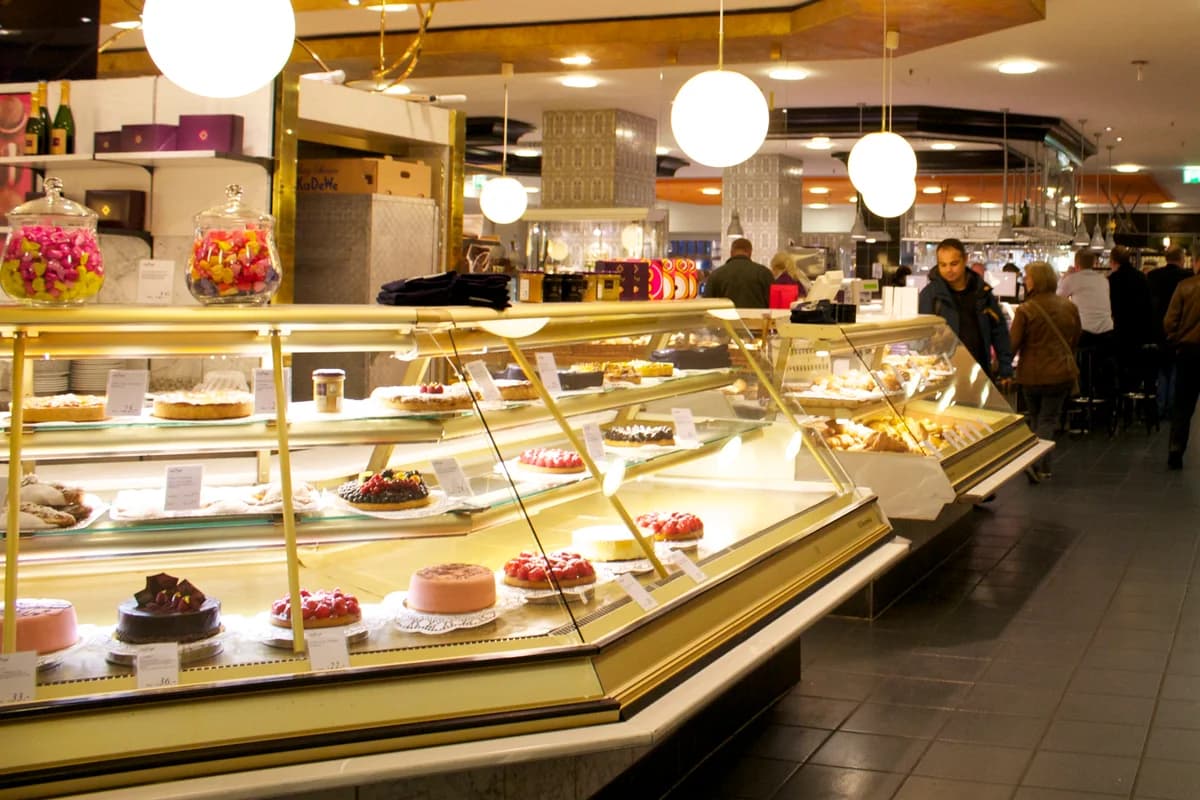 Manfred Brückels, CC BY-SA 3.0
Scan it with your phone
Point your camera at the QR code
KaDeWe: Berlin's Famous Department Store – Audio guide

I’ll tell you the secrets of Kaufhaus des Westens. I guide you here with the map, or you can listen from home. What you see is not what you think, and knowing it is worth it. Some narrations are AI voices and others are real people.
€0.996 min AI voiceHistory
Audio in:EnglishSpanishGermanFrenchItalianPortugueseChinese
How it works
- Go there
the app walks you there from wherever you are. - Listen there or from home
it plays by itself when you arrive, or press play from wherever you are. In your language if it was recorded in it. - Keep discovering
the Berlin map has more gems like this one, and you can put them together in a tour.
What you'll discover
In the heart of West Berlin, next to the Zoo, the Kaufhaus des Westens hides a story that begins in a small town and crosses the Atlantic.
Nazis, a bomber that fell from the sky, and a family that lost everything. This building survived every blow.
The Kaufhaus des Westens has much to tell. Come, I'll take you and tell you everything.
About Kaufhaus des Westens
Stop for a moment in front of the entrance, look at this enormous building that occupies the entire corner, and let me tell you how a village boy came to build all this.
Read the whole storyShow less
Imagine a Jewish boy born in 1870, in a tiny village called Hengstfeld, in southern Germany. His father, Josef Bernhard, was a butcher and cattle trader. His mother, Rika, had seven children, and Adolf was the second. There was no money, no luxury, just hard work and the dream of something bigger. At fourteen, Adolf Jandorf left his village to apprentice in a small business in Bad Mergentheim. At twenty, he crossed the Atlantic to New York looking for his older brother, and found him working as a streetcar driver. America taught him something fundamental: the power of modern commerce. And with that lesson, he returned to Germany with a plan.
Back in Berlin, Adolf Jandorf began opening popular stores. He used sales techniques that no one had seen in Germany: fixed prices, eye-catching displays, aggressive advertising. He built his chain of stores, A. Jandorf and Company, until he had six stores and five thousand employees. He brought four of his brothers, Karl, Robert, Moritz, and Julius, to run the branches. But Jandorf wanted something more. He wanted to create the largest and most luxurious store in all of continental Europe. And he chose this exact spot, on the corner of Tauentzienstraße and Wittenbergplatz.
On March 27, 1907, Kaufhaus des Westens opened its doors. The building, designed by architect Emil Schaudt, had 24,000 square meters of space. It was an immediate sensation. Berlin had never seen anything like it: a temple of commerce with electric light everywhere, elevators, and a variety of products that left people speechless. Jandorf had achieved his dream. A village boy, the son of a Jewish butcher, had created the most famous department store in Germany.
In 1927, Jandorf sold Kaufhaus des Westens to the Hermann Tietz company, another large chain of Jewish-owned department stores. The Tietz family modernized and expanded the store. But just five years later, in 1932, Adolf Jandorf died of appendicitis at the age of sixty-one. He did not live to see the worst that was to come. His only son, Harry, who was thirty-six, sensed the danger. That same year he fled first to Amsterdam and then to the United States, where he settled in Beverly Hills with his wife Charlotte.
With the rise of the Nazis to power in 1933, everything changed. The Jandorf brothers who remained in Berlin were persecuted. Julius Jandorf recounted after the war that the five brothers were singled out as Jews just for bearing the Jandorf surname, and that riots and physical assaults were constant. Moritz and Robert had emigrated to the United States as early as 1930. Julius managed to escape in December 1935. Adolf's wife, Helene, emigrated to the Netherlands in 1937. The founding family of Kaufhaus des Westens was expelled from their own city.
The Tietz family, the new Jewish owners of Kaufhaus des Westens, suffered an even more brutal fate. In March 1933, the three directors of the company were summoned to the Hotel Adlon. There, their passports were confiscated. The banks told them they would only renew credits if they put an 'Aryan' director in charge. The next day, April 1, the first official boycott against Jewish businesses began. Within days, the Tietz family had to sell all their shares for just ten percent of their real value. A company manager named Georg Karg bought those shares at a bargain price and renamed the company Hertie, an abbreviation of Hermann Tietz. Thus, with a simple name change, an entire Jewish family was erased from the history of their own company.
On the night of January 28-29, 1944, a British Royal Air Force Halifax bomber was shot down by the Germans and crashed directly onto Kaufhaus des Westens. All seven crew members died. The impact destroyed the upper floors and caused a fire that consumed the rest of the building. Berlin's most famous store was left in ruins. But Berlin did not let its Kaufhaus des Westens die. In 1950, the first two floors reopened, and by 1956 the complete reconstruction of the seven floors was finished.
Today, Kaufhaus des Westens is famous for its sixth floor, an entire level dedicated to gastronomy with 110 chefs, 40 bakers and pastry chefs, 35 gourmet counters, and restaurants. Two complete floors of food, the size of two football fields. The store passed through many hands after the war: from Hertie to Karstadt in 1994, then to the Austrian group Signa of magnate René Benko, which went bankrupt in 2023. Today, the owners are the Central Group of Thailand, a Thai family that also operates luxury department stores in Asia. The store founded by a Jewish boy from a German village now belongs to a family from the other side of the world. That's history. Nothing remains where it started.
Visiting Kaufhaus des Westens
- How to get there
- The closest stop is U Wittenbergplatz (bus), 28 meters away. Wittenbergplatz (metro/train) is 115 meters away.
- Entry and price
- Free entry.
- What to look for on site
- The sixth floor is famous for its gastronomy, featuring 110 chefs, 40 bakers and pastry chefs, 35 gourmet counters, and restaurants.
Frequently asked questions
Who founded Kaufhaus des Westens?
Kaufhaus des Westens was founded by Adolf Jandorf, a Jewish entrepreneur from a small German village.
What happened to Kaufhaus des Westens during World War II?
In January 1944, a British bomber crashed into the store, destroying the upper floors and causing a fire that devastated the building.
Who owns Kaufhaus des Westens now?
As of now, Kaufhaus des Westens is owned by the Central Group of Thailand, a family that operates luxury department stores in Asia.
What is significant about the sixth floor of Kaufhaus des Westens?
The sixth floor is dedicated to gastronomy, with a large selection of gourmet food and restaurants, making it a highlight of the store.
More audio guides in Berlin
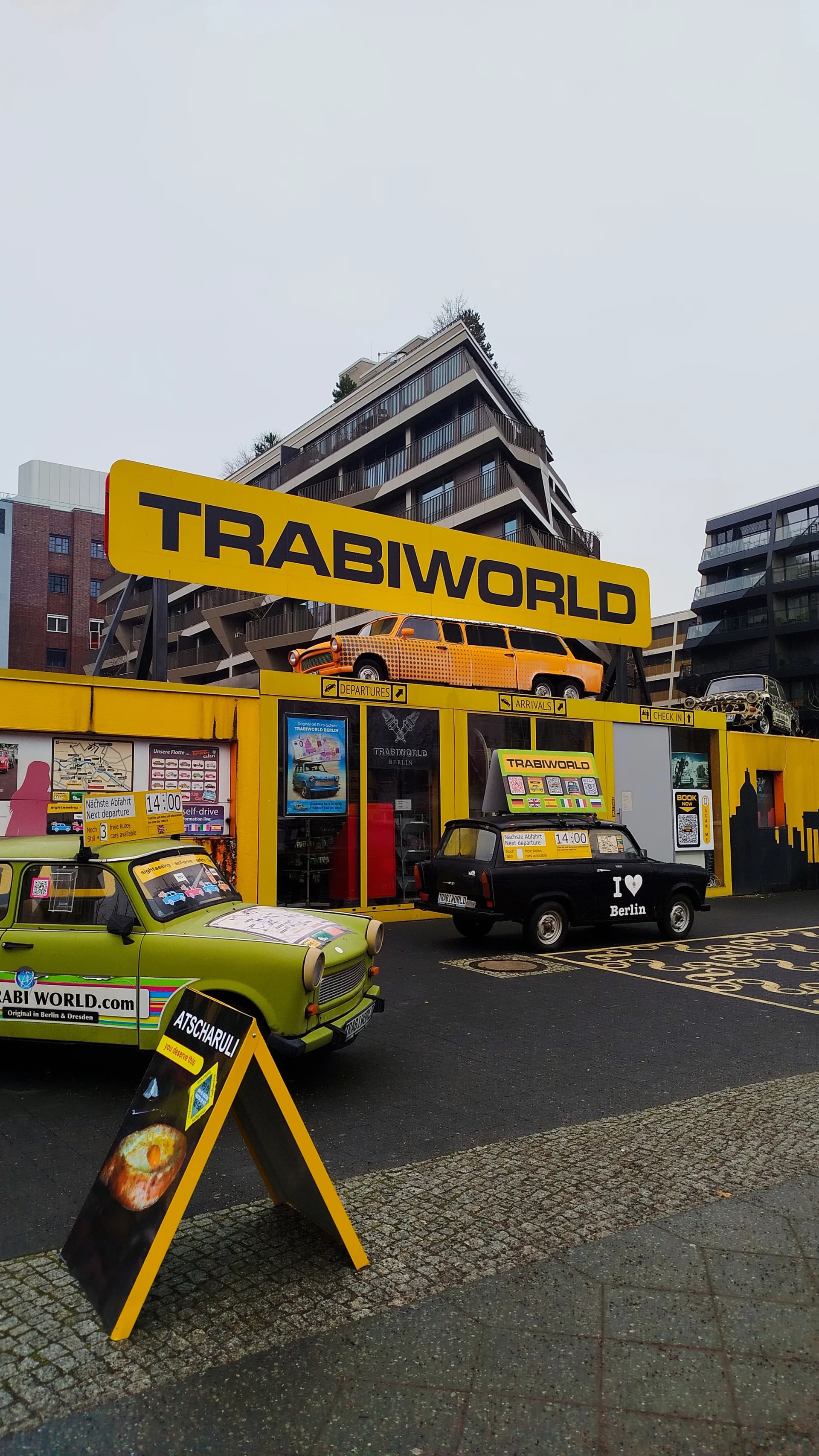 Gem · Audio guideBerlin: Trabiworld© Buch-t
 LightUp ToursEnglish · 5 min audio€0.99
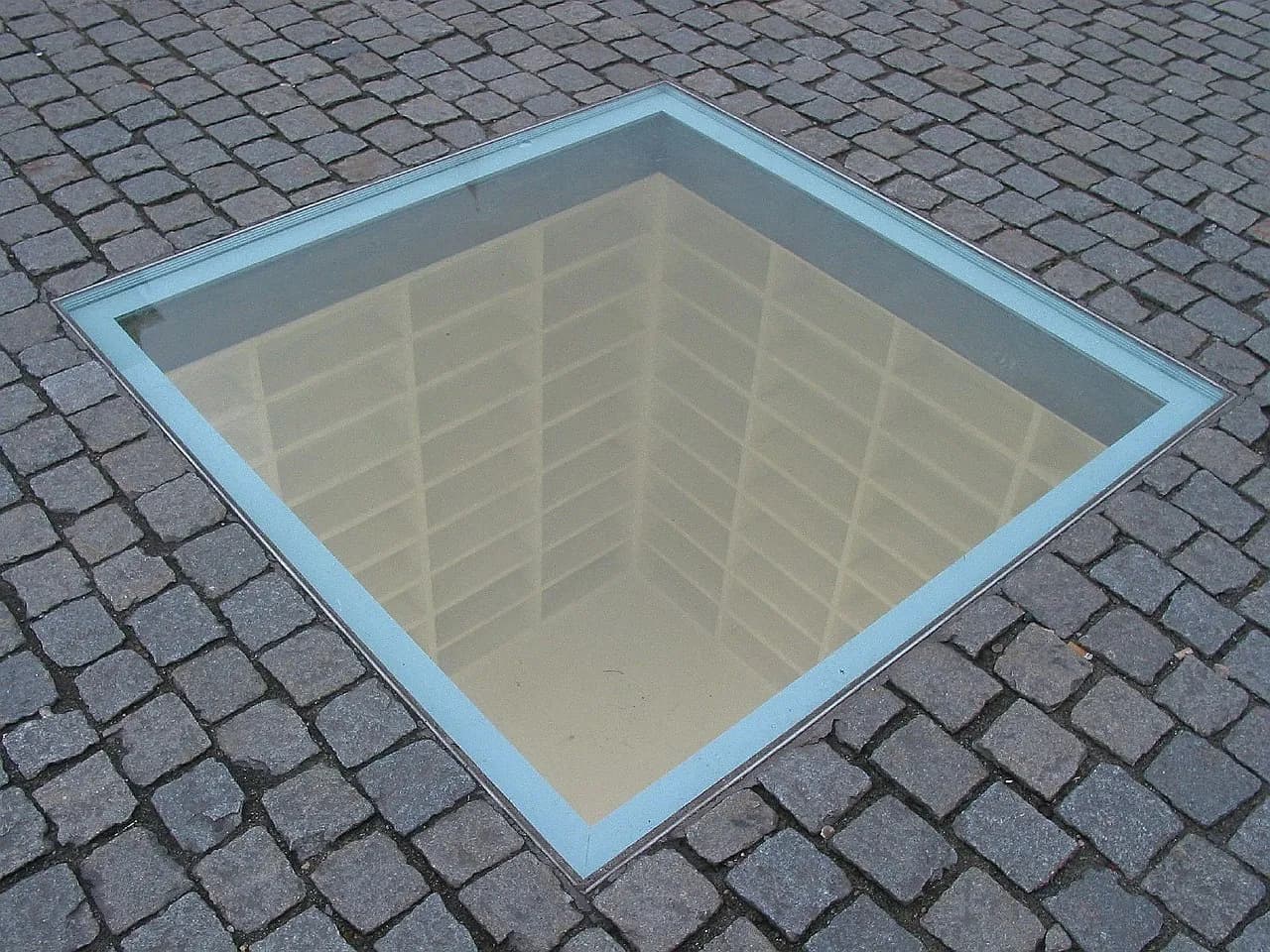 Gem · Audio guideBerlin: Bebelplatz© Charlotte NordahlLightUp ToursEnglish · 4 min audioFree
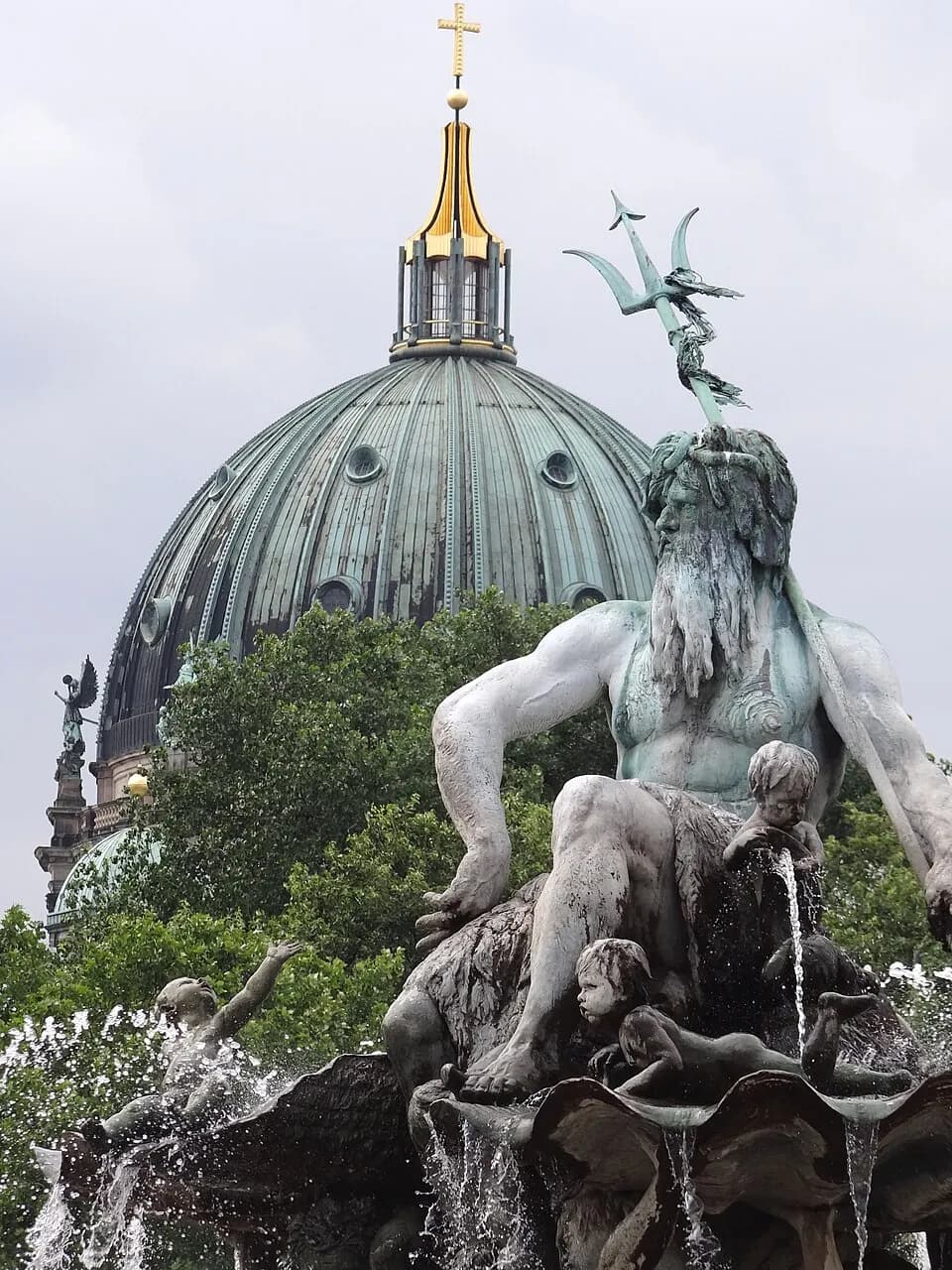 Gem · Audio guideBerlin: Neptune Fountain© CC BY-SA 3.0LightUp ToursEnglish · 5 min audioFree
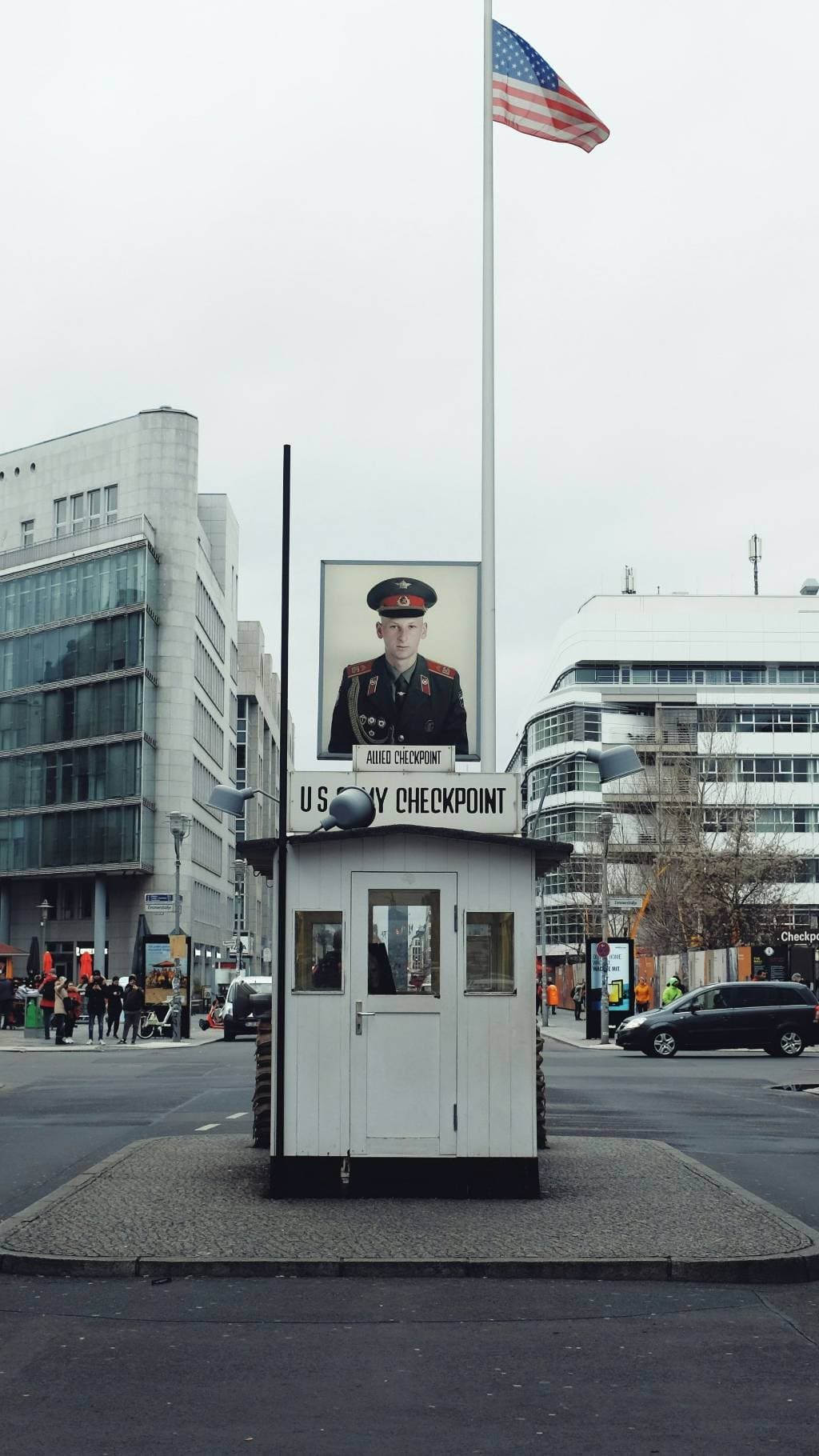 Gem · Audio guideBerlin: Checkpoint Charlie© Roger WollstadtLightUp ToursEnglish · 8 min audio€0.99

Reviews
No reviews yet. Be the first.