Audio Tours in Berlin: The Complete Guide to 5 Self-Guided Routes
Berlin is a city where history is felt on every corner — but most of it is invisible if no one tells you. From the Holocaust memorials to the murals of the East Side Gallery, every neighborhood is a different chapter of the 20th century, and a plaque can't carry the weight of what happened on that exact pavement. This is the complete guide to seeing Berlin with self-guided audio tours: the 5 routes we offer, how they differ, which one fits you, when to do them, what to bring, and the answers to everything travelers ask. No groups, no fixed schedules, narration in 7 languages — standing precisely where each story took place.
Complete City Guide
Everything about self-guided audio tours in Berlin: 5 routes from 2h to 3h 30min, how to choose, how to plan, and a full FAQ. In 7 languages.
Topics
- •Why do Berlin self-guided
- •Audio tour vs group tour vs free tour
- •The Third Reich & Jewish Quarter
- •Checkpoint Charlie & the Wall
- •Kreuzberg & urban art
- •Reichstag & Brandenburg Gate
- •Museum Island & Alexanderplatz
- •Which route is for you
- •How to plan your days
- •When to do them
- •How it works
- •Before you go
- •FAQ
- •Berlin is waiting
Why do Berlin as a self-guided audio tour
Berlin rewards context more than almost any city in the world. The same grey courtyard can be a former Gestapo site, an 1980s squat, or a techno club, and you would never know by looking at it. The history here is not on the surface — it is underneath it, and without someone to connect what you see to what happened, you walk through the most consequential decade of the 20th century without noticing.
A group tour moves at the guide's clock and the pace of the slowest walker, and Berlin is flat, enormous and spread out — the parts that matter are far apart. A self-guided audio tour fixes both problems at once: you go at your own speed, stand at a memorial for as long as it asks of you, and the narration waits for you.
It works differently for different travelers, and that's the point. The solo traveler never waits for anyone and never gets herded. The visitor returning to Berlin skips what they've seen and goes straight to what they missed. Families pause when a child needs to. And at the memorials — which is a real part of any honest Berlin visit — you get the silence and the time the place demands, instead of a guide talking over it. Berlin is, in a very real sense, the city the self-guided format was made for.
Audio tour, group tour, free walking tour, or just Google?
It's a fair question, so here's the honest comparison. A paid group tour is good if you want to ask a human questions in real time — but it has a fixed start time you plan your day around, it moves at the group's pace, and you spend a lot of it looking at the back of someone's head.
A 'free' walking tour is rarely free in practice — it runs on tip pressure, the groups are often large, the route and the hour are fixed, and the quality swings wildly depending on which guide you get. A paper guidebook or Googling on the spot gives you information but no narrative and no flow: you end up reading with your face in your phone instead of looking at the thing you came to see.
A self-guided audio tour gives you the depth of a good guide, on location, hands-free, at your pace, in your language, and repeatable — the trade-off is no live Q&A. For a city as spread out and as heavy with history as Berlin, that trade-off is worth it for most travelers. The strongest plan is often both: do the self-guided routes for the city, and add one paid expert tour if there's a single topic you want to go deep on with questions.
The Third Reich in Berlin: Where It All Happened
This tour takes you through one of the darkest chapters in history. In 7 stops and 2 hours of walking (25 minutes of audio), you explore Berlin's Jewish quarter, where thirty thousand people lived and disappeared in twelve years.
The narration guides you through synagogues that survived Kristallnacht, hiding places where Jewish families concealed themselves for years, and memorials honoring the victims. You also discover the story of Rosenstrasse, the only public protest that managed to defeat the Nazis and free prisoners.
It's an emotional and profound tour that allows you to stop at each point to reflect. With your headphones on, you listen to testimonies and historical accounts while walking the very streets where these events took place.
This is not a tour to rush. Heard on location, with testimony in your ears while you stand on the actual ground, it lands in a way no book or museum panel can. It's the route most worth doing slowly and probably alone, and self-guided is the only format that lets you stop, sit, and not be moved along.
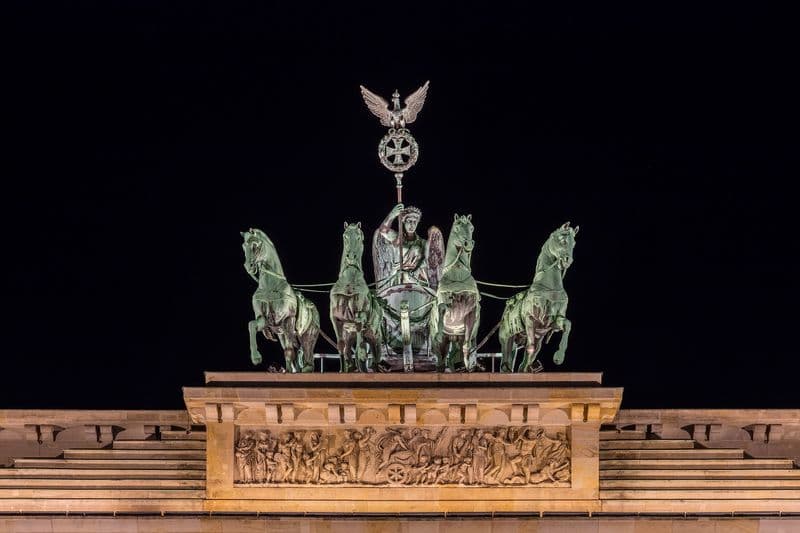
Brandenburg Gate in Berlin
Checkpoint Charlie and the Wall: Where the World Split in Two
Rated 5.0 stars, this tour of 5 stops and 2 hours 30 minutes (35 minutes of audio) is one of the most comprehensive about the Cold War in Berlin.
The route begins at the iconic Checkpoint Charlie, the most famous border crossing between East and West Berlin. The narration tells you stories of dramatic escapes, secret tunnels, and the lives divided by the Wall for 28 years.
You walk alongside the remains of the Berlin Wall, touch the concrete that separated entire families, and hear what the night of November 9, 1989 was like when thousands of Berliners crossed to the other side. The tour also covers the dark history of the Third Reich that led to the city's division.
This is one of the tours with the most audio content we offer in Berlin: 35 minutes of detailed narration that completely immerses you in history. It is also the best route to start with if you only have one day: it gives you the single most important Berlin story — division and reunification — and physically connects the places where it happened, so the history stops being abstract the moment you're standing in it.
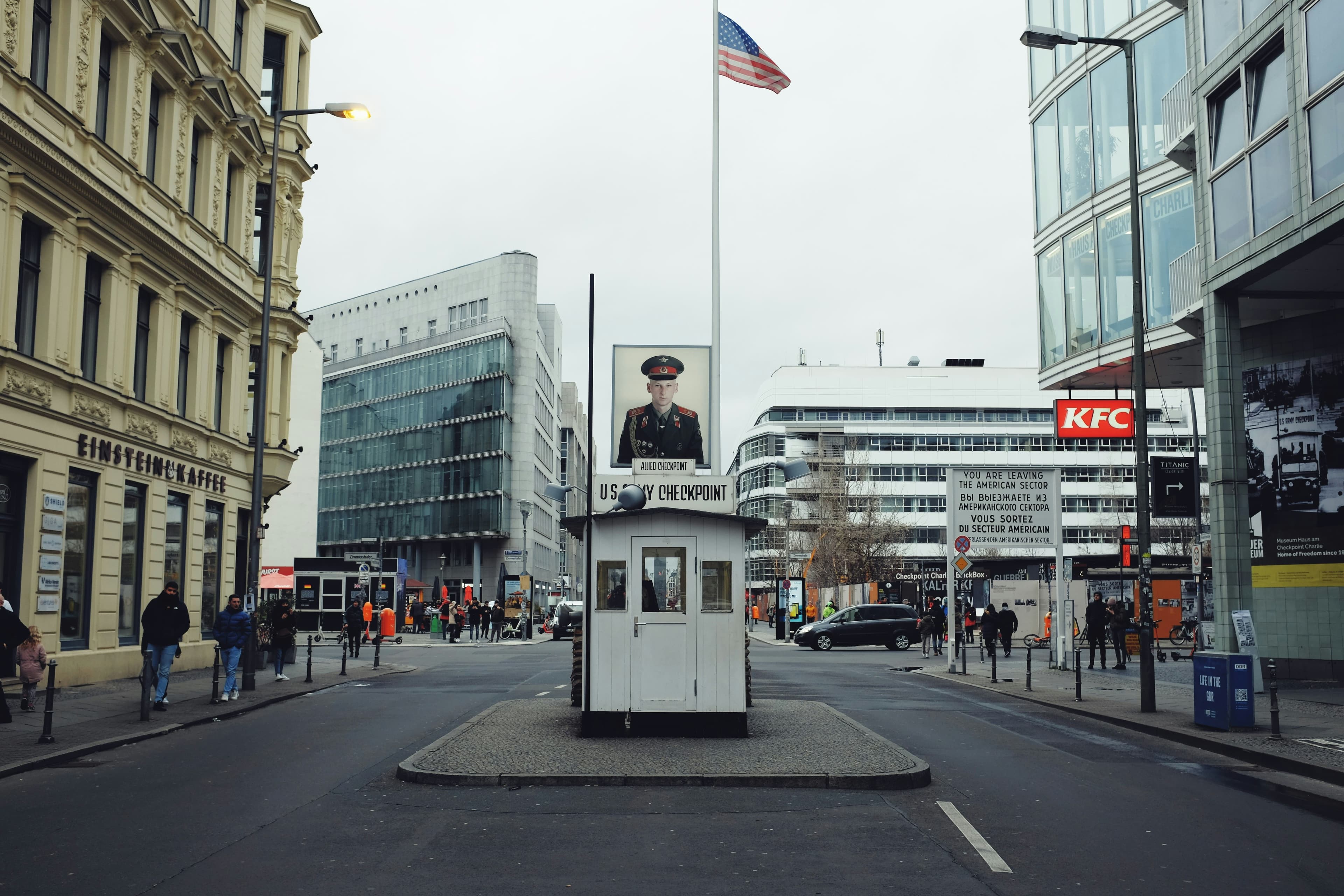
Checkpoint Charlie in Berlin
Kreuzberg: Urban Art and Alternative Culture
If you want to see the Berlin that doesn't appear on tourist postcards, this is your tour. In 7 stops and 3 hours (22 minutes of audio), you discover the alternative side of the city.
The route begins at the East Side Gallery, the longest open-air art gallery in the world: 1.3 kilometers of murals painted on the remains of the Berlin Wall. The narration explains the meaning of each work and the stories of the artists who created them.
Then you dive into Kreuzberg, the multicultural neighborhood par excellence. Here the narration takes you through alleys full of street art, tells you the history of the squatter movement of the 1980s, and guides you to RAW-Gelande, a former railway yard converted into a cultural center with clubs, galleries and street food markets.
It's a tour for those who want to understand why Berlin is considered the capital of urban art and counterculture in Europe. Of the five, this is the one where pace matters most: the point isn't to tick stops, it's to wander, double back, sit in a yard and let the city be unpolished — exactly what a self-guided format lets you do without holding anyone up.
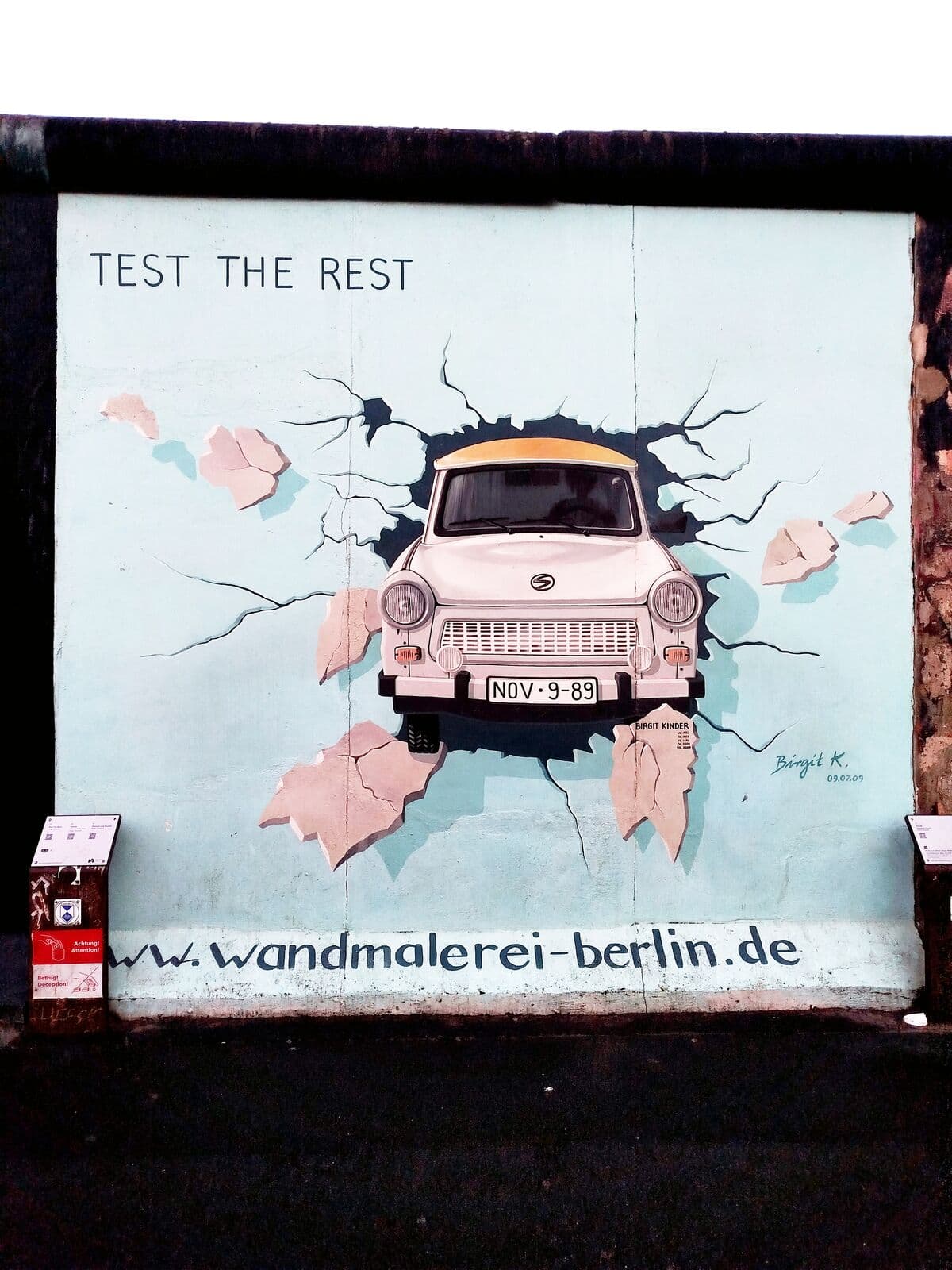
East Side Gallery - Berlin Wall
Reichstag, Brandenburg Gate and Memorials
Rated 5.0 stars, this is Berlin's most extensive tour: 9 stops and 3 hours 30 minutes of walking with 28 minutes of audio. It's the definitive route through the city's political heart.
The route goes from the Brandenburg Gate, symbol of German reunification, to the Reichstag, seat of the German parliament whose glass dome designed by Norman Foster is one of the marvels of modern architecture.
Along the way you pass through Berlin's most moving memorials: the Holocaust Memorial with its 2,711 concrete blocks, the memorial to homosexuals persecuted by the Nazis, and the monument to the Sinti and Roma murdered during the genocide.
The narration explains not only the history of each place, but also the architectural and political decisions behind each memorial. It's a tour that changes the way you see Berlin forever. If you only have time for two routes, pair this one with Checkpoint Charlie: together they give you the full arc — how the city was divided, and how it chose to remember.
Museum Island and Alexanderplatz: The Emblematic Heart of Berlin
This is the tour with the most audio content of all: 37 minutes of narration across 9 stops and 3 hours of walking. Rated 5.0 stars, it's the definitive route through Berlin's most emblematic central landmarks.
The route takes you through Museum Island, a UNESCO World Heritage Site where five world-class museums house treasures from ancient Egypt to 19th-century art. The narration explains the vision of the Prussian kings who created this cultural complex, unique in the world.
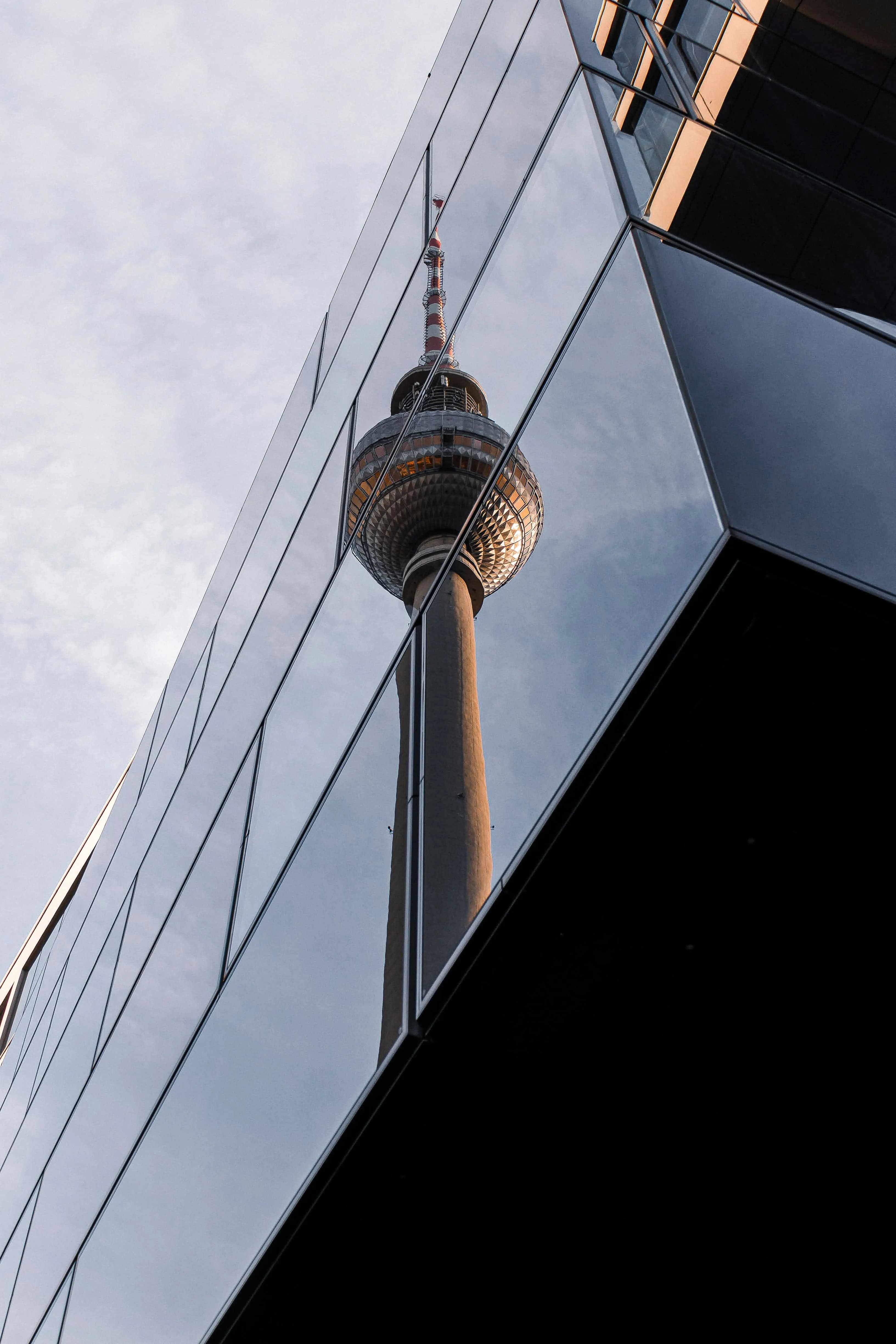
From there you walk to Alexanderplatz, the heart of what was East Berlin. Here the narration tells you how this square was the scene of the largest demonstration in GDR history in 1989, days before the Wall fell. You also pass by the iconic TV Tower, the tallest building in Germany.
The tour covers moments of freedom, struggle and rebellion that defined Berlin's history. It's the natural third route after Checkpoint Charlie and the Reichstag, and the deepest single tour we offer here: once you understand the division and the memory, this one shows you the centuries Berlin was built on and the city it became.
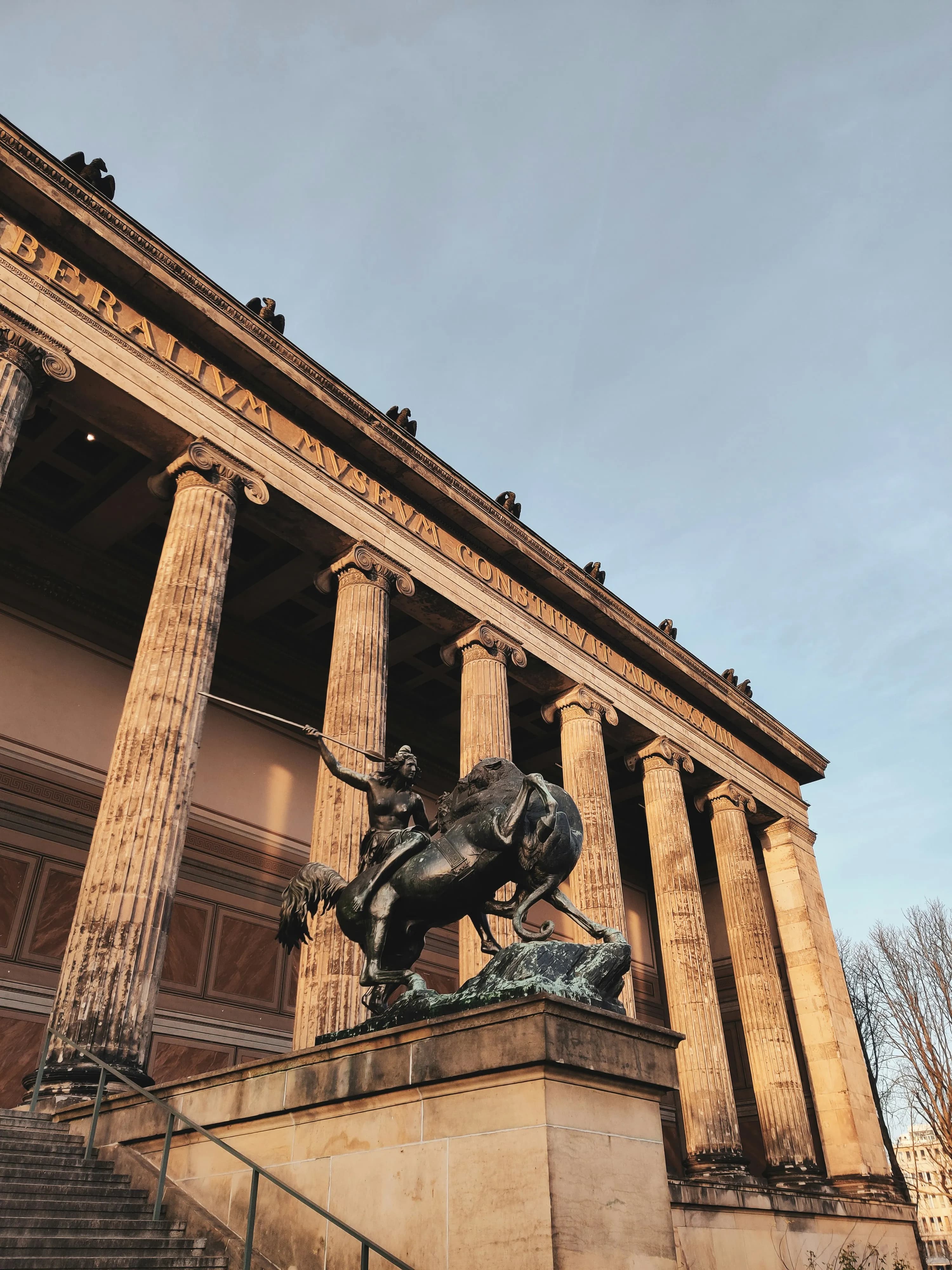
Altes Museum on Museum Island, Berlin
Which of the 5 Berlin tours is for you
If you only do one, do 'Checkpoint Charlie and the Wall'. It's the most important Berlin story, the most audio content, and the best first contact with the city for almost everyone.
If you love history and the World War II / Cold War period, pair 'The Third Reich and the Jewish Quarter' with 'Reichstag and Brandenburg Gate' — together they cover what led to the division and how Berlin chose to remember it. If you're into art, alternative culture and the city's counterculture, 'Kreuzberg' is unmissable. If you care about architecture, museums and the historic centre, go for 'Museum Island and Alexanderplatz'.
Returning to Berlin and already did the classics? 'Kreuzberg' plus 'The Third Reich' show you the city most tourists never reach. Travelling with kids? 'Museum Island and Alexanderplatz' is the lightest and most visual — the TV Tower and the open square make it the easiest to do at a child's pace. There's no wrong choice; self-guided just means the route bends around who you are.
How to plan your Berlin audio tour days
The five routes are designed to stack. Half a day or one day: do 'Checkpoint Charlie and the Wall' (2h 30min) — the essential Berlin story and the best starting point. A second day: add 'Reichstag and Brandenburg Gate' (3h 30min) for the political heart and the memorials, then 'Museum Island and Alexanderplatz' (3h) for the historic centre.
Three days or more: add 'The Third Reich and the Jewish Quarter' (2h) and 'Kreuzberg' (3h) for the alternative, countercultural Berlin most visitors never see. Do the heavier history routes in the morning, when you have energy and the sites are quieter; leave Kreuzberg for the afternoon when it wakes up.
Rainy day? The central routes (Museum Island, Reichstag) pass enough indoor anchors to duck into. With kids, split a long route across two short sessions — the tour resumes where you left off. And use the U-Bahn and S-Bahn to move between neighborhoods: Berlin is flat but big, and the metro lets you spend your walking on the tour, not on getting to it.
When to do your Berlin audio tours
The best time is a weekday morning. Brandenburg Gate, Checkpoint Charlie and the Holocaust Memorial are far calmer before midday and on weekdays than on a weekend afternoon, and the difference is the whole experience — these are places you want to hear in some quiet.
Season changes the plan. In summer the days are enormous (sunset around 10pm), so you can start late and still finish in daylight at a relaxed pace. In winter the days are short and cold — dress for it, start early, and keep the more indoor-anchored central routes as a wet-weather option.
This is exactly where self-guided beats a fixed group tour: you choose the light, the temperature and the crowd level instead of accepting whatever the tour's schedule hands you. Press play when Berlin is at its best for you.
How LightUp's Berlin tours actually work
It's deliberately simple. You pick the route, press play, and the narration activates automatically via GPS as you reach each point of interest — you don't fumble with numbered buttons like the old museum handsets. The route is tied to a map, so you always know where the next stop is and how to get there.
You download the tour, so a weak signal in a courtyard or underground in the U-Bahn never cuts the narration mid-sentence. All five routes are available in 7 languages — real narration, not auto-subtitles — so you hear Berlin in the language you actually think in. Pause for a coffee, a memorial or a whole day, and it resumes exactly where you left off.
Before you go: a practical checklist
Headphones, but the open or in-ear kind you can still hear traffic through — you'll be crossing real Berlin streets. A charged phone and ideally a power bank: GPS plus audio drains a battery over a 3-hour route. Download the tour on wifi before you start so you're not depending on signal.
Comfortable shoes — Berlin is flat but a single route is 5 to 9 kilometres of walking. Water, and a layer for the weather, which turns fast. And one thing that matters here more than in most cities: treat the memorials with respect. The Holocaust Memorial is not a playground or a photo backdrop; the tours are built to give those places the seriousness they deserve, and so should you.
Frequently asked questions about Berlin audio tours
Do I need internet during the tour? No — the tour downloads, so a weak signal won't cut it. Is it free? You can start for free and listen at your own pace. What languages are available? All 5 tours are narrated in 7 languages, not auto-subtitled. How long do they take? From 2 hours (Third Reich) to 3h 30min (Reichstag).
Can I pause and continue later? Yes — pause for a coffee, a memorial, or a day, and it resumes exactly where you left off. Can I do them by bike instead of walking? They're designed for Berlin's flat streets on foot, but you can cover more ground by bike between the spread-out neighborhoods, with the audio playing the whole way. Are they good with kids? Yes — 'Museum Island and Alexanderplatz' is the lightest; split long routes into shorter sessions.
Do I need to book tickets? The tours are outdoor walking routes, so no — but note that the Reichstag glass dome itself requires a separate (free) reservation if you want to go up, independent of the tour. Can I do them at night? The audio works any time; some memorials are striking at dusk, just use normal big-city common sense after dark.
Berlin is waiting
Berlin doesn't reveal itself to people who only photograph it. It opens up to the ones who stand still long enough to hear what happened where they're standing — at their own pace, in their own language, on the day and at the hour that suits them.
Pick a route, put your headphones in, and let the city tell you the parts the postcards never will. Press play whenever you're ready; Berlin has been waiting to be heard.
Audio guides in Berlin
Hear Berlin narrated in 7 languages
More from the blog


Take LightUp with you
Self-guided audio tours in 7 languages, offline-ready. Download the app and start exploring.