I’ll tell you the secrets of San Miguel Hermitage and Chorro de Quevedo Square. I guide you here with the map, or you can listen from home. What you see is not what you think, and knowing it is worth it. Some narrations are AI voices and others are real people.
Go there the app walks you there from wherever you are.
Listen there or from home it plays by itself when you arrive, or press play from wherever you are. In your language if it was recorded in it.
Keep discovering the Bogota map has more gems like this one, and you can put them together in a tour.
What you'll discover
The little square where, so the story goes, Bogotá was born. Very pretty and largely invented: knowing what is real and what isn’t makes it even more interesting.
About San Miguel Hermitage and Chorro de Quevedo Square
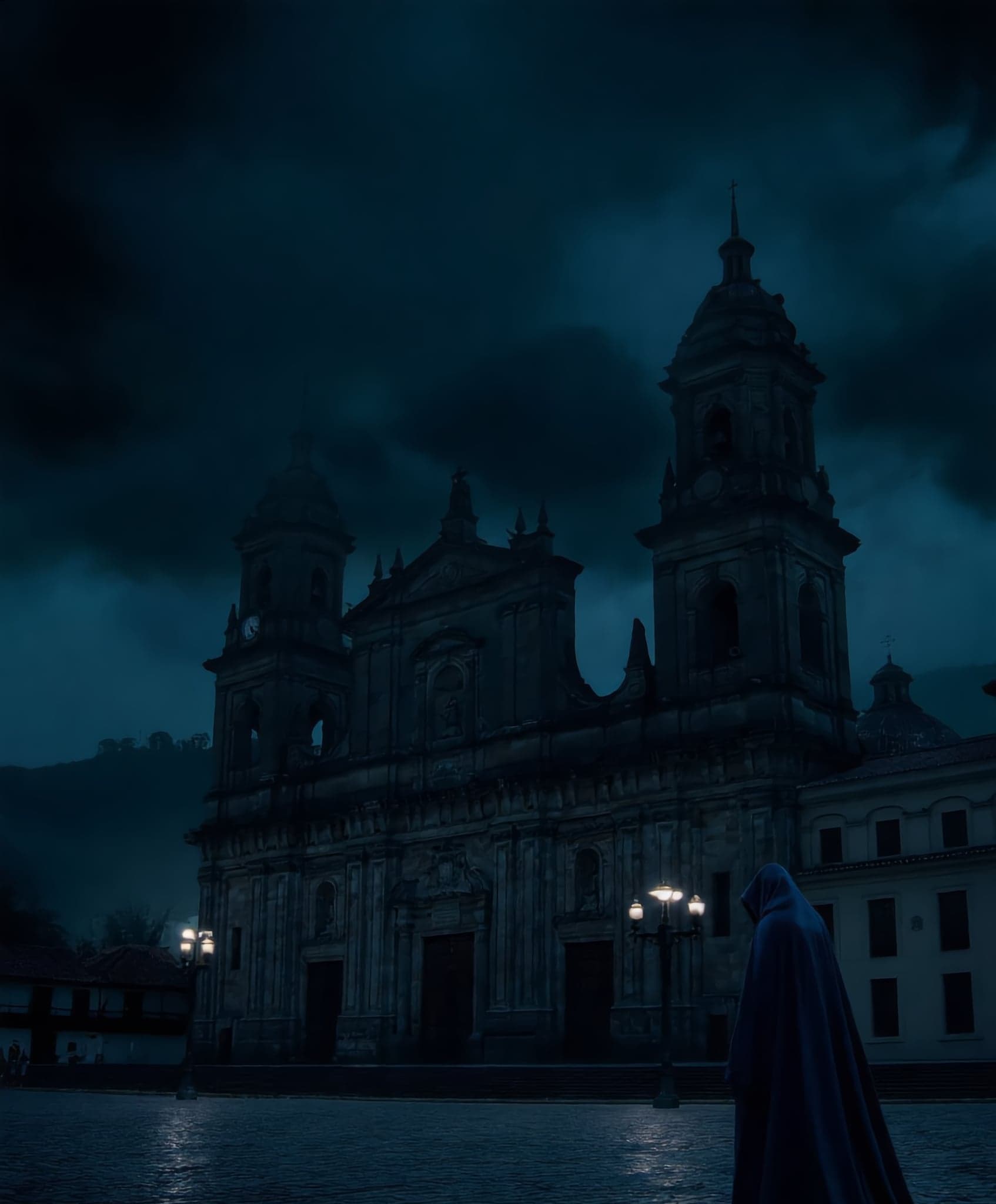
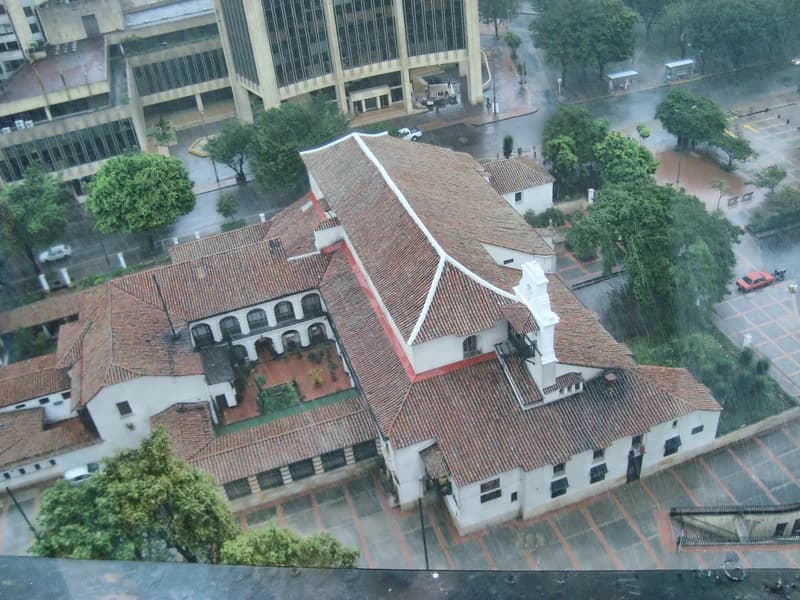
Stay where you are. Don’t go in just yet. Look at the whole little square: the cobblestones, the small chapel at the back, the adobe walls, the colonial atmosphere. Very pretty. And, for the most part, fake. This is one of those stories where it’s worth knowing what’s real and what was invented, because what was invented is just as interesting as what’s real. Let’s start with the chapel. The Ermita de San Miguel del Príncipe you see there was built in nineteen sixty-nine. Not in the sixteenth century, not in the seventeenth, not in the eighteenth. In nineteen sixty-nine. It was deliberately built using techniques and materials that imitate colonial architecture to reinforce the idea that this is the place where Bogotá was born. The original church that supposedly existed here was never documented at this exact spot. What you see is an evocation, a staged scene.
Read the whole storyShow less
Well done, but still a staged scene. And the founding of Bogotá here? That’s also more complicated than it seems. The official version says that Bogotá was founded on the sixth of August, fifteen thirty-eight, by the conquistador Gonzalo Jiménez de Quesada in what is now Parque Santander, a few blocks from here. El Chorro de Quevedo doesn’t appear in the founding documents. What is true is that before the Spanish arrived, this place had its own name: Thibsaquillo, which in the Chibcha language supposedly meant, according to what is said, land of rest. It was the recreation spot of the Zipa, the supreme ruler of the Muisca, because from here you can overlook the savanna and the land is high and protected. It’s said that when Jiménez de Quesada arrived with his troops, he chose this spot to camp. So it’s not where Bogotá was founded, even though tradition says the conquistadors camped here. The difference matters, even if nobody wants to talk about it.
The name came much later. In eighteen thirty-two, an Augustinian priest named Father Quevedo installed a public water fountain, a chorro, on this plot so that the neighbors could get water. The most famous square in La Candelaria owes its name to a nineteenth-century water fountain and a priest nobody remembers anymore. Now comes the most interesting part. The chicha you can get in the places around this little square has more than two thousand years of history and was at the center of one of the most shameless political and commercial setups in Bogotá’s history. Chicha is a fermented corn drink that the Muisca people made long before the Spanish arrived. The traditional process was unique: women would chew the corn and spit it into clay containers. The saliva activates enzymes that turn the starch into sugar and start the fermentation.
The containers were buried for several days. The result was a thick, slightly alcoholic, yellowish drink. For centuries, it was the everyday drink of the people of Bogotá, as common as water. The chicherías were the equivalent of today’s neighborhood shops. In eighteen eighty-nine, a German businessman named Leo Siegfried Kopp arrived in Bogotá and founded the Bavaria Brewery, the country’s first big industrial beer factory. The business was clear: for beer to sell, chicha had to disappear. And, as the story goes, in that same year of eighteen eighty-nine, very conveniently, the doctor Liborio Zerda published a study at the Faculty of Medicine in Bogotá declaring that chicha was toxic. No rigorous methodology, no comparative studies, no solid evidence.
From then on, a systematic campaign began. Newspapers published ads that said: chicha makes you stupid. Chicha incites crime. The doctors and hygienists of the time even invented a name for the supposed disease: chichismo. They said it was a slow deterioration of body and mind, different from regular alcoholism, caused specifically by drinking chicha. Chichismo was never recognized by any serious medical institution. It was a tool for pressure. The campaign half-worked for decades. Chicha held on. People kept drinking it. Then came the ninth of April, nineteen forty-eight. That day, Jorge Eliécer Gaitán was assassinated and Bogotá burned. The elites and the media needed an explanation for the popular violence that had left the city in flames. The explanation was chicha. The chicha sellers, the poor, those supposedly stupefied by that indigenous drink: they had destroyed the city.
What nobody mentioned, and what many say even though it’s not proven, is that what was consumed en masse during the Bogotazo wasn’t chicha but whisky, champagne, and vodka looted from downtown stores. Chicha was the perfect scapegoat because nobody was going to publicly defend chicha drinkers in nineteen forty-eight. Two months after the Bogotazo, on the second of June, nineteen forty-eight, the Ministry of Hygiene issued Decree eighteen thirty-nine banning the sale and consumption of chicha, guarapo, and other similar fermented drinks. Then came Law thirty-four of nineteen forty-eight. Many say that chicha is still technically illegal in Colombia, but that’s not true: that law regulates it, it doesn’t ban it. And yet here it is, in this little square, just as it always was.
El Chorro de Quevedo was one of the few corners of Bogotá where the chicherías survived the persecution, along with the neighborhood La Perseverancia, a remarkable historical paradox: La Perseverancia was the working-class neighborhood built around the Bavaria factory, and its own workers, the ones who made the beer that was supposed to replace chicha, kept making chicha at home. Today this little square is the bohemian heart of La Candelaria. Artists, musicians, poets, jugglers. The chicha sold here is the continuation of a resistance of more than one hundred and thirty years. Order it if you can. It has a thick, sour, earthy taste. Very different from anything you’ve ever tried.
Frequently asked questions
What is Chorro de Quevedo?
A small square in La Candelaria that everyone points to as Bogotá's birthplace. Which part is true and which was invented, LightUp tells you right there.
Was Bogotá founded at Chorro de Quevedo?
The records say otherwise, though tradition has its reasons. The difference matters, and the audio guide explains it.
Is the Chorro de Quevedo chapel colonial?
It looks colonial, but it isn't. When and why it was built is one of the surprises in the LightUp audio guide.
Is there an audio guide for Chorro de Quevedo?
Yes. With LightUp you listen in the square or from home, in 7 languages, including the story of the chicha still sold around it.