
Osthafen Warehouse (Spreespeicher)
Osthafen: Berlin's Old Industrial Port – Audio guide
 LightUp Originals
I’ll tell you the secrets of Osthafen Warehouse (Spreespeicher). I guide you here with the map, or you can listen from home. What you see is not what you think, and knowing it is worth it. Some narrations are AI voices and others are real people.
Audio in:EnglishSpanishGermanFrenchItalianPortugueseChinese
How it works
- Go there
the app walks you there from wherever you are. - Listen there or from home
it plays by itself when you arrive, or press play from wherever you are. In your language if it was recorded in it. - Keep discovering
the Berlin map has more gems like this one, and you can put them together in a tour.
What you'll discover
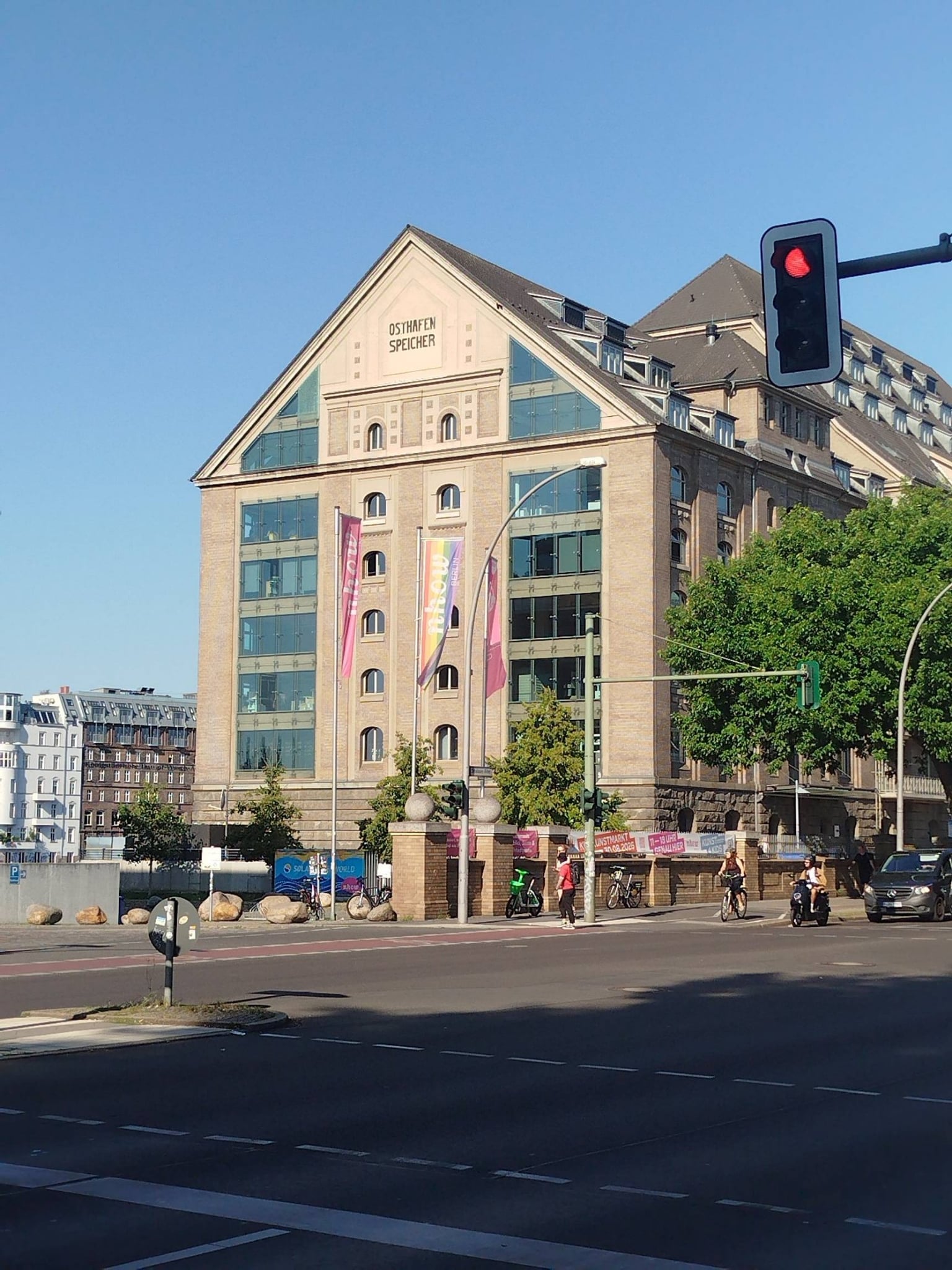
In Friedrichshain in Berlin stands a brick granary with a restored roof. It is called Spreespeicher, and its gable faces the Spree. Nineteen thirteen. The architect Friedrich Krause designed it as part of the Osthafen, the largest industrial port Berlin had seen until then. Six years of construction. On September 28, nineteen thirteen, the largest industrial port in Berlin was inaugurated. Seventeen million marks invested. Workers unloaded tons of grain from the ships. The conveyor belts lifted it nonstop, feeding every corner of the granary. In nineteen thirty, the port handled two million three hundred thousand tons a year. Then came nineteen thirty-nine: World War II. The Nazi army used it as a transshipment center to mobilize war supplies, until the Red Army occupied it in April nineteen forty-five. After reunification in nineteen ninety, the port lost all its relevance. The granary was left with a destroyed roof. In the mid-nineties, the conversion began. They used Bunzlau clinker brick, granite, shell limestone. They finished in two thousand one. Today it is a protected heritage site. Inside there are lofts, offices, event spaces. The south terrace faces the Spree and the Oberbaum Bridge. This granary survived progress, war, occupation, division, reunification. Listen to the full guide and let's explore it together.
About Osthafen Warehouse (Spreespeicher)
In the east of Berlin, where the Spree widens, a brick building holds the memory of the city's largest industrial port. In the early twentieth century, Berlin needed a port that could handle the grain, coal, and goods arriving from Eastern Europe. On September 6, 1907, they began digging the foundations of the Osthafen, the eastern port. It took six years. Friedrich Krause, the municipal civil engineering architect, designed a huge granary with a gabled roof and facades of brick and natural stone. Independent architects Fritz Kritzler and Max Tischer were commissioned to design the facades, which had to be functional but also worthy of the imperial capital. Look at this image: a crane hoists grain from a barge. This is how the Osthafen worked at its peak, moving tons of cereal every day. On September 28, 1913, the port was inaugurated. The Spreespeicher was at the western end, next to the Oberbaum Bridge and the cold storage warehouse they called "the egg store." The building contained a three-part grain silo, designed to store and redistribute cereals that arrived by water and left by train. Here you see the port in December 1927: loaded barges, cranes working, smoke coming from the chimneys. The Osthafen was the logistical heart of Berlin. During World War II, the Osthafen suffered severe damage. But the Spreespeicher continued to function as a redistribution center for the Wehrmacht until April 1945. In April 1945, the Red Army occupied the docks. They took everything in the warehouses and did not leave until 1947. This photo is from 1948: a worker with a sack enters through a door marked "Umtausch-Getreide." Exchange grain. Berlin was beginning to reorganize under Soviet control. Approximately eighty percent of the port's buildings and grounds were destroyed after the war. But the Spreespeicher endured. Here you see it in the 1950s: the building still stands with the sign "Osthafenmühle" painted on the facade. East port mill. This is an image of the port in the 1950s: workers unloading grain by hand into barges, the Oberbaum Bridge in the background. The Osthafen was still operating, now in East Berlin. Until 1990, the Spreespeicher was used as a warehouse in the planned economy of the GDR. Decades of silent movement of goods. This barge named "Berlin" moored next to the building is from 1954. The port moved grain, coal, and construction materials to rebuild the divided city. Look at this crane unloading sacks in 1963. Two workers watch. The Spreespeicher was part of the invisible infrastructure that kept East Berlin running. With reunification in 1990, the Osthafen lost its economic significance. Berlin no longer needed an industrial port in the east. For years, the building had a partially destroyed roof. But in 2000, restoration plans began. The work was completed in 2001. This port crane from 1980 still stands. The technology changed, but the port's structure remains as a witness to a century of industrial history. Today the Spreespeicher is home to several media companies. The arched windows you see on the restored facade are the originals by Kritzler and Tischer, now filled with the light of modern offices. The building offers three spaces for conferences, meetings, and private celebrations. Where grain was once stored, events are now held. The large gabled roof and the flags flying today in front of the building mark the transformation. It's the same building, but the city around it has changed three times.
Visiting Osthafen Warehouse (Spreespeicher)
- How to get there
- The closest stop is Stralauer Allee bus stop, 18 meters away.
Frequently asked questions
What is the historical significance of the Osthafenspeicher?
The Osthafenspeicher was part of Berlin's largest industrial port, designed to handle grain, coal, and goods from Eastern Europe. It played a crucial role in the city's logistics, especially during the early 20th century.
What happened to the Osthafenspeicher during World War II?
During World War II, the Osthafen suffered severe damage, but the Spreespeicher continued to function as a redistribution center for the Wehrmacht until April 1945.
How did the Osthafenspeicher change after the reunification of Germany?
After reunification in 1990, the Osthafen lost its economic significance as an industrial port. Restoration plans began in 2000, and the building was restored by 2001, now housing media companies and offering spaces for events.
What architectural features should I look for at the Spreespeicher?
Look for the original arched windows designed by architects Fritz Kritzler and Max Tischer, now part of the restored facade. The building's large gabled roof and the historic port crane from 1980 are also notable.
What can I find nearby the Osthafenspeicher?
Nearby, you can find the nhow Berlin, which is accessible and located just 71 meters away.
More audio guides in Berlin
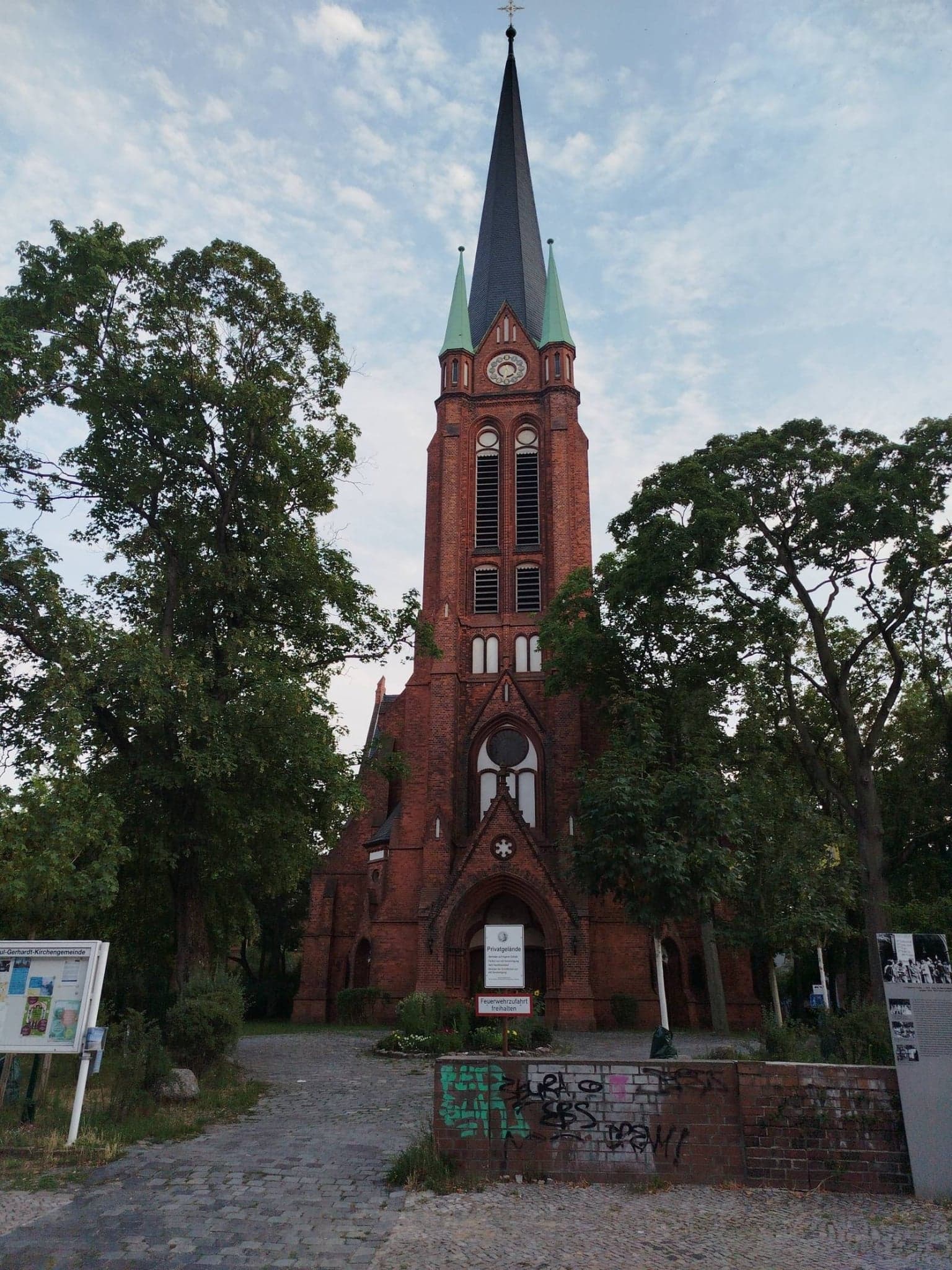 Gem · Audio guideAudio guideBerlin: Church of the Redeemer (Erlöserkirche)© dravvtLightUp OriginalsEnglish · 5 min audio
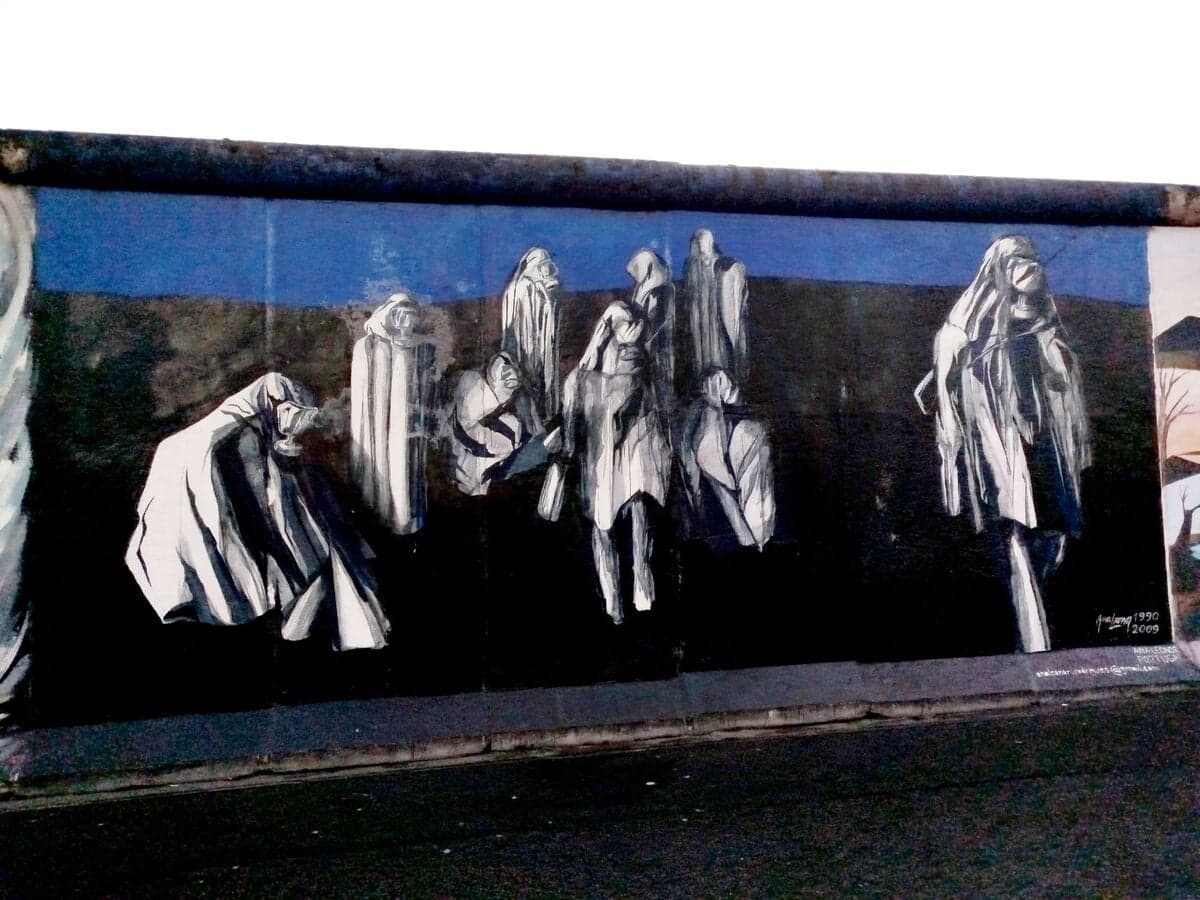 Gem · Audio guideAudio guideBerlin: Ana L. M. Rodrigues – Untitled© dravvtLightUp OriginalsEnglish · 3 min audio
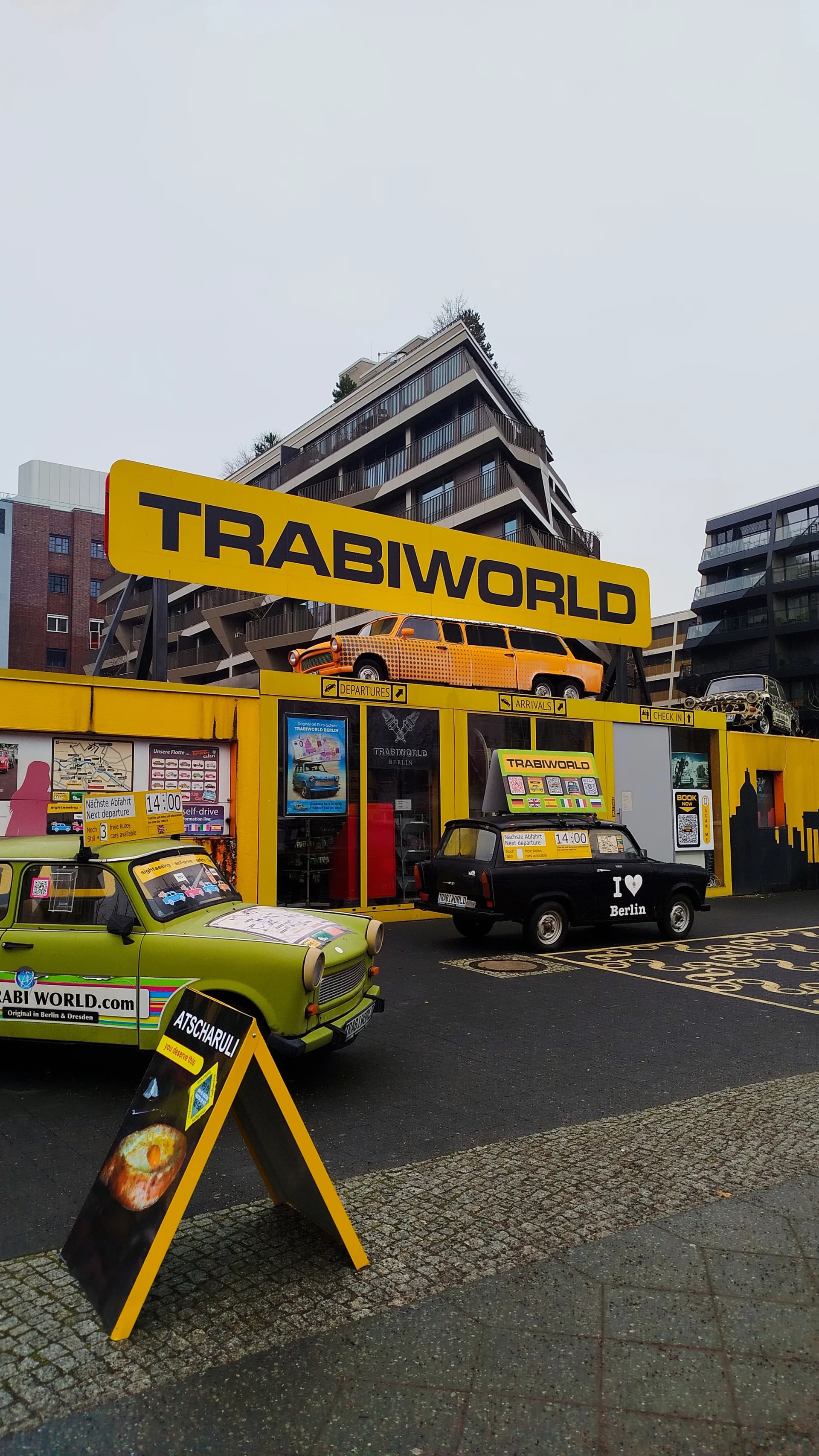 Gem · Audio guideAudio guideBerlin: Trabiworld© Buch-tLightUp OriginalsEnglish · 5 min audio€0.99
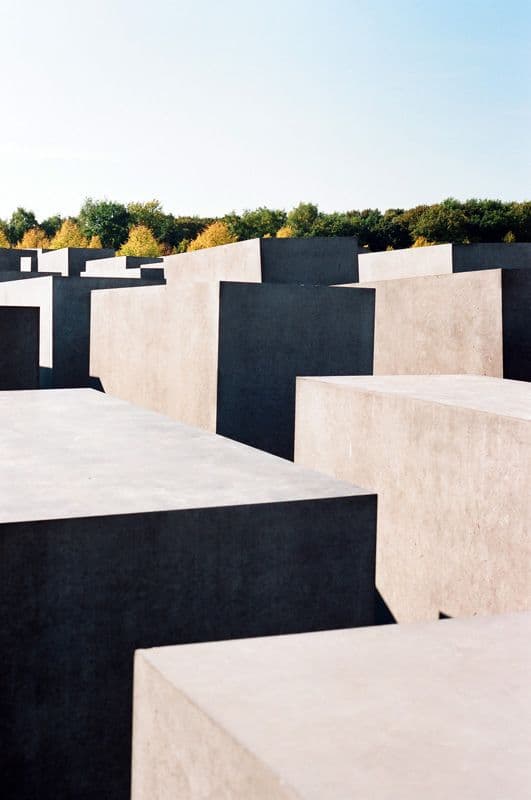 Gem · Audio guideAudio guideBerlin: Holocaust Memorial© Mario DuhanicLightUp OriginalsEnglish · 5 min audio€0.99

Reviews
No reviews yet. Be the first.