
Kottbusser Tor · Audio guide
Listen to the story of Kottbusser Tor
Download the LightUp app or scan the QR with your phone. You'll hear this place narrated in your language — 7 languages available, AI and human voices. Free to start, walk Berlin at your own pace.
Scan with your phone
Point your camera at the QR code
Story
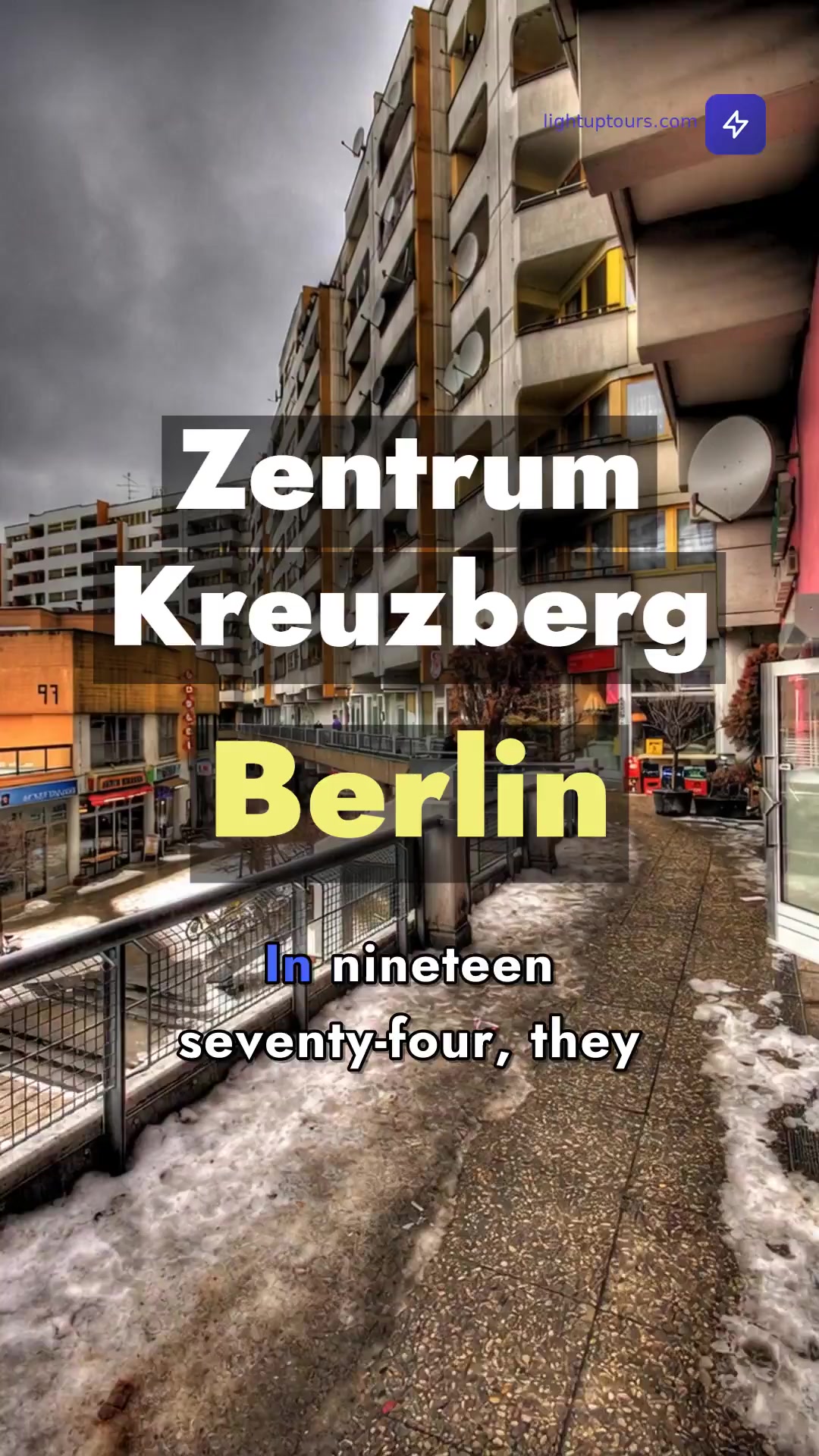
In nineteen seventy-four, they dropped this brutalist tower into the heart of Kreuzberg.
Satellite dishes now cling to every balcony. This is Neues Kreuzberger Zentrum.
This corner of Berlin hides secrets. Let me tell you how this building tried to move a community and became its monument instead.
Nineteen sixty-one. The Wall went up. Kreuzberg was suddenly a dead end, pressed against concrete and barbed wire.
West Berliners fled to safer neighborhoods.
West Germany needed workers for its factories. They signed a deal with Turkey the same year.
Come for two years, work, go home. Nobody wanted Kreuzberg because of the Wall. So the Turks moved in.
Nobody forced them. But they were told two years, unmarried men only. The two years stretched. Families followed.
By nineteen seventy-three, around eight hundred and sixty thousand Turkish workers had settled across West Germany.
One of those workers' kids was Hakan Durmuş. Born in Kreuzberg, joined the Thirty-Six Boys gang, went to prison. Inside, he heard a rap song and decided to become Killa Hakan.
By the early seventies, Kreuzberg was crumbling. Old tenements, Turkish families, radical squatters. The city called it blight.
They designed the Neues Kreuzberger Zentrum as part of a modernization plan. Clean lines, new commerce, higher rents.
The goal was renewal. The result would be displacement.
Push out the poor, bring in the middle class. But the Turkish families moved into the new tower anyway.
Satellite dishes on every balcony. Grocers opened below.
The building meant to gentrify them became their anchor.
Today Killa Hakan still raps about Kreuzberg Thirty-Six. The tower meant to gentrify the neighborhood became their anchor instead. The city wanted renewal. The Turks stayed anyway.
Follow us for more hidden stories of Berlin's streets.
Visiting Kottbusser Tor
- How to get there
- The closest metro stop is Kottbusser Tor, just 21 meters away.
- Entry and price
- Entry is free.
- Opening hours
- The area is always open.
Frequently asked questions
What is the historical significance of Kottbusser Tor?
Kottbusser Tor was one of the fourteen gates of the customs wall built by King Frederick William I between 1734 and 1737. It was not a defensive wall but served to collect taxes and catch deserters.
What is the Neues Kreuzberger Zentrum?
The Neues Kreuzberger Zentrum, now called Zentrum Kreuzberg, is a controversial building constructed between 1969 and 1974. It has twelve floors with 367 social housing units and was part of a program to modernize Kreuzberg.
What happened during the Battle of Fraenkelufer?
In December 1980, the Battle of Fraenkelufer occurred when police attempted to evict a squatted house. Protesters built barricades at Kottbusser Tor, leading to clashes with overturned cars and tear gas.
What is the connection between Kottbusser Tor and the döner kebab?
In 1972, Kadir Nurman, a Turkish worker, popularized the döner kebab near the Zoo station, making it a quick and portable meal. Although he never patented it, the döner kebab became a staple in Germany.
What is the current atmosphere at Kottbusser Tor?
Today, Kottbusser Tor is a lively area with a mix of cultures, including a large immigrant population. The plaza is known for its vibrant market atmosphere, with shishas, music, and a diverse community.
More audio guides in Berlin


Comments
No comments yet.