
Gropius Bau
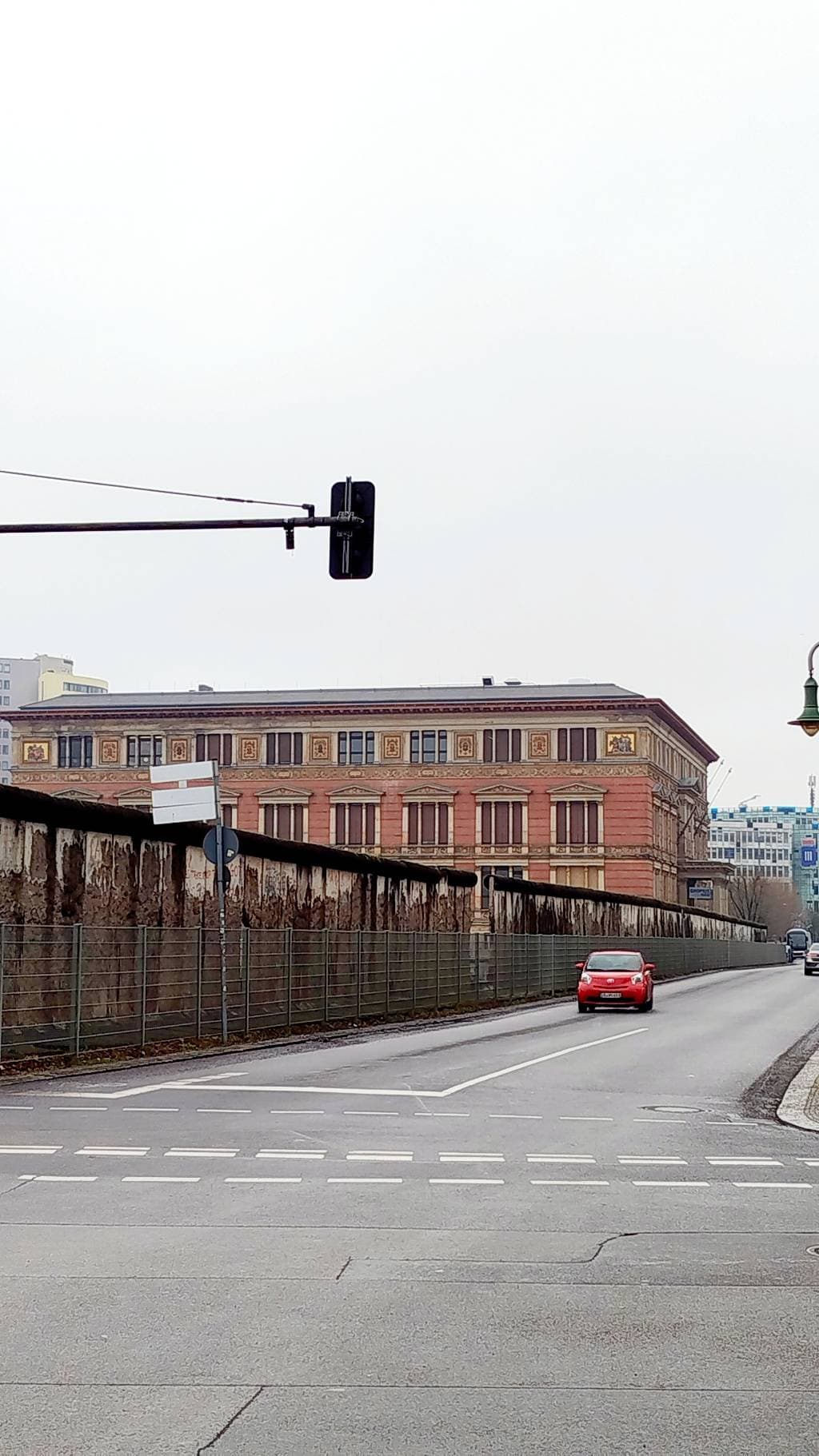 Dravvt
Scan it with your phone
Point your camera at the QR code
Gropius Bau: Before the Bauhaus – Audio guide

I’ll tell you the secrets of Gropius Bau. I guide you here with the map, or you can listen from home. What you see is not what you think, and knowing it is worth it. Some narrations are AI voices and others are real people.
Free5 min AI voiceArt
Audio in:EnglishSpanishGermanFrenchItalianPortugueseChinese
How it works
- Go there
the app walks you there from wherever you are. - Listen there or from home
it plays by itself when you arrive, or press play from wherever you are. In your language if it was recorded in it. - Keep discovering
the Berlin map has more gems like this one, and you can put them together in a tour.
What you'll discover
This building was bombed, forgotten, and almost demolished. Today it is one of the most important art spaces in Europe.
Its creator shared a surname with the founder of the Bauhaus. It's no coincidence. There is a family connection that few know about.
The Gropius Bau rose from its ashes with an incredible story. Come and I'll tell you about it from its halls.
About Gropius Bau
This building is called Gropius Bau. It was designed by an architect named Martin Gropius in 1881. It was a museum of decorative arts. One of the most elegant buildings in Berlin. Martin Gropius died a year before it was completed. He never saw it inaugurated. But his surname would continue to make history. His great-nephew, Walter Gropius, founded the Bauhaus 38 years later. The most influential design school of the 20th century.
Read the whole storyShow less
Look at the bases of the columns. These reliefs were designed by the sculptor Otto Lessing in 1881. What you see is a shield with tools of the decorative arts: a compass, a ruler, a painter's palette, surrounded by laurel branches. It's not random decoration. This building was the Royal Museum of Decorative Arts of Prussia, so the entire facade is itself a display of what it exhibited inside: ceramics, textiles, goldsmithing. Otto Lessing was one of the most important sculptors in Berlin. He also made the bronze doors of the Zeughaus, the old Prussian arsenal. Each column base has a different shield representing a different artistic discipline.
This headless figure on the staircase is one of the original sculptures from 1881. It represented an allegory of the arts, probably sitting next to a vessel symbolizing ceramics, one of the decorative arts the museum exhibited. During World War II, the Allied bombings and the street fighting in the last days of the Battle of Berlin in 1945 destroyed much of the building. The roof collapsed, the north facade was devastated, and these sculptures lost their heads, arms, and details. When the building was restored in 1978, a deliberate decision was made: the golden mosaics and decorative reliefs were meticulously reconstructed using historical photographs. But these sculptures were left exactly as they were. Broken. Incomplete. With shrapnel marks.
Do you see this is the other destroyed sculpture on the other side of the staircase? It also lost its head and much of its body in the 1945 fighting. They weren't left like this due to a lack of budget. It was a conscious architectural decision. The restorers wanted the building to tell its full story: the beauty of the Prussian Renaissance above, restored with precision, and below, at the entrance, these broken figures as a direct testimony of the destruction. If you look closely, you can see the bullet and shrapnel impact marks on the stone. It's a powerful contrast: an art museum guarded by two figures mutilated by war.>>Across the street, you have the Abgeordnetenhaus, the Parliament of the State of Berlin. It was built by the architect Friedrich Schulze between 1892 and 1899, also in the Italian Renaissance style. Originally, it was the House of Representatives of the Kingdom of Prussia. Here, in 1919, the Prussian State Assembly met for the first time after Germany abolished the monarchy at the end of World War I. During Nazism, Hermann Göring appropriated it as part of his Ministry of Aviation. During the Cold War, the German Democratic Republic used it as an office building. After reunification, in 1993, the Berlin parliament moved back here. The three flags you see are those of the European Union, Germany, and the state of Berlin with its bear.
Do you see this bronze statue? You might wonder who it is? It's the Freiherr vom Stein. Heinrich Friedrich Karl vom und zum Stein. The man who modernized Prussia. The sculpture was made by Hermann Schievelbein and was inaugurated in 1875. It was originally in Dönhoffplatz and was moved here in 2003. The four figures at the corners of the pedestal represent his virtues: Love of the Fatherland, Willpower, Piety, and Truth. The reliefs on the pedestal show scenes from the Wars of Liberation against Napoleon. Vom Stein was a minister of Prussia in 1807, just after Napoleon crushed the Prussian army in the battles of Jena and Auerstedt. At that moment of total crisis, Stein convinced the king to make radical reforms. His October Edict of 1807 abolished serfdom in Prussia, freeing thousands of peasants. In 1808, he created municipal self-government, giving citizens the right to elect their own local representatives for the first time. Napoleon considered him so dangerous that he intercepted one of his letters, declared him a personal enemy of France, and ordered all his properties confiscated. Stein had to flee into exile. By the way, the two buildings on either side of you can be visited. The Gropius Bau has contemporary art exhibitions that change each season, and the Abgeordnetenhaus has a free exhibition on the history of democracy in Germany.
Visiting Gropius Bau
- How to get there
- The closest stop is Abgeordnetenhaus (bus), 149 meters away. Other nearby stops include S Anhalter Bahnhof (bus) at 256 meters and Anhalter Bahnhof (metro/train) at 271 meters.
- Opening hours
- Saturday-Sunday 10:00-19:00; Monday, Wednesday-Friday 12:00-19:00.
- Entry
- Entry is required.
Frequently asked questions
What should I look for at Gropius Bau?
Look for the bases of the columns with reliefs designed by Otto Lessing in 1881, featuring a shield with tools of the decorative arts. The building itself is a historical monument and was originally the Royal Museum of Decorative Arts of Prussia.
What happened to the sculptures at the entrance?
The sculptures at the entrance were damaged during World War II. They were left in their damaged state during the restoration in 1978 to serve as a testament to the destruction of the war.
Who designed the Gropius Bau?
The Gropius Bau was designed by architect Martin Gropius in 1881. He died a year before its completion and never saw it inaugurated.
What is nearby Gropius Bau?
Nearby, you can visit the Abgeordnetenhaus, the Parliament of the State of Berlin, and the Topographie des Terrors, which is open daily from 10:00 to 20:00 except on certain holidays.
More audio guides in Berlin
 Gem · Audio guideBerlin: Bode Museum
 LightUp ToursEnglish · 5 min audioFree
 Gem · Audio guideBerlin: Markthalle NeunLightUp ToursEnglish · 6 min audio€0.99
 Gem · Audio guideBerlin: World Time Clock (Weltzeituhr)LightUp ToursEnglish · 5 min audioFree
 Gem · Audio guideBerlin: Neptune FountainLightUp ToursEnglish · 5 min audioFree

Reviews
No reviews yet. Be the first.