
Görlitzer Park
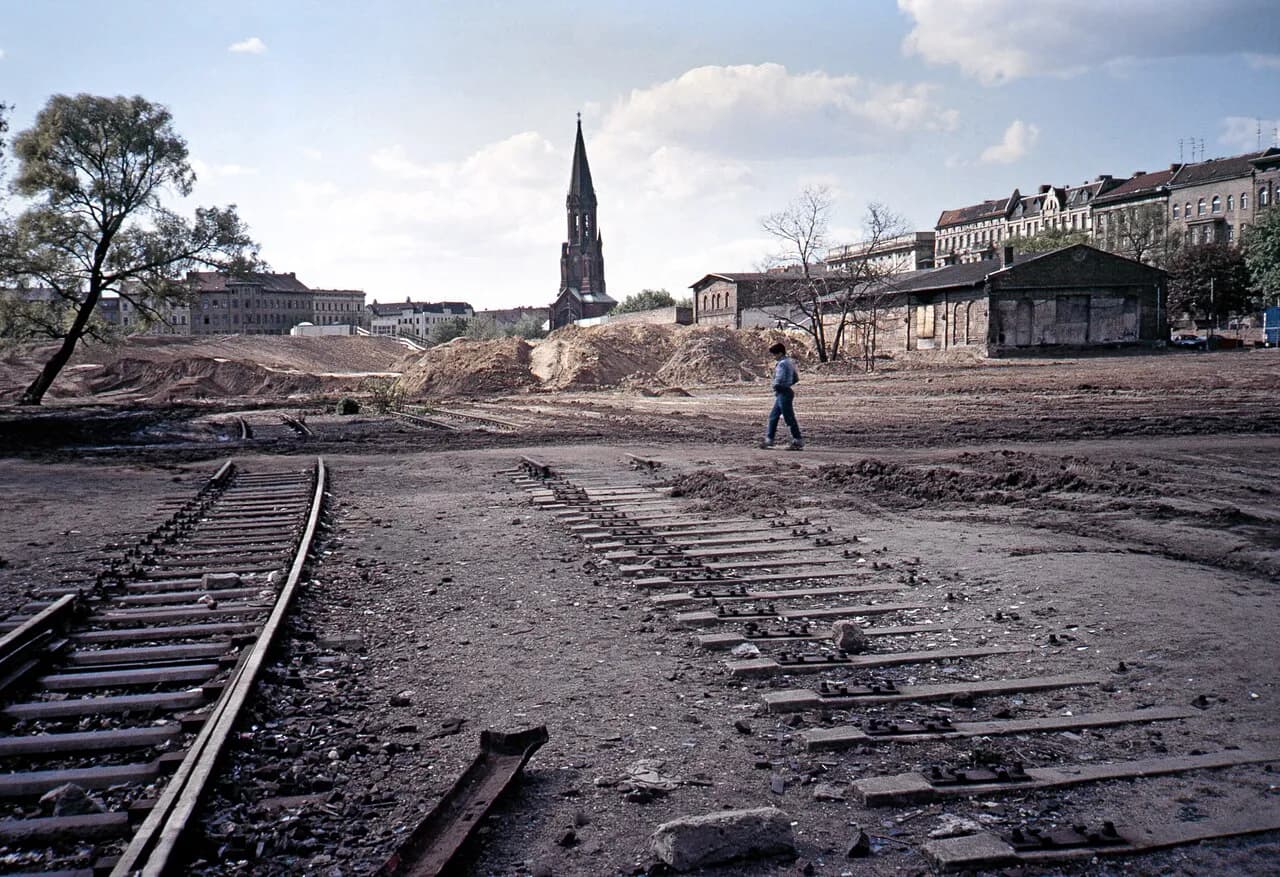 Von Georg Slickers - Selbst fotografiert, CC BY-SA 3.0
Scan it with your phone
Point your camera at the QR code
Görlitzer Park: Kreuzberg's Lost Station – Audio guide

I’ll tell you the secrets of Görlitzer Park. I guide you here with the map, or you can listen from home. What you see is not what you think, and knowing it is worth it. Some narrations are AI voices and others are real people.
€0.999 min AI voiceHistory
Audio in:EnglishSpanishGermanFrenchItalianPortugueseChinese
How it works
- Go there
the app walks you there from wherever you are. - Listen there or from home
it plays by itself when you arrive, or press play from wherever you are. In your language if it was recorded in it. - Keep discovering
the Berlin map has more gems like this one, and you can put them together in a tour.
What you'll discover
On the edge of Kreuzberg, where trains once connected Berlin to Vienna, a park now blooms on the ruins.
Görlitzer Bahnhof opened in eighteen sixty-five. In nineteen thirty-eight,
Hitler passed through its platform on his way back from seizing Czechoslovakia — a turning point before the war that would destroy everything.
The station was destroyed during the Battle of Berlin. By nineteen sixty-one, the Berlin Wall turned the site into a fenced wasteland.
In the nineteen eighties, squatters and artists moved in. Wild plants took over the tracks. The neighborhood fought for a park.
At the end of the nineteen eighties, the park was built on the ruins. They excavated the old underground railway tunnel a ghost from the station's past — and left it exposed, creating a crater in the middle like a natural amphitheater.
On the crater's edge stands a steel sculpture called Schreitender Mensch, fourteen meters tall, made from the old railway tracks.
From station to wasteland to wilderness to park. This is Görlitzer. Download the app and I'll take you there and show you around it.
About Görlitzer Park
Welcome to Görlitzer Park. You are standing where trains from Vienna and Breslau used to arrive over a hundred years ago.
Read the whole storyShow less
This was one of the busiest stations in Berlin, the Görlitzer Bahnhof, designed in Italian Renaissance style and opened in 1865.
As you explore the surroundings and if the weather is nice, you can sit in the park, and I'll tell you the stories of this place.
Afterwards, we'll move together through the park because I want to show you some interesting things.
This park is in Kreuzberg, which during the Cold War was on the West side of Berlin.
But be aware, Kreuzberg was surrounded by the Wall on three sides, it was basically a dead-end alley within the city. Just south of the park runs the Landwehr Canal, and right there the Wall used to run.
After the war, the GDR — the German Democratic Republic, which was East Germany, the communist side controlled by the Soviet Union — closed the station to passenger traffic in 1951.
Although the station was on the west side, the trains went east, to cities like Görlitz and Breslau, which were now on the other side of the Iron Curtain.
Without a destination, there was no reason to keep it open. And when the Wall came in '61, all hope of reconstruction died.
They demolished it piece by piece: the large platform hall in '62, the main building in '67. What remained was a huge wasteland in the middle of Kreuzberg.
And here's where the story gets interesting. For almost twenty years, this was no man's land. No clear owner, no use, no oversight.
Homeless people started arriving, then squatters. In '89, the Mutoid Waste Company landed here,
an anarchist collective of artists from London who made sculptures from the scrap left from the station. It was all creative chaos.
When they finally turned it into a park in the early '90s, the drug trade had already taken hold. That decades-long void, without control, without structure, created the perfect conditions. And to this day, Görli carries that reputation.
the most documented open-air drug markets in Germany. Mainly cannabis, also cocaine.
The sellers operate visibly, approaching visitors near the entrances and along the paths. They are mostly young men from West Africa, from Senegal, Gambia, Nigeria, many with asylum seeker status and a legal ban on working while their cases are resolved.
The park is also a community meeting point for them, a place with familiar faces, shared languages.
In May 2019, the park director, Cengiz Demirci, made a decision that caused a national scandal: he painted pink rectangles on the paths to designate zones where sellers could operate, with informal agreements attached: no selling to minors, no blocking paths, no aggressive approaches. The goal was to protect families and park runners from constant contact. The police, conservative politicians, and the federal drug commissioner condemned it immediately.
Demirci explained his reasoning: ninety percent of the sellers would stop selling if they were simply given work permits, because the drug market was not their first choice but their only legal income option. The pink zones disappeared, but the debate did not. In 2023, conservative mayor Kai Wegner proposed fencing the entire park, reducing its seventeen entrances to six locked gates, and closing it at night. The district mayor of Friedrichshain-Kreuzberg, Clara Herrmann, refused to cooperate.
Residents organized a campaign under the slogan Görli bleibt offen, Görli stays open, arguing that the closure would displace the problem to the surrounding residential streets without solving it, and would criminalize a vulnerable migrant community. The fence cost 1.8 million euros to build and costs 800,000 euros a year to maintain security. On March 1, 2026, Görlitzer Park began closing at night for the first time in its history: from ten at night to six in the morning in winter, from eleven to six in summer. The experiment has just begun.
But this park is much more than that story. It's a place where Kreuzberg residents have been building community for decades. So walk calmly, enjoy what you're about to discover, and hold on to what Görli truly is: an unfiltered piece of Berlin.>>Let's start walking towards the children's farm, the Kinderbauernhof. Yes, a real farm in the middle of Kreuzberg.
In the '80s, Kreuzberg was a neighborhood surrounded by the Berlin Wall on three sides. It was cheap, abandoned, and full of bombed-out buildings that were never rebuilt. The neighborhood kids grew up among concrete, wastelands, and rubble. There was no nature, no greenery, nothing.
In 1981, a group of parents, teachers, and neighbors of different nationalities said: these kids need to touch an animal, see a plant grow, get their hands dirty. They took a wasteland full of rubble inside Görlitzer Park — which at that time wasn't even a park yet, it was the ruin of the old train station — and started building a farm with their own hands, with help from the neighborhood's children and teenagers.
They funded it themselves at first. The idea was simple: turn a piece of dead city into something alive. A place where children of all cultures in the neighborhood — Turks, Germans, Arabs, all mixed — could learn about animals and nature without leaving Kreuzberg.
And this is not unique to here. Germany has a tradition of urban farms for children that started in Stuttgart in 1962 with the first Jugendfarm. The idea spread across the country and today there are more than nine hundred farms like this scattered throughout Germany. They call them Jugendfarmen or Kinderbauernhöfe: spaces within neighborhoods where children can have direct contact with animals, gardens, and nature, without leaving the city. It's a very German thing: the community organizes, volunteers maintain, and the neighborhood benefits.
And there it is, the Görlitzer one, more than forty years later, operating for free, maintained by volunteers and educators. That's what makes this place special: it wasn't made by the government, it wasn't made by a company. It was made by the residents of a forgotten neighborhood for their children.>>Now walk towards the center of the park. You'll notice that the ground dips down and forms a large, round hollow. Locals call it "the crater." This is no coincidence: a tunnel used to run underneath here connecting the neighborhoods on either side of the train tracks.
People used it to cross without having to go around the entire station. When they closed the station and decided to turn all this into a park, they demolished the tracks and buildings, but when excavating they found the tunnel walls still standing. Instead of tearing them down, the architects left them there on purpose and designed the park around them. That's why you have this particular sunken shape.
Look closely at the walls, they are the originals, they've been here for over a hundred years. Touch them if you want, you're touching a piece of the old Görlitz station. In summer this hollow becomes Görli's favorite spot: people come down with blankets, have picnics, play guitar, and sunbathe all afternoon. It's like a small open-air stadium but without seats or rules.>>Do you see a huge sculpture of rusted steel? It's called Schreitender Mensch, which means "walking man." It's fourteen meters tall and was made by Berlin sculptor Rüdiger Preisler in 1991 when he won a contest to place art in the park. Look closely: it has no body or head, just giant legs of steel beams welded in a zigzag, like taking a huge step. The artist made it this way on purpose, it represents a human walking without really knowing where to. And the rust you see is not neglect, Preisler corroded the steel from the start so that the sculpture would change over time.
Visiting Görlitzer Park
- How to get there
- The closest bus stop is Glogauer Straße, 251 meters away. Other nearby stops include Spreewaldplatz (392 meters), Ohlauer Straße (438 meters), and Lausitzer Platz (480 meters).
- Entry and price
- Entry to Görlitzer Park is free.
- What to look for on site
- The park features a Kinderbauernhof (children's farm), sports and playgrounds, two viewpoints, and a small lake.
Frequently asked questions
What is the history of Görlitzer Park?
Görlitzer Park was created in the late 1980s and early 1990s after the demolition of the old Görlitzer Bahnhof railway facilities. The park is located in Kreuzberg, a district that was surrounded by the Berlin Wall on three sides during the Cold War.
What is the Kinderbauernhof?
The Kinderbauernhof is a children's farm located within Görlitzer Park. It was established in the early 1980s by local parents and teachers to provide children with a place to learn about animals and nature.
What is the significance of the sculpture in the park?
The sculpture 'Schreitender Mensch' (Walking Man) by Rüdiger Preisler was installed in 1991. It features giant legs made of steel beams, symbolizing humanity walking without a clear direction.
Is Görlitzer Park safe to visit?
Görlitzer Park is considered a crime-prone area by the Berlin police, with most incidents occurring during the day. There is an ongoing debate about closing the park at night to address safety concerns.
What is the 'crater' in the park?
The 'crater' is a large, round depression in the park, originally part of a tunnel that connected neighborhoods across the railway tracks. The tunnel walls were preserved and incorporated into the park's design.
More audio guides in Berlin
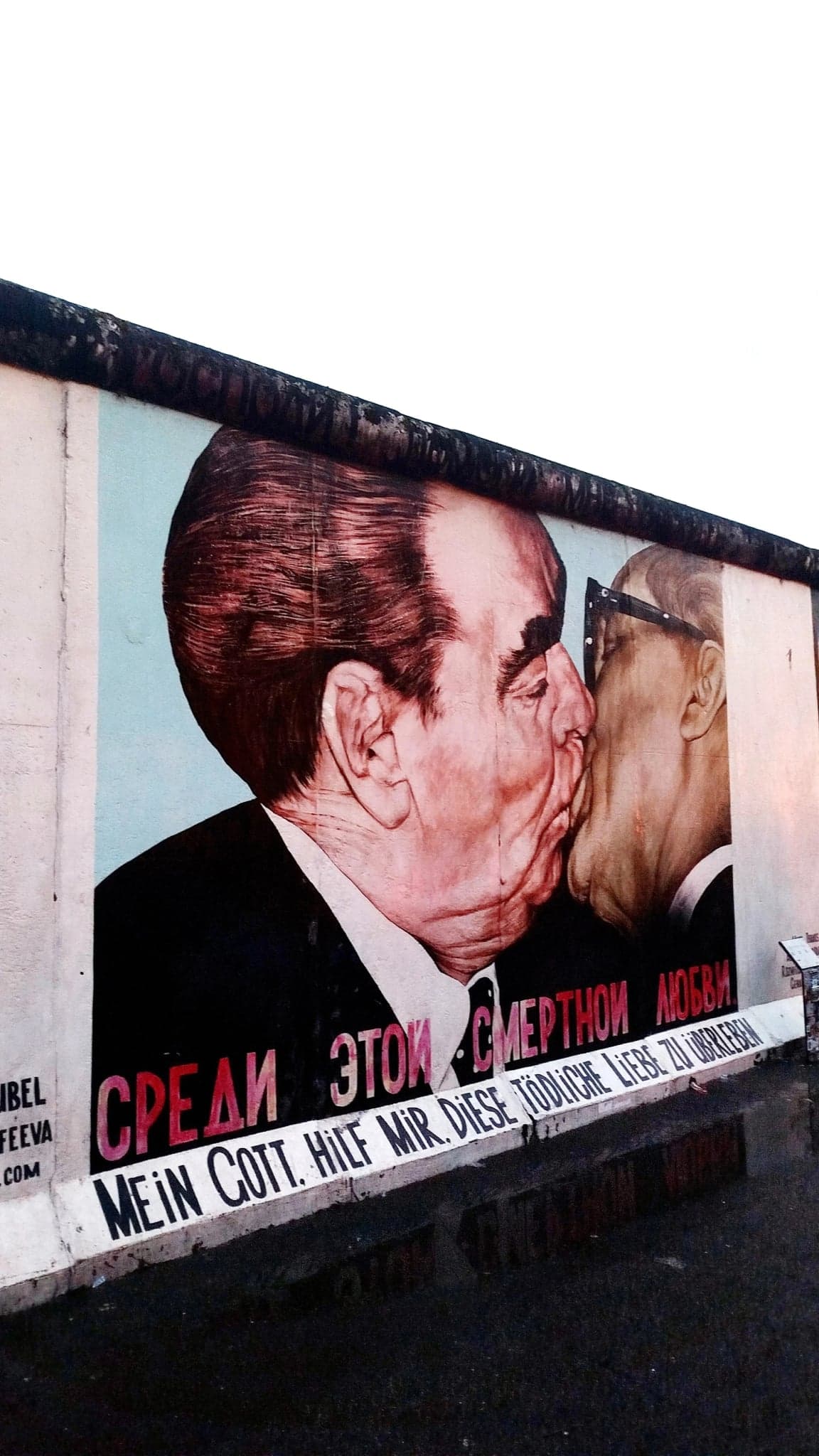 Gem · Audio guideBerlin: Mein Gott hilf mir, diese tödliche Liebe zu überleben
 LightUp ToursEnglish · 4 min audioFree
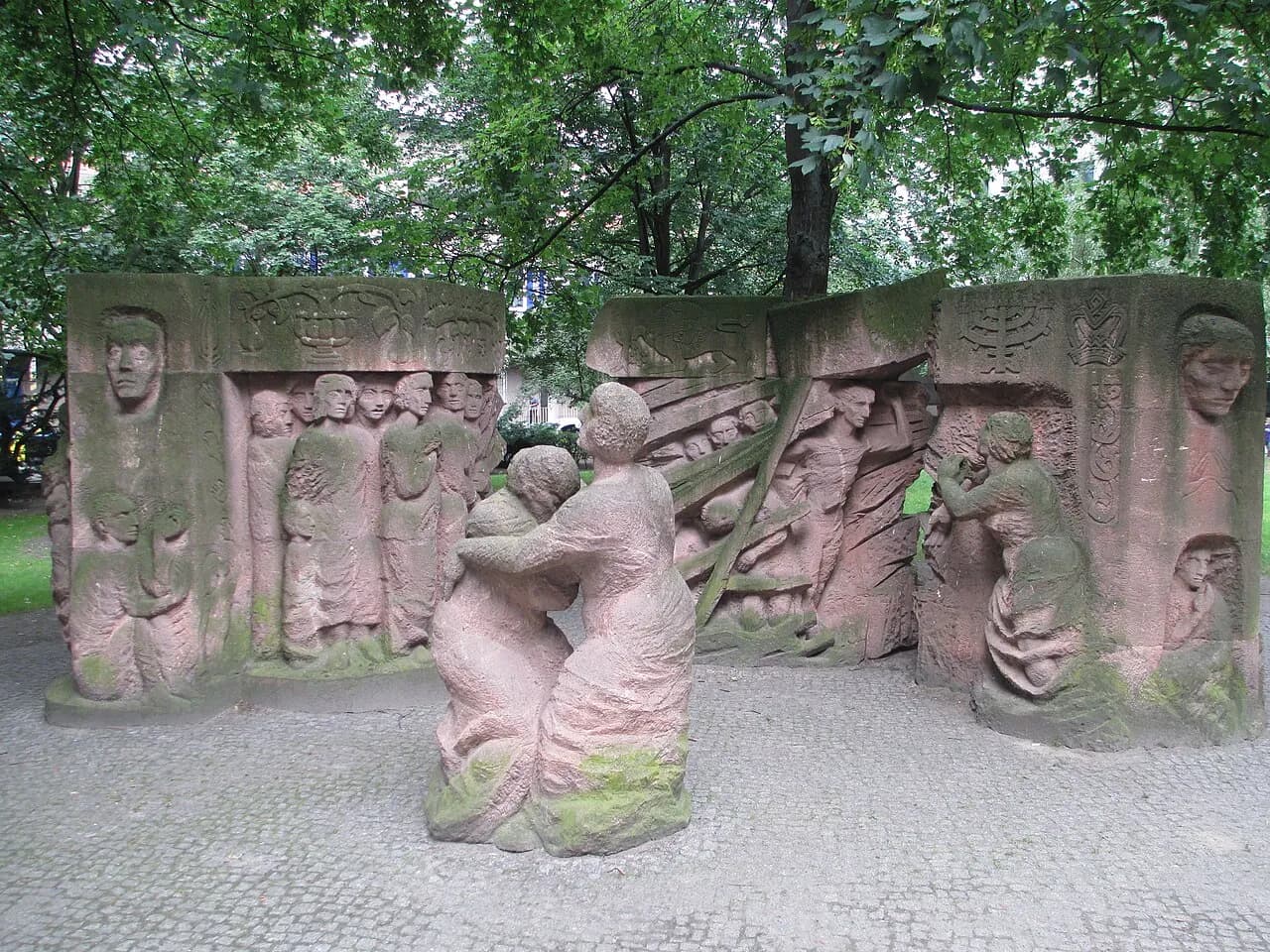 Gem · Audio guideBerlin: Block of WomenLightUp ToursEnglish · 4 min audioFree
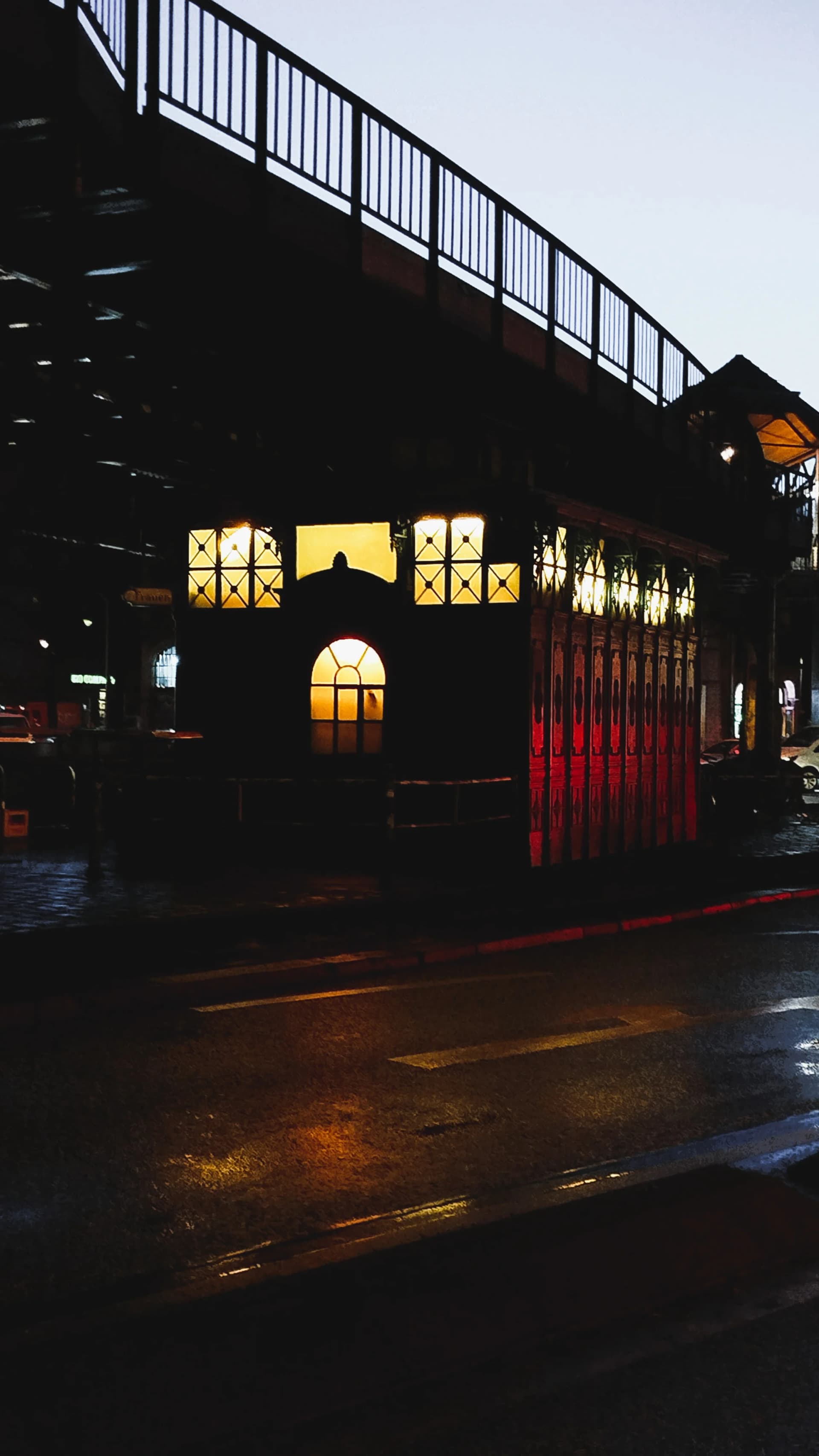 Gem · Audio guideBerlin: Burger Meister - BurgersLightUp ToursEnglish · 5 min audioFree
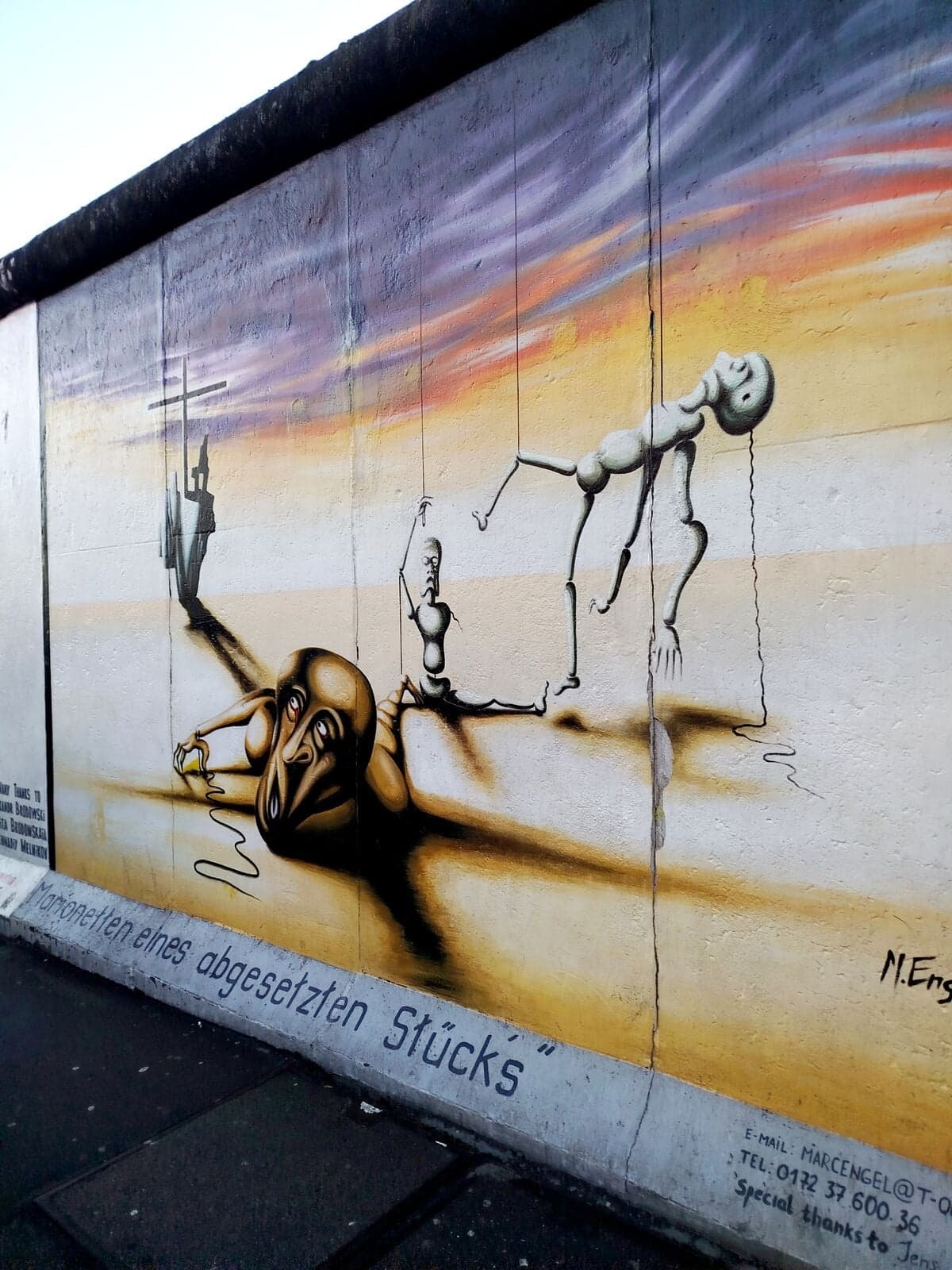 Gem · Audio guideBerlin: Marionetten eines abgesetzten StücksLightUp ToursEnglish · 4 min audio€0.99

Reviews
No reviews yet. Be the first.