
Osthafenspeicher (Spreespeicher) · Audio guide
Listen to the story of Osthafenspeicher (Spreespeicher)
Download the LightUp app or scan the QR with your phone. You'll hear this place narrated in your language — 7 languages available, AI and human voices. Free to start, walk Berlin at your own pace.
Scan with your phone
Point your camera at the QR code
Story
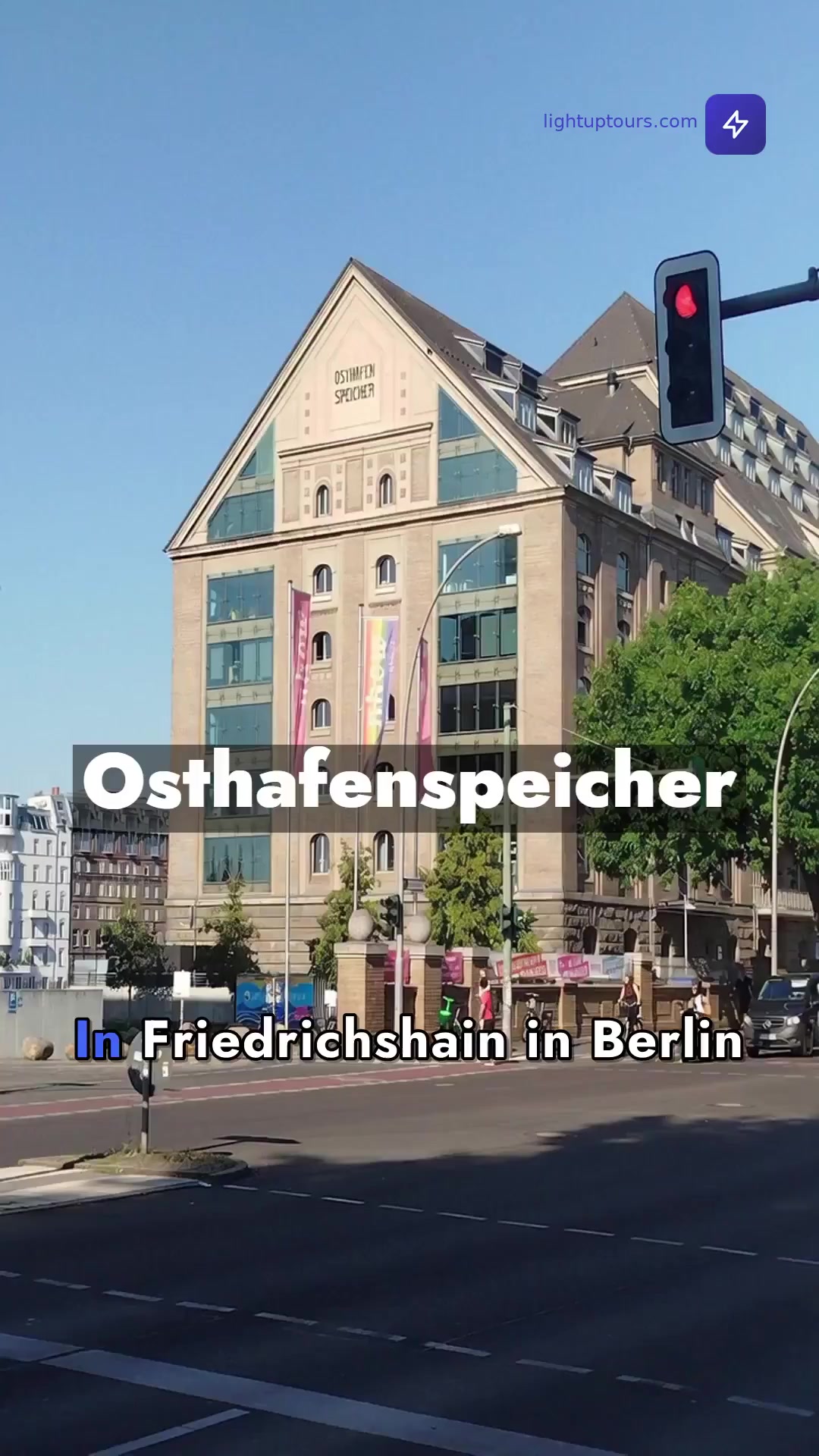
Junto al Spree, un granero de ladrillo con techo a dos aguas alza su gable por encima de la Stralauer Allee. Hoy tiene oficinas de medios. Pero en mil novecientos trece fue el corazón logístico de Berlín.
Seis de septiembre de mil novecientos siete: cavan los cimientos del Osthafen, el puerto industrial más grande que Berlín había tenido. Tardaron seis años en construirlo.
Friedrich Krause diseñó este almacén enorme de tres cuerpos para grano. Fritz Kritzler y Max Tischer dibujaron fachadas de ladrillo y piedra caliza dignas de la capital imperial.
El veintiocho de septiembre de mil novecientos trece inauguraron el puerto. Grúas, barcazas, toneladas de cereales moviéndose desde la barca al tren. Berlín respiraba por este muelle.
La guerra destruyó ochenta por ciento del puerto. Pero este edificio resistió. El Ejército Rojo ocupó los muelles en abril del cuarenta y cinco y vació los almacenes hasta el cuarenta y siete.
Hasta mil novecientos noventa, el Spreespeicher almacenó grano para Berlín Este. Con la reunificación, el puerto perdió su significado. El techo quedó parcialmente destruido durante años.
Lo restauraron en dos mil uno. Escucha el tour completo y te llevo a las entrañas de este gigante de ladrillo que movió el grano de toda una ciudad.
Visiting Osthafenspeicher (Spreespeicher)
- How to get there
- The closest stop is Stralauer Allee bus stop, 18 meters away.
Frequently asked questions
What is the historical significance of the Osthafenspeicher?
The Osthafenspeicher was part of Berlin's largest industrial port, designed to handle grain, coal, and goods from Eastern Europe. It played a crucial role in the city's logistics, especially during the early 20th century.
What happened to the Osthafenspeicher during World War II?
During World War II, the Osthafen suffered severe damage, but the Spreespeicher continued to function as a redistribution center for the Wehrmacht until April 1945.
How did the Osthafenspeicher change after the reunification of Germany?
After reunification in 1990, the Osthafen lost its economic significance as an industrial port. Restoration plans began in 2000, and the building was restored by 2001, now housing media companies and offering spaces for events.
What architectural features should I look for at the Spreespeicher?
Look for the original arched windows designed by architects Fritz Kritzler and Max Tischer, now part of the restored facade. The building's large gabled roof and the historic port crane from 1980 are also notable.
What can I find nearby the Osthafenspeicher?
Nearby, you can find the nhow Berlin, which is accessible and located just 71 meters away.
More audio guides in Berlin




Comments
No comments yet.