
Berlin Zoological Garden · Audio guide
Listen to the story of Berlin Zoological Garden
Download the LightUp app or scan the QR with your phone. You'll hear this place narrated in your language — 7 languages available, AI and human voices. Free to start, walk Berlin at your own pace.
Scan with your phone
Point your camera at the QR code
Story
In the heart of Berlin West stands the Zoological Garden. A place that hides a story of resilience and honor. Let me tell you what happened here.
Today it's full of families, children pointing at elephants and polar bears. But between eighteen seventy-eight and nineteen fifty-two, something darker happened here.
The zoo hosted twenty-five human exhibitions. They called them Völkerschauen. Indigenous peoples from Africa, the Americas, the Pacific—put on display alongside the animals.
Sixty-two thousand people came one Sunday in eighteen seventy-eight to see Nubians from the Nile valley, standing next to elephants and rhinoceroses.
One man from Cameroon, Martin Dibobe, arrived in eighteen ninety-six for an exhibition. But when it ended, he didn't leave. He stayed in Berlin. He learned a trade.
He became a locksmith. Then a mechanic. Then—the city's first Black train conductor for the BVG Berlin's transport authority.
In nineteen nineteen, Dibobe and seventeen others submitted a petition to the Weimar Assembly. They demanded equal rights for Africans in Germany. No second-class citizenship. No hierarchy by race. It was resistance written in ink.
The zoo still stands. The animals are still here.
But so is the memory of those who were caged, and the courage of those who refused to be forgotten. I take you there and tell you more stories about this place.
Visiting Berlin Zoological Garden
- How to get there
- The closest metro/train stop is Zoologischer Garten, 17 meters away. The closest bus stop is S+U Zoologischer Garten, 52 meters away.
- Entry and price
- The entry price for adults is 22.
Frequently asked questions
What is the significance of the Elephant Gate?
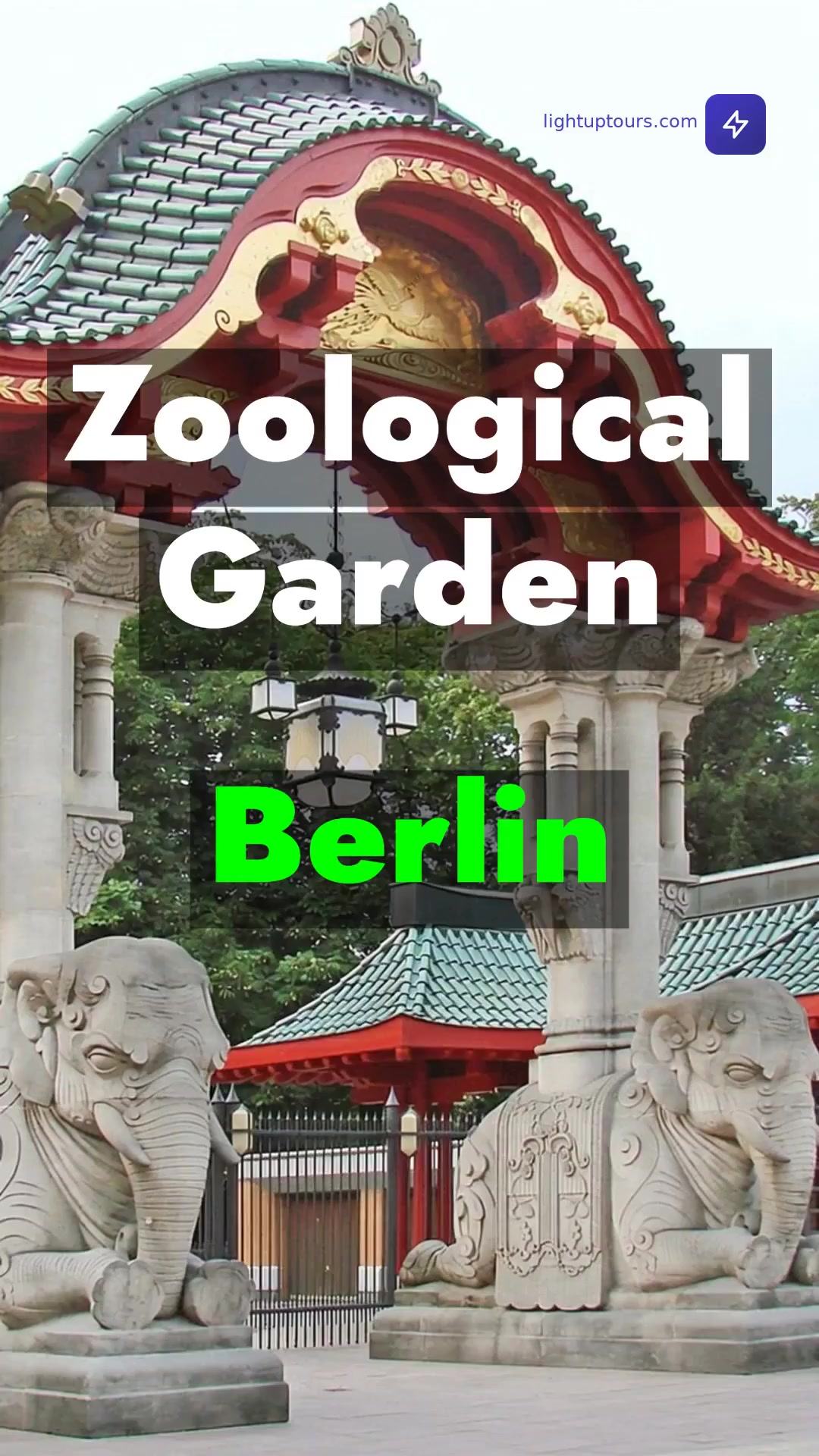
The Elephant Gate, or Elefantentor, is a replica of the original gate built in 1899. It features two life-sized stone elephants and a pagoda-style roof. The original was destroyed during World War II, and the current gate was reconstructed between 1983 and 1984.
What historical events affected the zoo during World War II?
During World War II, the Berlin Zoological Garden was heavily bombed, resulting in the destruction of many animal enclosures and the death of 30% of the animals. By the end of the war, only 91 of the original 3,715 animals survived.
What unique historical exhibitions took place at the zoo?
Between 1878 and 1932, the zoo hosted Völkerschauen, or 'people shows,' where indigenous people from Africa, South America, and Asia were exhibited. This included a group of Kawésqar people from Tierra del Fuego in 1881.
What was the role of Knautschke the hippo in the zoo's history?
Knautschke was a baby hippo who survived the bombings of 1943 thanks to the bravery of young Berliners. He became a beloved symbol of resilience for Berliners and had 35 offspring.
How did the Cold War affect the zoo?
After Berlin was divided, the Berlin Zoological Garden was in the western part, leading to the creation of the Tierpark in East Berlin in 1955. This resulted in a rivalry between the two zoos, each trying to acquire more exotic species.
More audio guides in Berlin


Comments
No comments yet.