
Arco de Cuchilleros · Audio guide
Listen to the story of Arco de Cuchilleros
Download the LightUp app or scan the QR with your phone. You'll hear this place narrated in your language — 7 languages available, AI and human voices. Free to start, walk Madrid at your own pace.
Scan with your phone
Point your camera at the QR code
Story
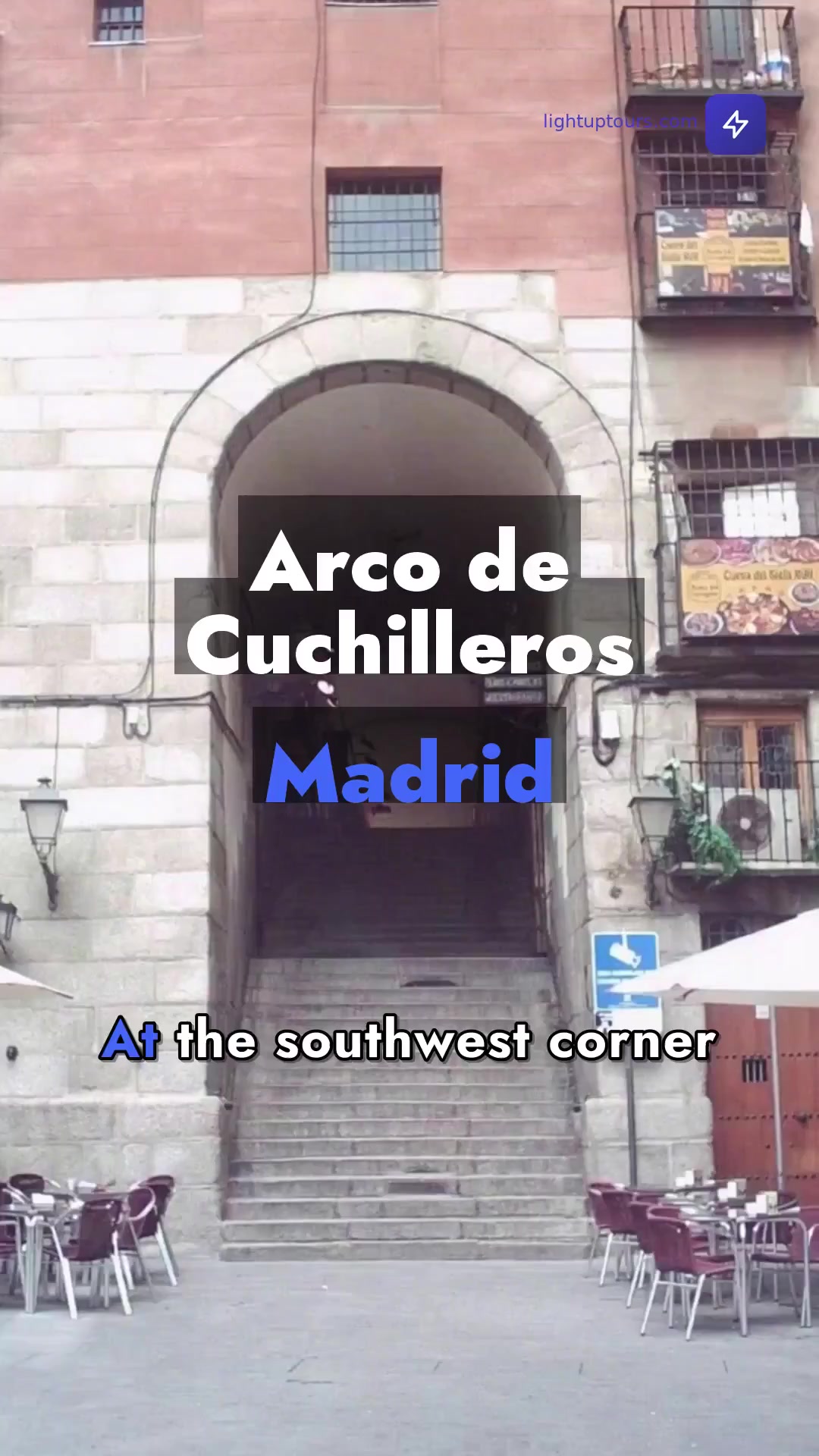
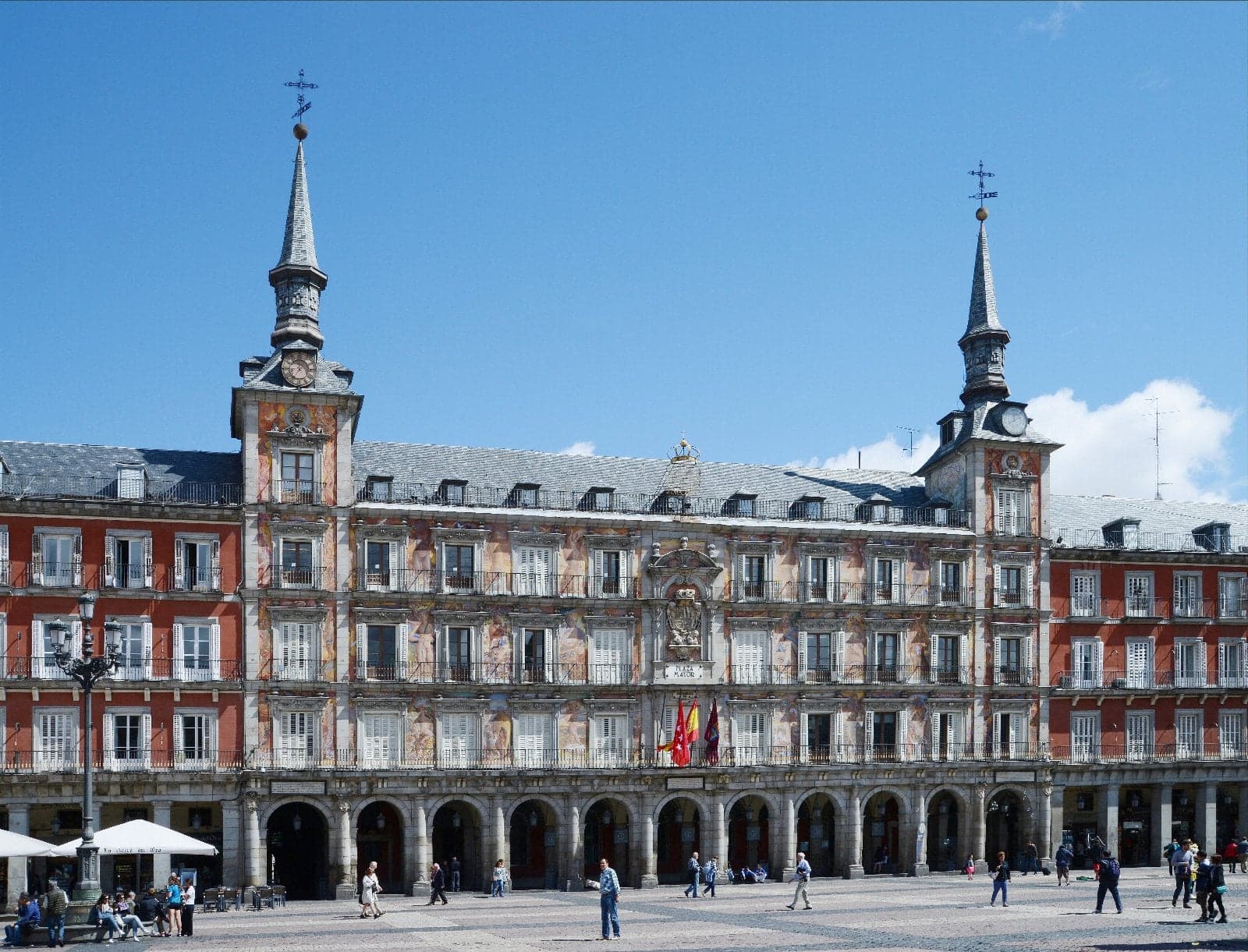
At the southwest corner of the Plaza Mayor, a stone arch rises like a tower, bridging the gap between two worlds.
In sixteen seventeen, Juan Gómez de Mora designed the stone staircase and the arch to connect the square with Cuchilleros Street.
Below, the knife makers and swordsmiths worked. It was said that no one could match them in all of Europe.
In seventeen ninety, a fire devastated the Plaza Mayor. Juan de Villanueva redesigned the arch and enclosed the square with arcades on all its sides.
In May of eighteen hundred eight, a friar named Antonio climbed the iron pulpit
and shouted to the people to rebel against Napoleon.
The arch remains one of the ten entrances to the Plaza Mayor. These stairs rise from the level of the knife makers to the Plaza de los Austrias.
Listen to the full guide and I'll tell you everything, from the sixteenth-century guild to the caves of the bandit Luis Candelas.
Visiting Arco de Cuchilleros
- How to get there
- The closest bus stop is Plaza Mayor, 115 meters away.
Frequently asked questions
What is the historical significance of the Arco de Cuchilleros?
The Arco de Cuchilleros was designed by architect Juan Gómez de Mora in 1617 to connect the elevated Plaza Mayor with the lower streets. It has witnessed significant events, including the 1790 fire and the 1808 uprising against Napoleon's troops.
What can I see around the Arco de Cuchilleros?
Nearby, you can explore the Casa de la Carnicería, Hostal La Macarena, and the famous restaurant Las Cuevas de Luis Candelas, which was once a hideout for the bandit Luis Candelas.
Why is the Arco de Cuchilleros unusually high?
The height of the Arco de Cuchilleros is due to the vertical distance it bridges between the Plaza Mayor and the old Cava de San Miguel, designed to accommodate the elevation difference.
What role did the Arco de Cuchilleros play in the 1808 uprising?
A friar named Antonio used the iron railing atop the arch, known as 'el púlpito', to call the people of Madrid to resist Napoleon's troops, leading to the uprising celebrated on May 2nd.
What is the architectural style of the Arco de Cuchilleros?
After the 1790 fire, architect Juan de Villanueva redesigned the arch in a neoclassical style, integrating it into the fortified access points of the Plaza Mayor.
More audio guides in Madrid


Comments
No comments yet.