 LightUp
5 Things to See at Castillo San Felipe de BarajasIs It Worth Going Inside?
If you’re heading to Cartagena de Indias, Castillo San Felipe de Barajas belongs on your list of places to visit. It’s impressive from the street, but what’s inside is in another league. These are the five things you can’t skip — and the last one is the one you really can’t miss.
Hours
7:00 am – 6:00 pm
Ticket
38,000 COP
Visit
1 h 30 min
Audio guide
On LightUp
Topics
The underground tunnels
The underground tunnels are stunning, and they’re what people remember most: narrow, dark passageways running through the inside of the hill. The first surprise is the temperature. Outside, Cartagena sits at 30 degrees, and suddenly you step into these cool tunnels and feel like you’ve been transported somewhere else. The sound changes too, and if you walk slowly you can even hear your own breathing.
One thing to know: only part of the tunnel network is open to the public, so don’t expect to walk all of it. What you can see is enough to understand why everyone comes out talking about them.
And if someone tells you one of them leads all the way to the Cathedral, just smile: it’s a much-repeated legend, but it isn’t true.
The ramps and the ramparts
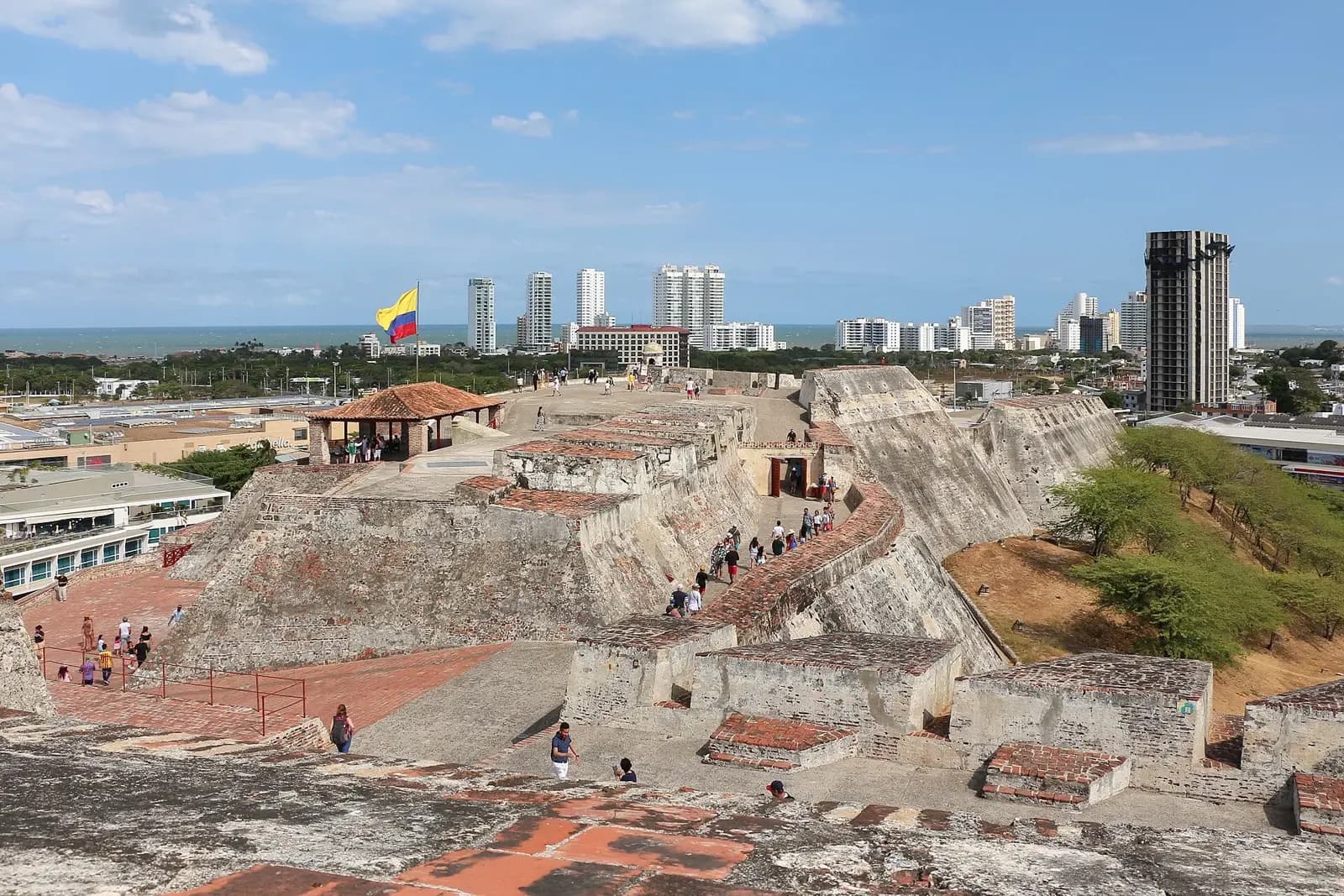
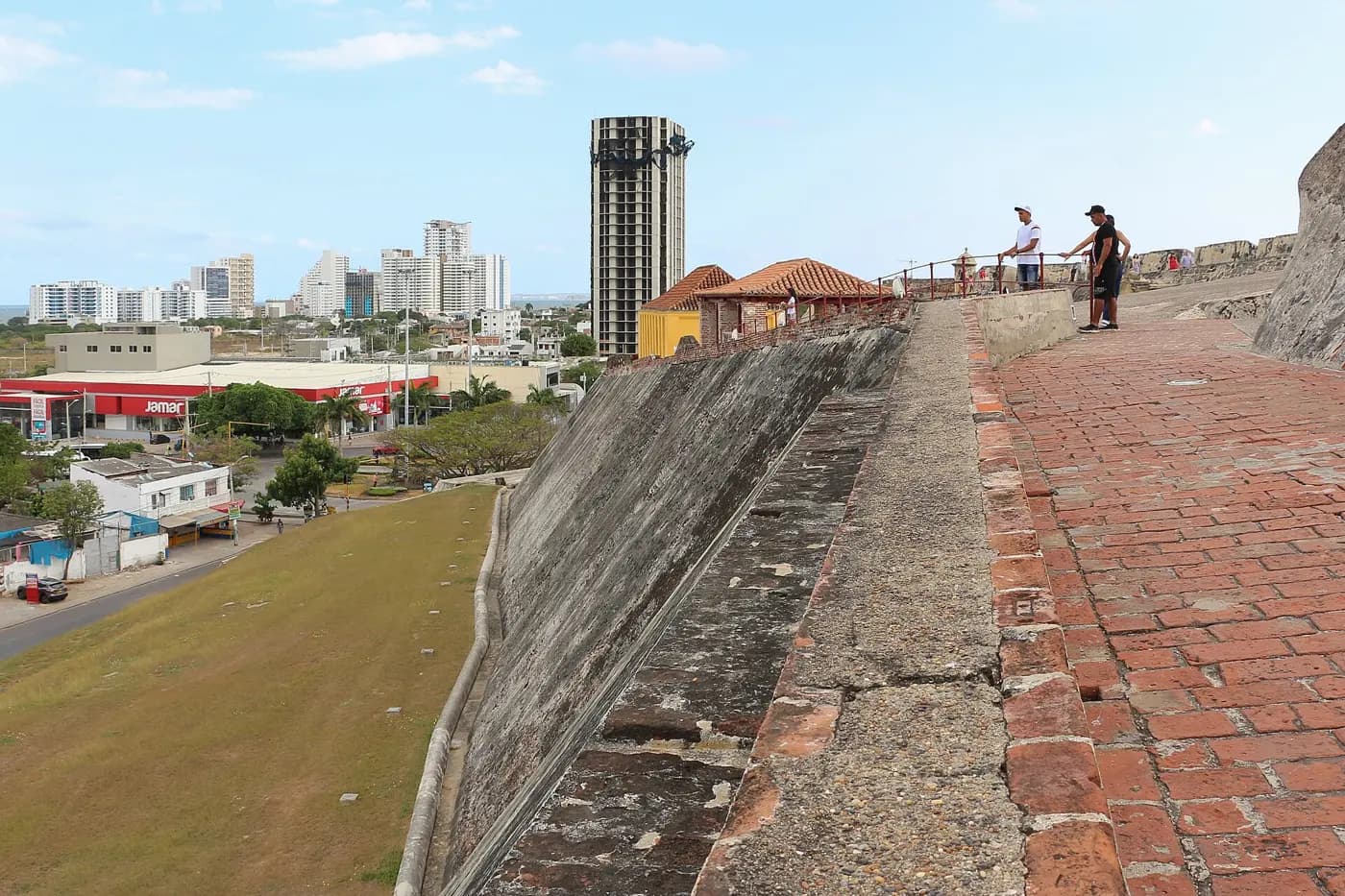
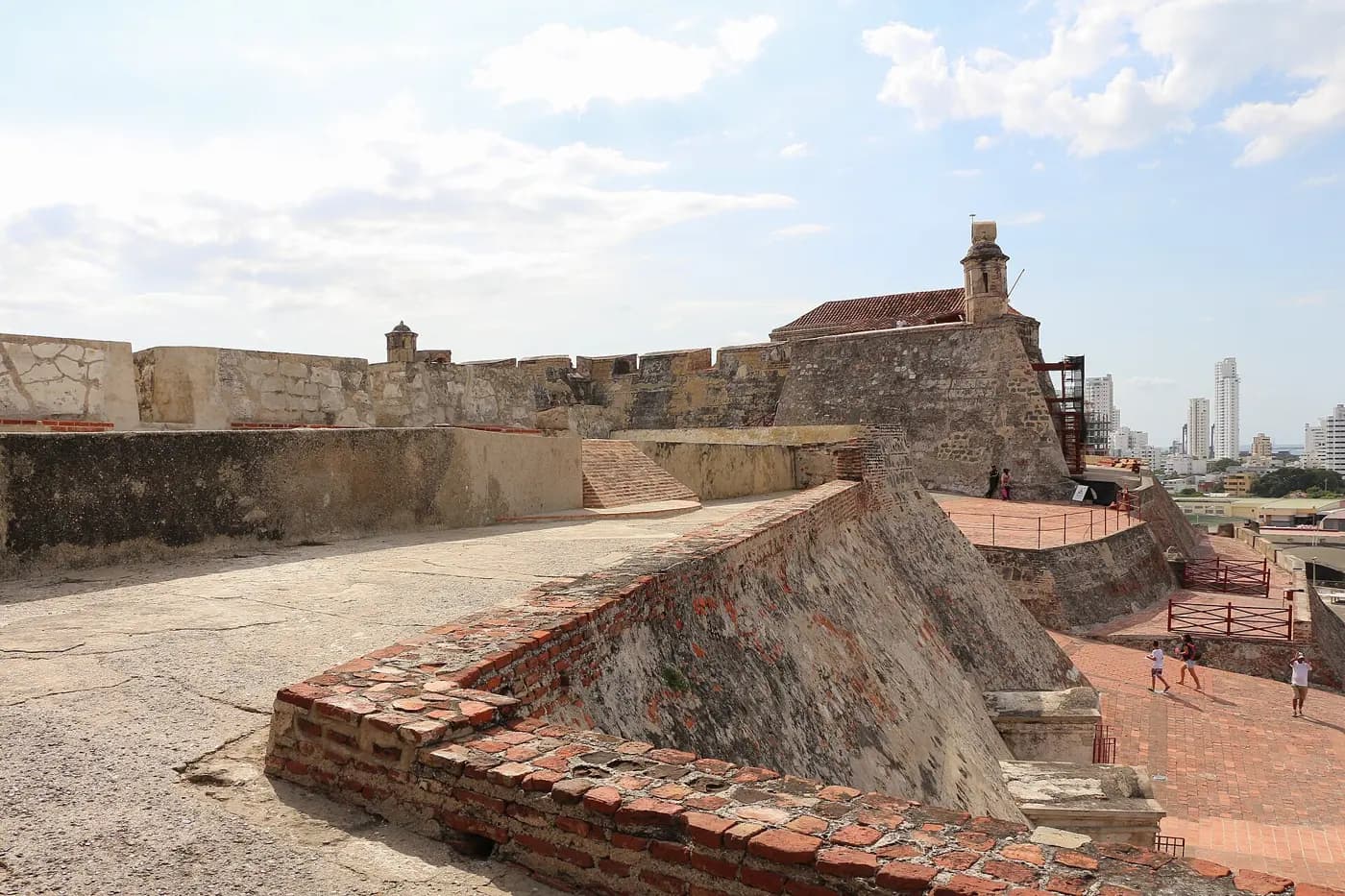
From the entrance below, the castle rises on the hill of San Lázaro, some 40 metres above the city, and the only way up is on foot, along its stone ramps. As you climb, the ramparts close in around you and the castle grows bigger and bigger: thick, sloping walls that seem to grow out of the hill itself. Take your time, enjoy the sea breeze and look back every now and then — the city slowly settles at your feet.
The sentry boxes and the batteries: where the cannons stood
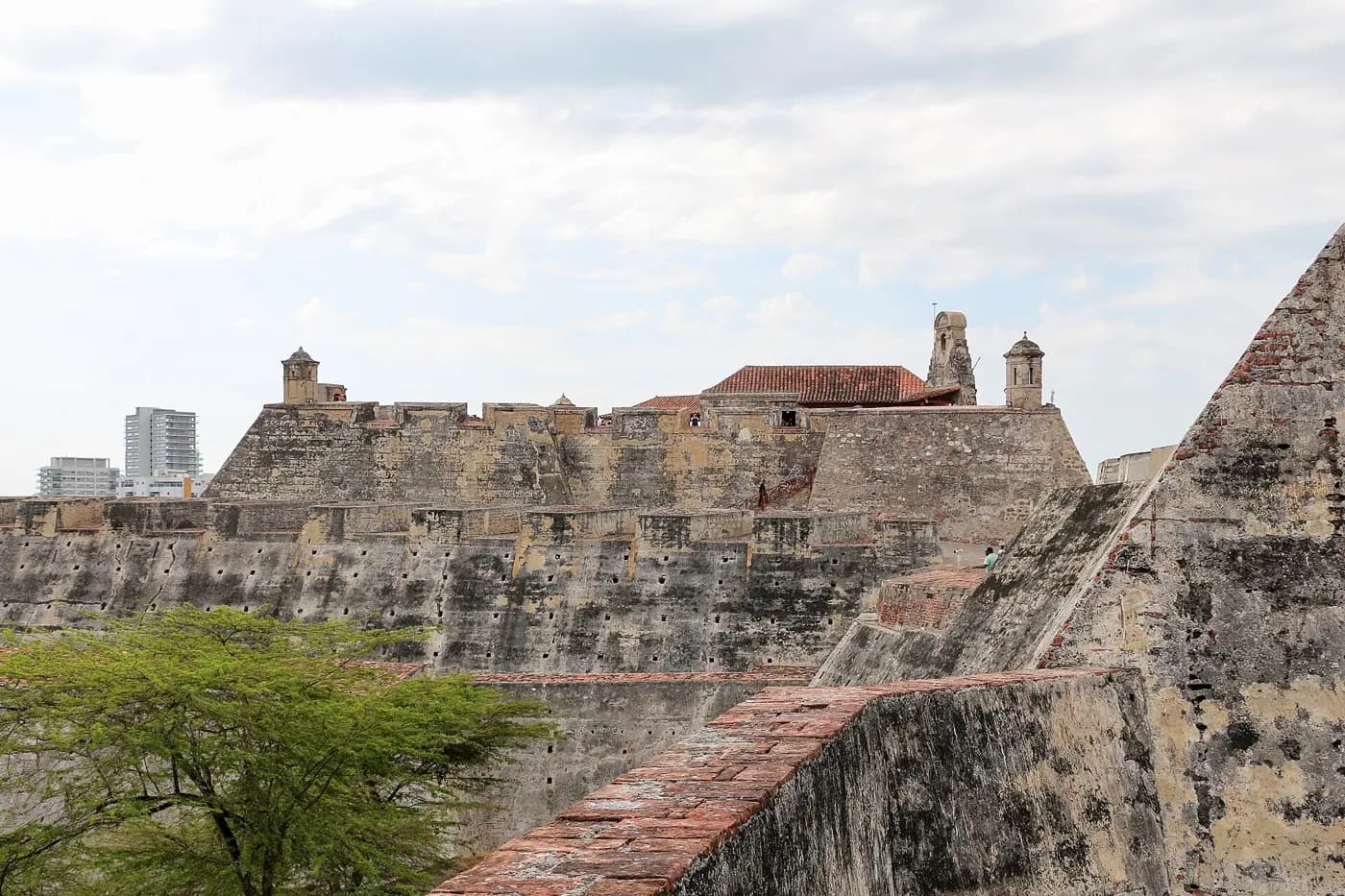
First, what’s a sentry box? It’s a small round turret jutting out from the corner of a wall, and it was the post of the sentinels, the soldiers who guarded the castle day and night. From there they kept watch over the sea, the bay and the roads leading into the city, sheltered from the sun, the rain and gunfire, peering through narrow slits without being seen. The ones at San Felipe are Renaissance in style, with dome-shaped roofs, and inside there’s barely room for one person. Lean out and look at the city the way they saw it: it’s no coincidence that the sentry boxes have become one of Cartagena’s symbols, and that almost everyone takes their souvenir photo here.
Around them are the batteries, the platforms where the cannons were placed. The castle has seven, and each has its own name: San Lázaro, Santa Bárbara, La Redención, San Carlos, Los Doce Apóstoles, La Cruz and el Hornabeque. Look out for them as you climb; Los Doce Apóstoles had the most firepower in the whole castle.
The view from the top
When you reach the very top, you understand why the climb was worth it. On one side lies the walled city with its tiled roofs; on the other, the towers of Bocagrande facing the sea, the hill of La Popa and a good stretch of the bay. With the wind in your face and the whole city in front of you, it’s one of the best viewpoints in Cartagena, especially late in the afternoon, when the light turns golden.
Hear its story as you walk
The stones are impressive, but they don’t tell you on their own what happened here. That story comes from a LightUp gem — that’s what we call our audio guides: the one for Castillo San Felipe de Barajas, a superb narration by Descubre Cartagena. You can tell they know their subject: the story hooks you from start to finish, and the ambient sounds drop you right into every moment. You listen on your phone, at your own pace, as you explore the castle.
Press play at the entrance, next to the statue of Blas de Lezo, while you wait in line, and you’ll reach the ramparts already knowing what you’re about to see.

Descubre Cartagena
Local guides in Cartagena de Indias · Castillo San Felipe audio guide
Audio guides on this stretch
Is it worth going inside?
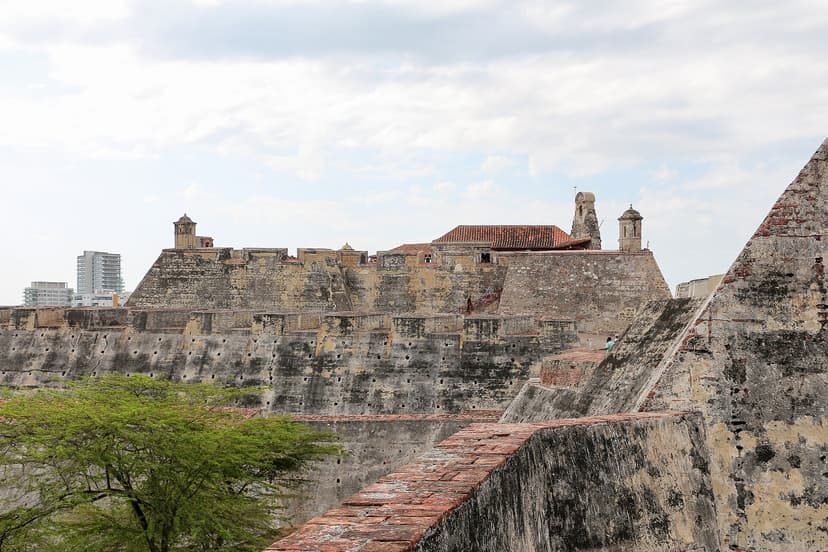
Yes, absolutely. From outside you only see an imposing wall; the coolness of the tunnels, the photo in the sentry box and the view from the top can only be experienced inside. Allow at least an hour and a half to explore it without rushing.
Go early or late in the afternoon: at midday the sun is fierce and there’s quite a climb. Bring water, a cap and comfortable shoes.
What to know before you go
Opening hours: open every day, from 7:00 a.m. to 6:00 p.m.
Price: in 2026 general admission costs 38,000 COP, and 33,000 COP for Colombians. Entry is free for Colombians over 62, children under 6 and, on certain Sundays of the year, all Colombians. Prices change every year, so check them at the ticket office.
Getting there: from Getsemaní it’s about a 15 to 20-minute walk, flat until the last stretch, which goes uphill. By taxi it takes 5 to 10 minutes from the historic centre. If you’re driving, there’s parking on Avenida Antonio Arévalo and another lot near the Zapatos Viejos monument.
At the entrance you’re greeted by the statue of Blas de Lezo, donated by Spain in 1955. Look closely: they called him «Patapalo» (“Peg Leg”) because he had lost a leg, an arm and an eye in earlier battles, and that’s exactly how the statue shows him.
Wheelchairs and reduced mobility: the lower areas can be visited via the ramps, but the tunnels and upper sections have stairs, uneven stones and narrow passages, and are very difficult or impossible in a wheelchair. If that’s your case, ask at the ticket office which route you can do.
Near the castle: the Zapatos Viejos
When you leave, walk a few steps to the Zapatos Viejos (Old Shoes) monument: a pair of giant boots inspired by the poem «A mi ciudad nativa» (“To My Native City”) by Luis Carlos López, Cartagena’s poet, who wrote that the city stirs in him «ese cariño que uno le tiene a sus zapatos viejos» (“the fondness one has for one’s old shoes”). People climb inside the boots for a photo, and it’s one of the quirkiest you can take home from Cartagena.
Photos: Bernard Gagnon, CC BY-SA 4.0, via Wikimedia Commons.
Audio guides in Cartagena
Stories of Cartagena by local guides, in their own voice or an AI voice


More from the blog

Audio Tours in Berlin: The Complete Guide to 5 Self-Guided Routes
The complete guide to self-guided audio tours in Berlin: 5 routes (Third Reich, the Wall, Kreuzberg, Reichstag, Museum Island), which one to pick, how to plan your days, and answers to every question. In 7 languages, at your own pace.
Read more →
Self-Guided Tours in Bogota: 3 Routes to Explore the Colombian Capital at Your Own Pace
Discover Bogota with 3 self-guided audio tours: Plaza de Bolivar and the Gold Museum, La Candelaria to Chorro de Quevedo, or the National Park and La Macarena. In 7 languages, at your own pace.
Read more →
Why Use Audio Tours: The Best Way to Explore Madrid
Audio guides have revolutionized tourism. Discover why self-guided audio tours are the preferred choice of travelers in Madrid, Berlin and cities worldwide.
Read more →
How to earn money as a guide on LightUp: audio guides and in-person tours
Sell audio guides, sell your in-person tours or do both. Here’s how each option works, how people book you and when you get paid.
Read more →
Self-Guided Audio Walking Tours: The Complete Guide to Exploring a City Your Way
The complete guide to self-guided audio walking tours: why they beat group tours, how they work, who they're for, how to pick a good one, mistakes to avoid, and a full FAQ. On foot or by bike, in 7 languages, at your own pace.
Read more →
What to See in Berlin in 3 Days on Foot: A Walkable Itinerary
A realistic 3-day Berlin itinerary on foot: Mitte and the historic centre, the Wall and the east, the Jewish quarter and Kreuzberg. Distances, times, when to take the U-Bahn, and free audio guides in 7 languages for every stop.
Read more →
Holocaust Memorials in Berlin: What to Visit and How to Understand It
A guide to Berlin's Holocaust memorials: the Memorial to the Murdered Jews of Europe, the Sinti and Roma memorial, Bebelplatz, the Topography of Terror and the Jewish quarter. A 3-hour walking route, what each place means, and free audio guides in 7 languages.
Read more →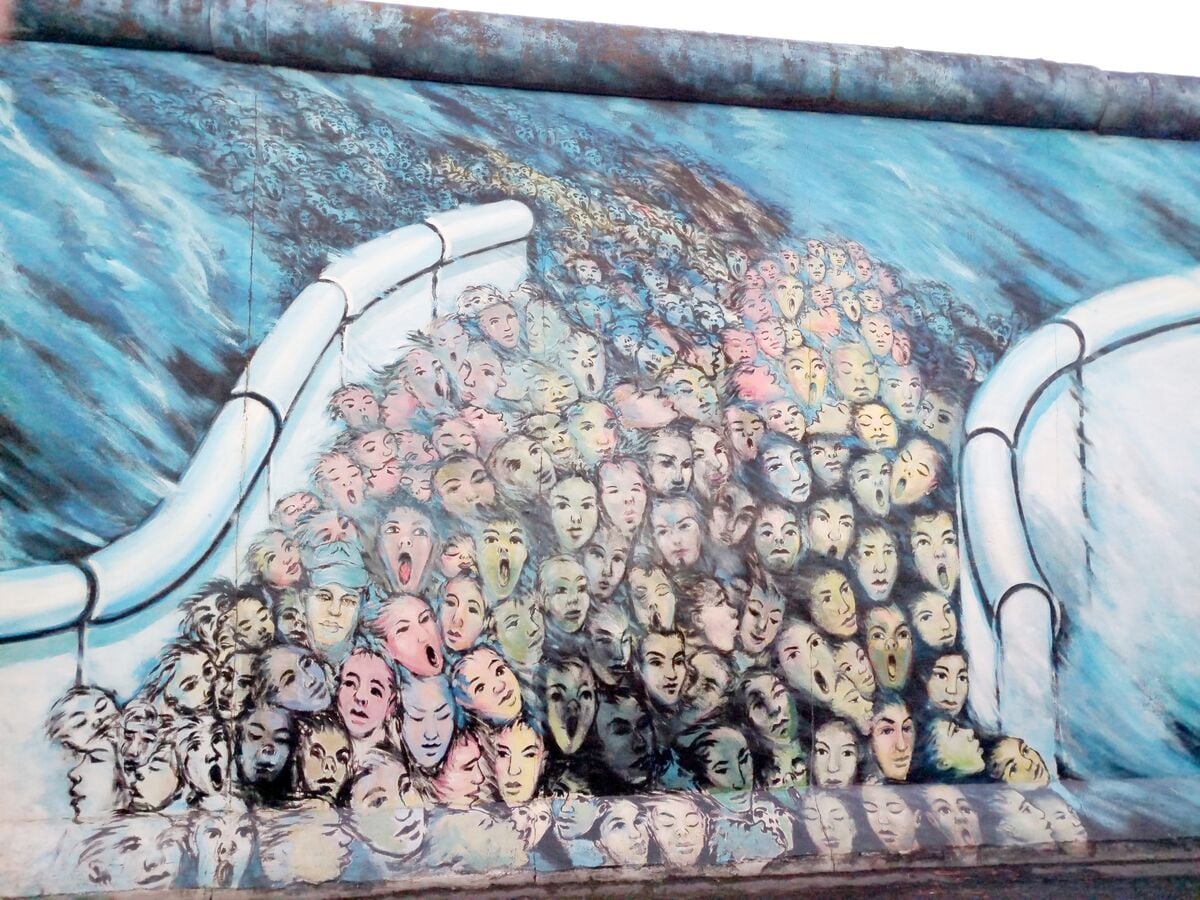
The East Side Gallery, Mural by Mural: What the Paintings Are Actually Saying
A guide to Berlin's East Side Gallery: what this stretch of wall really was, the stories behind the kiss, the Trabant and the faces of November, and a free audio walk along all 1.3 kilometres.
Read more →
Social Media for Tour Guides: The Complete Guide to Getting Found and Booked
The complete guide to social media for tour guides: why reels are the new word-of-mouth, which platform to be on, what to post, the mistakes to avoid, and how to turn views into bookings. With a full FAQ.
Read more →
Your guide page on LightUp: one link for your audio guides, your tours and your bookings
Your tours with a booking button, your audio guides, a QR code and messages through LightUp: everything you do on one page.
Read more →
Discover a city with someone who lives there: audios and tours with local guides
Hear the stories of every place with gems and, if the guide runs in-person tours, book one with them. You pay nothing until the guide accepts.
Read more →

Take LightUp with you
Self-guided audio tours, offline-ready. Download the app and start exploring.