
Zur Wilden Renate · Audio guide
Listen to the story of Zur Wilden Renate
Download the LightUp app or scan the QR with your phone. You'll hear this place narrated in your language — 7 languages available, AI and human voices. Free to start, walk Berlin at your own pace.
Scan with your phone
Point your camera at the QR code
Story
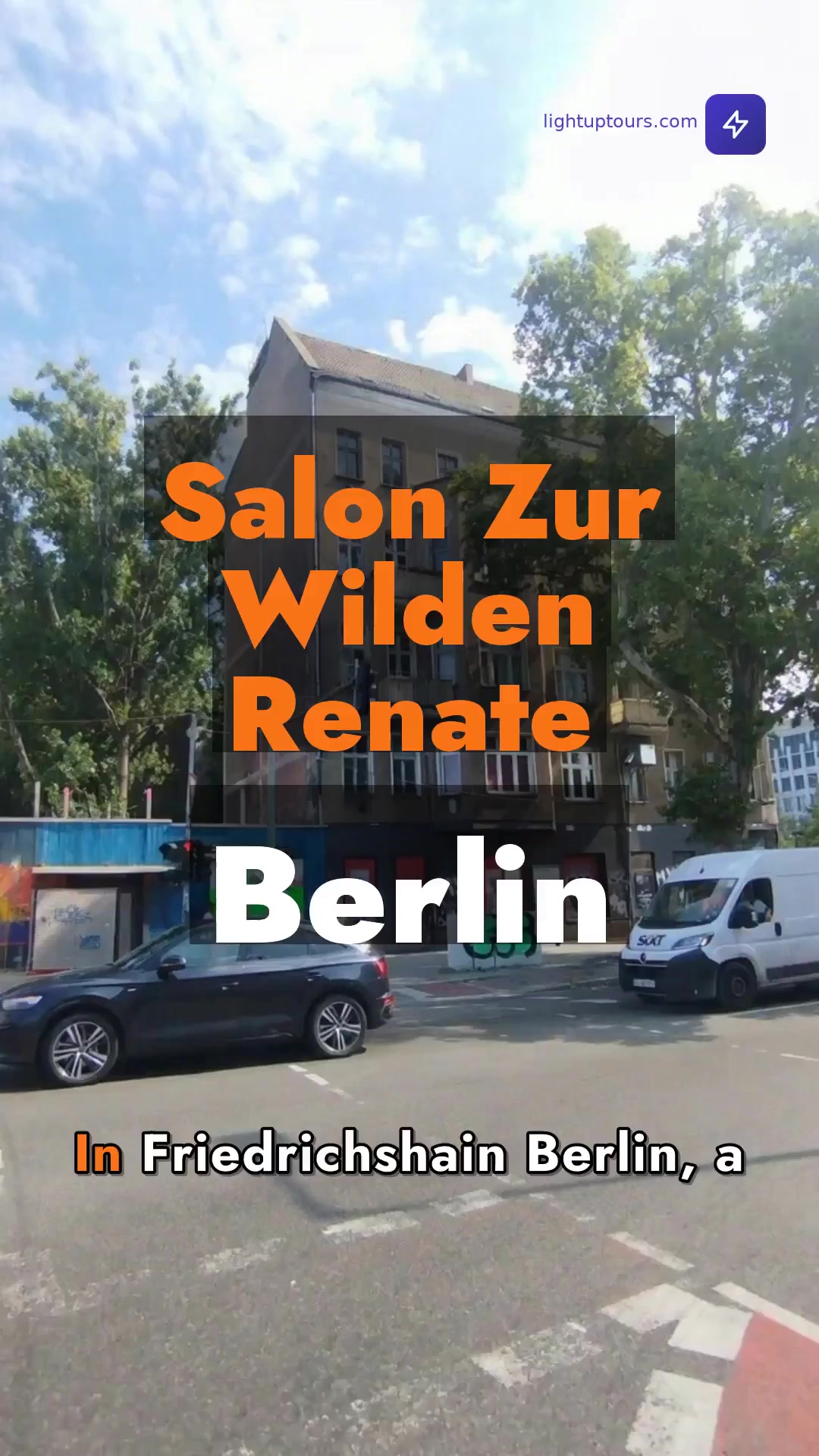
In Friedrichshain Berlin, a dilapidated building with uneven windows and fallen plaster hides a techno labyrinth. The building looks as it did a hundred years ago. But let me tell you how it all started.
Stralau was a fishing village on the banks of the Spree. Over time and with industrial growth, it went from being a water-surrounded village to what you see today.
In 2007, squatters and artists transformed it into Zur Wilden Renate. A factory of techno and endless nights where each room is different.
This place was built when Berlin tripled its population in thirty years. The industry needed workers, and workers needed somewhere to live.
Narrow stairs, overcrowding, courtyards without light. But it survived World War II and the Wall.
When the Wall fell, property rights were up in the air. Owners reappeared out of nowhere.
Years of legal vacuum. Squatters took every available corner, including this place.
Renate has several dance floors spread across different levels: the black room, the green room, the red room. Outside, a garden with a boat hanging between the trees.
In 2024, it was announced that it would close at the end of 2025. The rent had tripled in ten years. But it still operates today.
From Miethaus to legendary club. Listen to the full guide and I'll tell you the history of this place from the nineteenth century to now.
Visiting Zur Wilden Renate
- How to get there
- The closest bus stop is Markgrafendamm, 192 meters away. Other nearby stops include Glasbläserallee (242 meters), Krachtstraße (311 meters), and Persiusstraße (447 meters). The nearest metro/train stop is Treptower Park, 459 meters away.
Frequently asked questions
What is the history of this building?
The building was originally part of the industrial neighborhood of Stralau, which transformed from a fishing village to an industrial area in the mid-19th century. It survived World War II and the division of Berlin, remaining a quiet part of East Berlin until the fall of the Berlin Wall.
What can I see inside Zur Wilden Renate?
Inside, you will find several dance floors spread across different levels, each with its own unique sound and character. The building retains its historical architecture with high, narrow windows and rusty balconies.
What is the significance of the graffiti on the blue fence?
The graffiti depicts a sun over water, adding a splash of color to an area that has historically been grey and functional. It symbolizes the transformation and resilience of the space.
What is the atmosphere like at Zur Wilden Renate?
The club is known for its imaginative and budget-friendly decor, with creaky floors and squeaky stairs. Each room has its own distinct character, contributing to a unique and eclectic atmosphere.
Are there any artists working in the building?
Yes, the building also houses artist studios where painters, sculptors, and musicians work during the day in the same spaces where others dance at night.
More audio guides in Berlin


Comments
No comments yet.