
Kottbusser Tor · Audioguía
Escucha la historia de Kottbusser Tor
Descarga la app LightUp o escanea el QR con tu móvil. Escucharás este lugar narrado en tu idioma — 7 idiomas disponibles, voces de IA y humanas. Empieza gratis y recorre Berlin a tu ritmo.
Escanea con tu teléfono
Apunta tu cámara al código QR
Historia
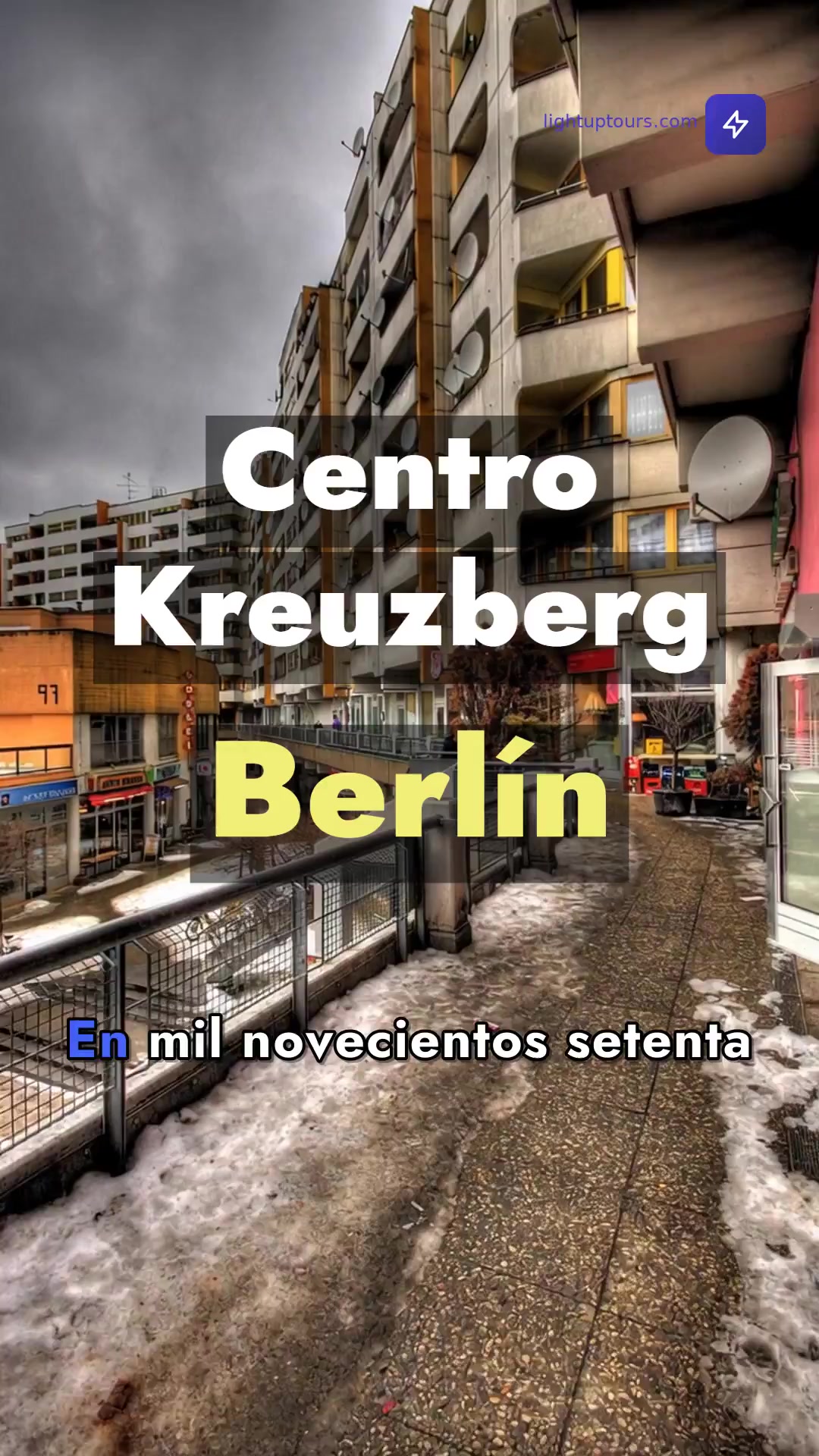
In nineteen seventy-four, they dropped this brutalist tower into the heart of Kreuzberg.
Satellite dishes now cling to every balcony. This is Neues Kreuzberger Zentrum.
this corner of Berlin hides secrets. Let me tell you how this building tried to move a community and became its monument instead.
Nineteen sixty-one. The Wall went up. Kreuzberg was suddenly a dead end, pressed against concrete and barbed wire.
West Berliners fled to safer neighborhoods.
West Germany needed workers for its factories. They signed a deal with Turkey the same year.
Come for two years, work, go home. Nobody wanted Kreuzberg because of the Wall. So the Turks moved in.
Nobody forced them. But they were told two years, unmarried men only. The two years stretched. Families followed.
By nineteen seventy-three, around eight hundred and sixty thousand Turkish workers had settled across West Germany.
One of those workers' kids was Hakan Durmuş. Born in Kreuzberg, joined the Thirty-Six Boys gang, went to prison. Inside, he heard a rap song and decided to become Killa Hakan.
By the early seventies, Kreuzberg was crumbling. Old tenements, Turkish families, radical squatters. The city called it blight.
They designed the Neues Kreuzberger Zentrum as part of a modernization plan. Clean lines, new commerce, higher rents.
The goal was renewal. The result would be displacement.
Push out the poor, bring in the middle class. But the Turkish families moved into the new tower anyway.
Satellite dishes on every balcony. Grocers opened below.
The building meant to gentrify them became their anchor.
Today Killa Hakan still raps about Kreuzberg Thirty-Six. The tower meant to gentrify the neighborhood became their anchor instead. The city wanted renewal. The Turks stayed anyway.
Follow us for more hidden stories of Berlin's streets.
Visitar Kottbusser Tor
- Cómo llegar
- La estación de metro más cercana es Kottbusser Tor, a 21 metros.
- Entrada y precio
- La entrada es gratuita.
- Horario
- Abierto siempre.
Preguntas frecuentes
¿Qué es el Neues Kreuzberger Zentrum?
El Neues Kreuzberger Zentrum es un edificio de doce pisos construido entre 1969 y 1974, diseñado por Werner Jokisch y Johannes Uhl. Originalmente parte de un plan de renovación urbana, hoy es un bloque anti-gentrificación y hogar de una comunidad diversa.
¿Por qué se llama Kottbusser Tor?
El nombre Kottbusser Tor proviene de una antigua puerta de la muralla aduanera construida por el rey Federico Guillermo I entre 1734 y 1737. Esta puerta conectaba Berlín con la ciudad de Cottbus.
¿Qué sucedió durante la Batalla de Fraenkelufer?
En diciembre de 1980, la policía intentó desalojar una casa okupa, lo que llevó a manifestantes a levantar barricadas en Kottbusser Tor. Este evento marcó a Kreuzberg como un barrio de resistencia.
¿Qué puedo encontrar en la plaza hoy en día?
Hoy en día, Kottbusser Tor es un mercado vibrante con frutas, shishas, y música en varios idiomas. Es una zona de delito prioritario, pero también un refugio para quienes no caben en el Berlín turístico.
¿Cuál es la historia del döner kebab en Berlín?
El döner kebab berlinés fue popularizado por Kadir Nurman en 1972, cerca de la estación Zoo. Aunque no lo patentó, su creación se ha convertido en un alimento básico en Alemania, vendiéndose más que en Turquía.
Más audioguías en Berlin

.webp&w=3840&q=75)


Comentarios
Aún no hay comentarios.