
"Alte Nationalgalerie" Old National Gallery · Audio guide
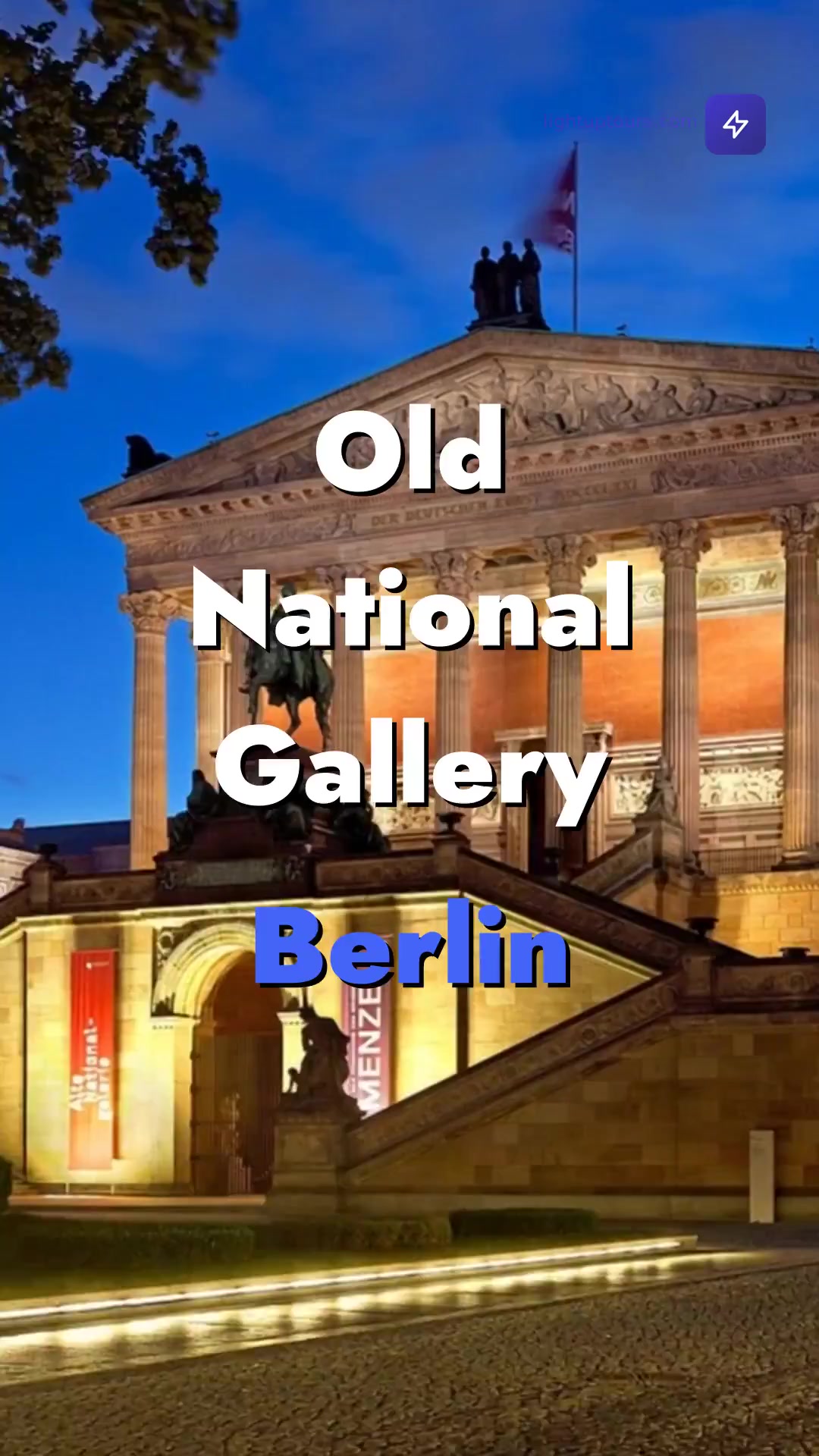
Listen to the story of "Alte Nationalgalerie" Old National Gallery
Download the LightUp app or scan the QR with your phone. You'll hear this place narrated in your language — 7 languages available, AI and human voices. Free to start, walk Berlin at your own pace.
Scan with your phone
Point your camera at the QR code
Story
This is the old National Gallery in Berlin, a gallery that holds art the Nazis tried to burn. Paintings they called degenerate.
In nineteen thirty-seven, the Nazis staged the Entartete Kunst exhibition. Degenerate Art. They put modern paintings on display to mock them.
Jewish painters.
Modernists.
Cubists.
They called it un-German. Unhealthy. And ordinary Berliners came to laugh at what the gallery had once fought to preserve.
But decades before, in eighteen sixty-three Paris, Manet painted Olympia. A nude woman staring back at the viewer.
No mythological excuse. Just modern Paris. Just raw truth. The public was scandalized. Cafés. Dancers. Prostitutes. Nudes lounging beside clothed men. Everyday modern life. This is what the Nazis would later call degenerate.
On the other side, a Black servant offering flowers. Her name was Laure. In that time, this kind of reality—a Black woman painted as she was, not as exotic fantasy—was not common in painting. Manet showed her simply. A moment of honesty.
In nineteen thirty-seven, they confiscated thousands of works from German museums. More than twenty thousand paintings seized. Some sold abroad. Others destroyed.
Then came the Allied bombs. Berlin was destroyed. The Alte Nationalgalerie was hit. Paintings were hidden underground. Some lost forever. Others buried near Alexanderplatz.
After the war, the gallery was rebuilt. Berlin was divided. The museum stood in East Berlin. And slowly the collection returned. Impressionists beside German Romantics. Modern art next to classical masters. Today the Alte Nationalgalerie holds what survived. What the Nazis tried to erase. What the bombs couldn't destroy.
Visiting "Alte Nationalgalerie" Old National Gallery
- How to get there
- The closest stops are Am Kupfergraben (tram) at 258 meters, U Museumsinsel (bus) at 291 meters, and S Hackescher Markt (tram) at 295 meters.
- Visit duration
- A visit typically takes around 2 hours to explore the gallery and its collections.
- Entry and price
- Entry for adults is priced at 14.
- Opening hours
- Open from 10:00 to 18:00, closed on Mondays.
- What to look for
- Don't miss the works of Monet, Renoir, Manet, Friedrich, Menzel, and Schinkel. The building itself is a neoclassical masterpiece.
Frequently asked questions
What is the historical significance of the Alte Nationalgalerie?
The gallery showcases 19th-century art and has survived wars, dictatorships, and political division. It is now a UNESCO World Heritage site.
What are the highlights of the collection?
Key highlights include works by Monet, Renoir, Manet, Caspar David Friedrich, and Adolph Menzel. Notable pieces include Friedrich's 'The Monk by the Sea'.
Who were Hugo von Tschudi and Ludwig Justi?
Hugo von Tschudi and Ludwig Justi were directors who expanded the gallery's collection with French Impressionists and Expressionists, despite opposition from the Kaiser.
What happened to the gallery during World War II?
In 1944, the building was bombed, and its collections were evacuated to safe locations. The gallery partially reopened in 1949, still in ruins.
What nearby attractions can I visit?
Nearby, you can find the statue of Friedrich Wilhelm IV. von Preußen, the Löwe sculpture, and the Bogenspannerin statue, all within 50 meters.
More audio guides in Berlin


Comments
No comments yet.