
Spitteleck
 Gunnar Klack
Scan it with your phone
Point your camera at the QR code
Berlin History at Spittelmarkt: the Spitteleck – Audio guide

I’ll tell you the secrets of Spitteleck. I guide you here with the map, or you can listen from home. What you see is not what you think, and knowing it is worth it. Some narrations are AI voices and others are real people.
Free4 min AI voiceHistory
Audio in:EnglishSpanishGermanFrenchItalianPortugueseChinese
How it works
- Go there
the app walks you there from wherever you are. - Listen there or from home
it plays by itself when you arrive, or press play from wherever you are. In your language if it was recorded in it. - Keep discovering
the Berlin map has more gems like this one, and you can put them together in a tour.
What you'll discover
There is a building in Berlin that nobody photographs, that does not appear in the tourist guides, and that most people pass by without looking.
But it has been telling one of the city's most intense stories for decades.
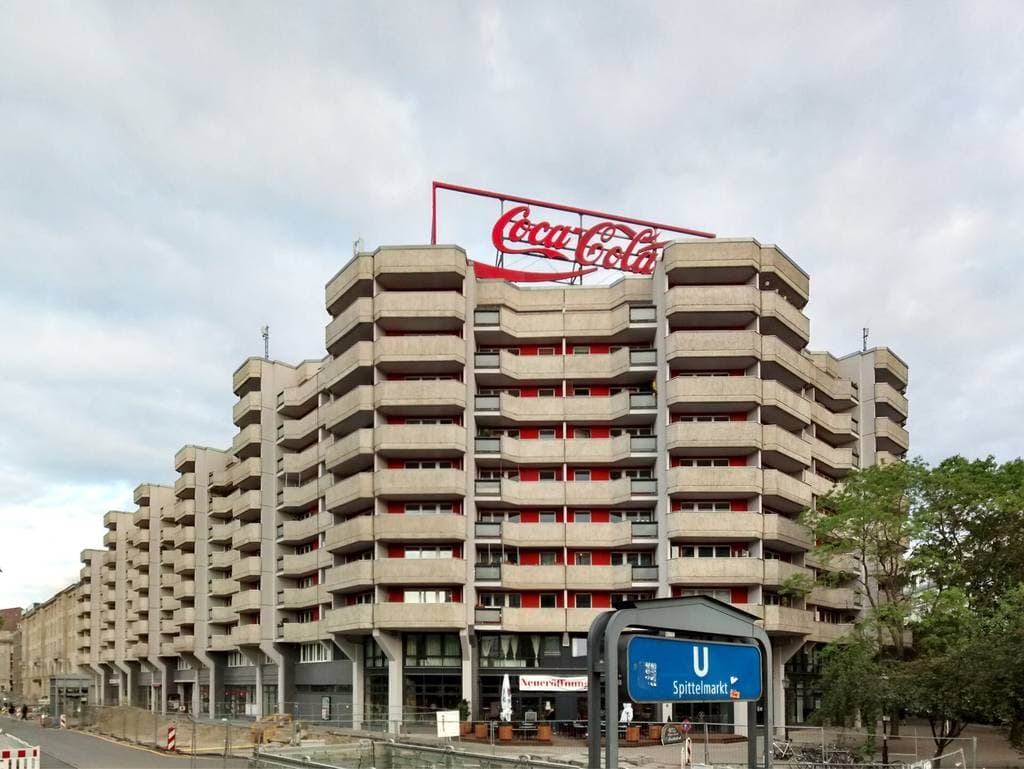
On its facade, children playing and flowers are carved into the concrete. On its roof, there is a Coca-Cola sign.
And between those two things fits the entire history of divided Germany, the Cold War, and reunification. Let me tell you the story.
About Spitteleck
Look at the ground you're walking on. This square is called Spittelmarkt and for centuries it has been one of the liveliest spots in Berlin.
Read the whole storyShow less
The name comes from Spital, the old word for hospital. Here, around the year fourteen hundred, a church and a hospital were built outside the city walls to serve travelers, merchants, the poor, and the sick.
Around that hospital, a market grew. Around the market, a city grew. By the eighteenth century, it was one of the most important commercial squares in Berlin.
The name evolved with the place. Getraudenhospital, Hospital, Spital, Spittel. And so it remained: Spittelmarkt.
Then came the war. The bombings and the final battle for Berlin in nineteen forty-five reduced centuries of city to rubble.
What followed was not a reconstruction. It was a political decision about what kind of city the GDR wanted to be.
In the sixties and seventies, the answer was clear: nothing old matters. Look to the west, those huge and monotonous blocks are the Leipziger Straße complex. The historical layout, erased. The urban memory, erased.
Spittelmarkt remained like a scar. The name was left, the U-Bahn station, and the emptiness. That emptiness was also an opportunity.
You are standing in front of one of the most interesting buildings in Berlin. Most people pass it by. Welcome to the Spitteleck.
It was built between nineteen eighty and nineteen eighty-five. The architect was Eckart Schmidt, using prefabricated concrete panels, the same system that raised thousands of gray blocks throughout the GDR. But this one would be different.
Schmidt decided to listen to the place. He studied the historical layout of the streets and respected the height of the buildings that once stood here. The curve of the building is not a whim, it is the echo of what existed before.
Look at the facade closely. Animals, flowers, figures of children carved directly into the concrete. Brutalism with a soul.
Inside there were two hundred ninety-five apartments, a daycare, two shops, and a restaurant. A small city within the city.
In nineteen eighty-six, the Spitteleck won the Berlin Capital Architecture Prize. The GDR awarding a building that respected its own urban past. A small gesture, a huge turn.
Then the wall fell. And in nineteen ninety-one, something new appeared on the roof of this building. A red, bright, unmistakable sign. Coca-Cola.
One of the first large Western advertisements installed in the former territory of the GDR. Here, in this building that socialism had awarded three years earlier. Hardly could capitalism have chosen a more symbolic place.
The sign is still there today. Socialism below, capitalism above. Berlin in a single image.
Visiting Spitteleck
- How to get there
- The closest metro/train stop is Spittelmarkt, 24 meters away. The nearest bus stop is U Spittelmarkt, 45 meters away.
- Entry and price
- Entry is free.
- Opening hours
- The site is always open.
Frequently asked questions
What is the history of Spittelmarkt?
Spittelmarkt has been a vibrant point in Berlin for centuries, originating around a church and hospital built in the 1400s. It evolved into a major commercial square by the 18th century.
What happened to Spittelmarkt during and after World War II?
The area was heavily bombed during the war, leaving it in ruins. Post-war, the GDR decided not to reconstruct the old city but to build new structures, leading to the creation of the Leipziger Straße complex.
What is unique about the Spitteleck building?
Built between 1980 and 1985 by architect Eckart Schmidt, Spitteleck respects the historical street layout and building heights. Its facade features detailed carvings, making it a unique example of 'brutalism with soul.'
Why is there a Coca-Cola sign on Spitteleck?
In 1991, a Coca-Cola sign was installed on the roof, symbolizing the shift from socialism to capitalism after the fall of the Berlin Wall. It remains a striking image of Berlin's history.
More audio guides in Berlin
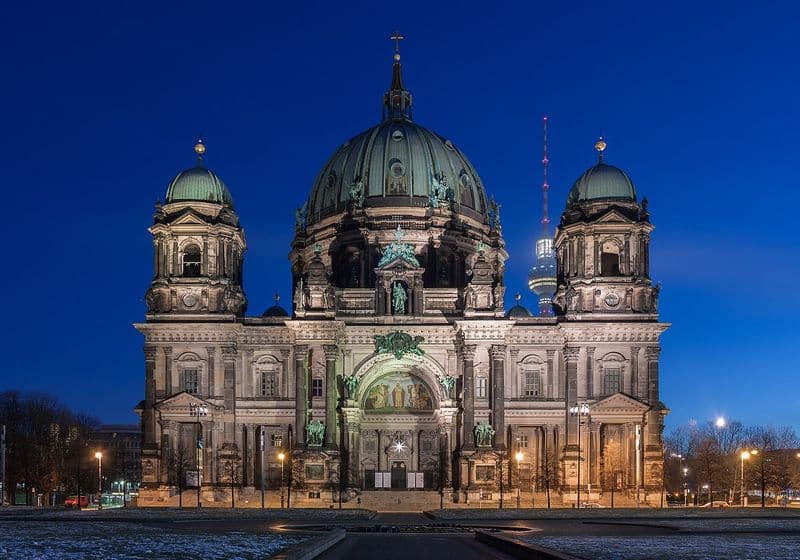 Gem · Audio guideBerlin Cathedral
 LightUp ToursEnglish · 5 min audioFree
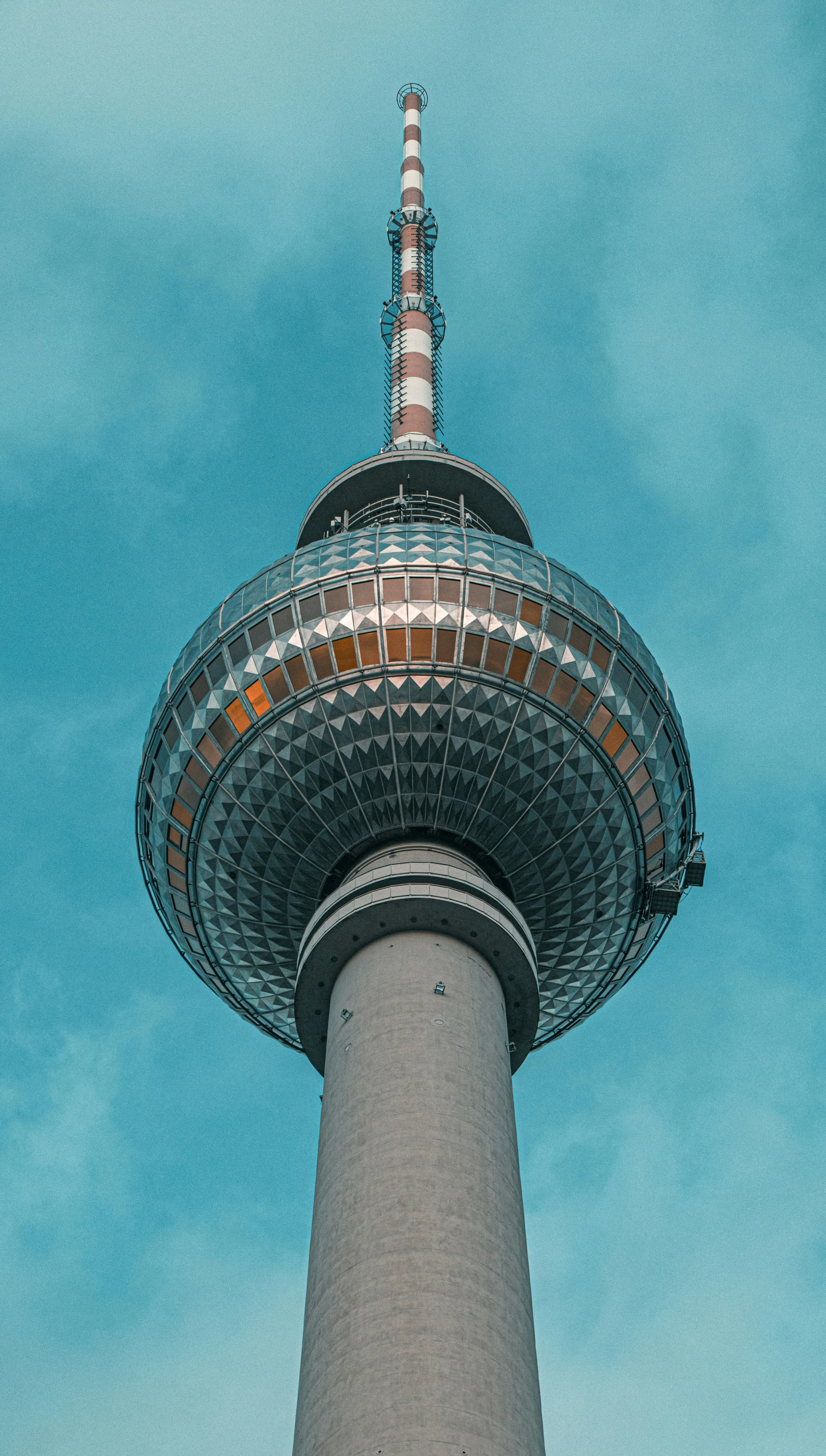 Gem · Audio guideBerlin: TV Tower (Fernsehturm)LightUp ToursEnglish · 4 min audioFree
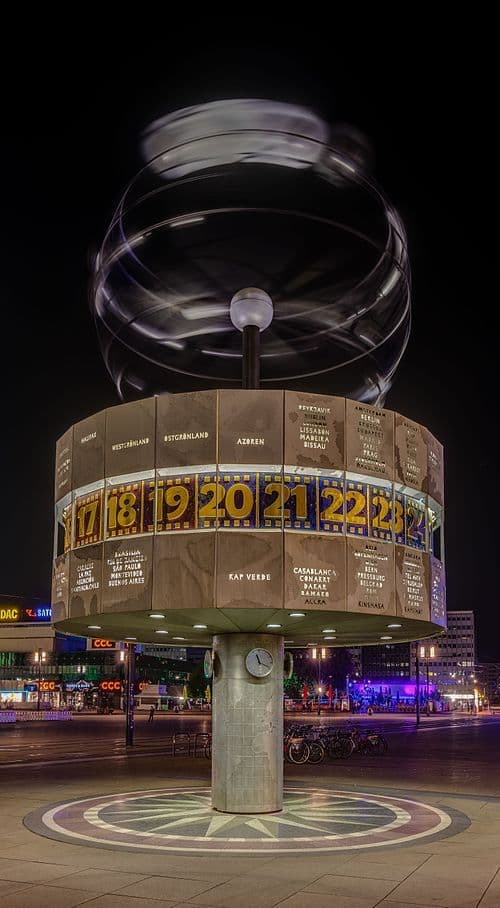 Gem · Audio guideBerlin: World Time Clock (Weltzeituhr)LightUp ToursEnglish · 5 min audioFree
 Gem · Audio guideBerlin: AnaL.M.Rodrigues - UntitledLightUp ToursEnglish · 3 min audioFree

Reviews
No reviews yet. Be the first.