
TV Tower (Fernsehturm)
Scan it with your phone
Point your camera at the QR code
Berlin TV Tower: East Germany's 368 m Message – Audio guide

I’ll tell you the secrets of TV Tower (Fernsehturm). I guide you here with the map, or you can listen from home. What you see is not what you think, and knowing it is worth it. Some narrations are AI voices and others are real people.
Free4 min AI voiceHistory
Audio in:EnglishSpanishGermanFrenchItalianPortugueseChinese
How it works
- Go there
the app walks you there from wherever you are. - Listen there or from home
it plays by itself when you arrive, or press play from wherever you are. In your language if it was recorded in it. - Keep discovering
the Berlin map has more gems like this one, and you can put them together in a tour.
What you'll discover
Two hundred meters above Berlin, this tower hides something its creators never wanted. Something that appears every morning and that they tried to eliminate for years.
An entire regime against a reflection. Engineers, scientists, no one could solve the problem. And the most ironic thing is that it is still there.
The TV Tower has a history that literally shines. Let's go together and I'll explain why.
About TV Tower (Fernsehturm)
What you're seeing is not just architecture — it's the result of a political obsession. Welcome to the Berlin Television Tower, an icon not only of the city but also of world engineering.
Read the whole storyShow less
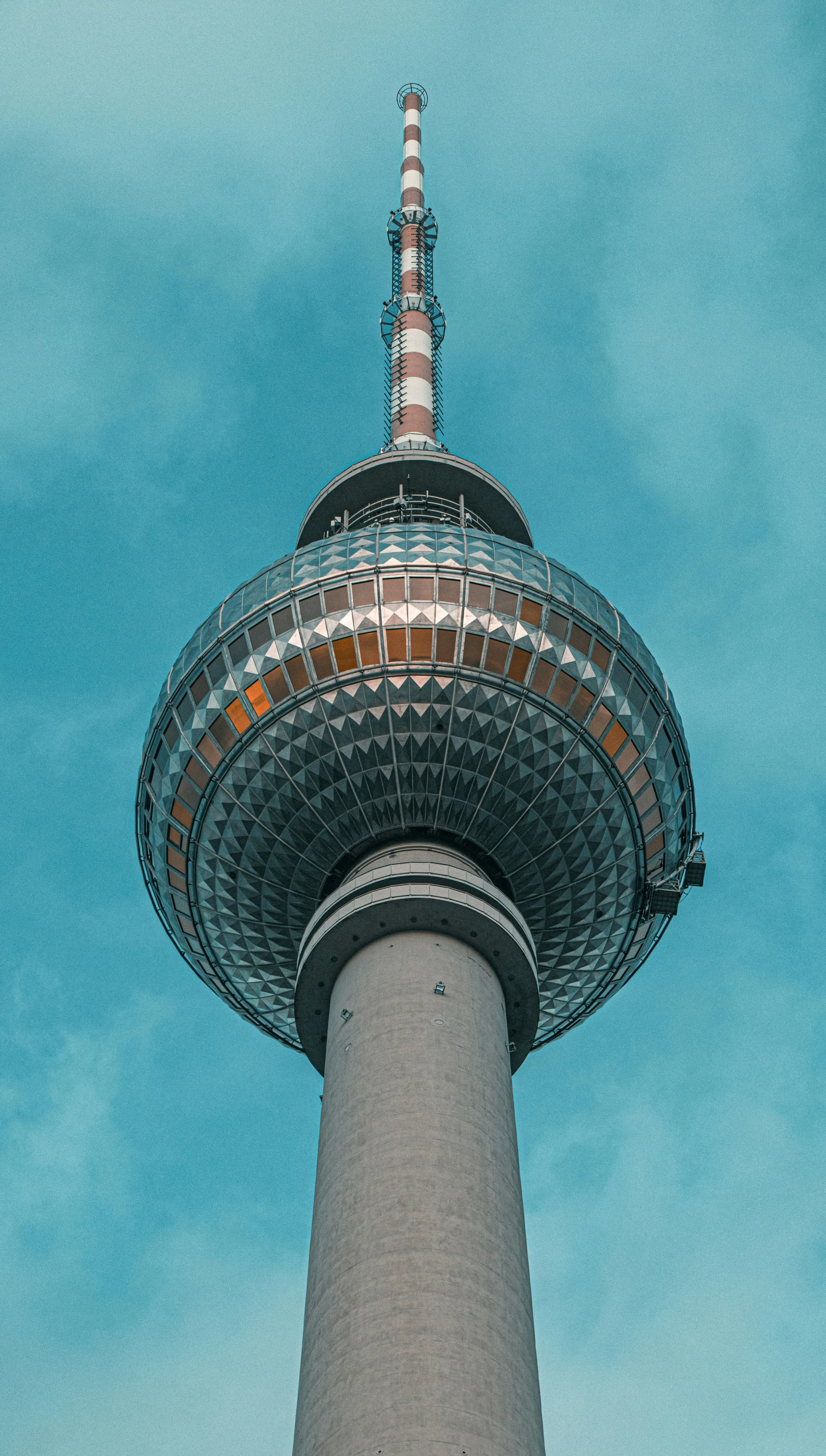
It all started in the 1960s when the GDR government decided to erect this tower with a very specific goal: to demonstrate to the world the strength of the socialist system. But the location wasn't easy to decide. The first chosen site was the southeast of the city, and it had to be discarded because the height of the tower would endanger the safety of Schönefeld Airport. Then Walter Ulbricht made a deliberately provocative decision: to build it here, in Alexanderplatz, so it would be visible from West Berlin. A political message three hundred sixty-eight meters high, planted in the heart of the divided city. While East Berliners went about their daily lives, the regime was erecting its symbol of power right above their heads.
Construction began on August 4, 1965. Engineers worked more than two hundred meters high with all of East Berlin at their feet, in three different shifts to finish it on time. They used the climbing system — the internal steel structure grew a little faster than the external reinforced concrete that was developing around the inner axis, the only possible method at the time for a work of this magnitude. Look at that curved wall leaning over you: the concrete axis starts with sixteen meters in diameter at the base and narrows to nine meters at the top. It's two hundred fifty meters of pure reinforced concrete.
But there was a problem the regime didn't count on publicizing: the original budget of thirty-three million marks skyrocketed to ninety-five million because the materials had to be imported from West Germany, paid in foreign currency. The state that boasted of socialist self-sufficiency needed capitalism to build its largest symbol.
The most challenging moment of the entire project was lifting and assembling the sphere — thirty-two meters in diameter — more than two hundred meters high. It was designed to evoke the Soviet satellite Sputnik: technology and power in a single image. And although even with strong winds the oscillation of the structure is barely noticeable — controlled by a one-and-a-half-ton metal rod suspended from three cables —
there was a problem that no one had foreseen and that no engineer could solve: every time the sun reflects on the stainless steel dome, a cross pattern forms. The state that had removed the crosses from all the churches in East Berlin had a giant, luminous cross shining on its most emblematic construction. Berliners called it the Pope's revenge. And the architects were not invited to the inauguration.
Now I recommend you go inside. Everything you've just seen from the outside is nothing compared to what's above. The entrance you see there is the only public access point — two elevators that go up six meters per second. In forty seconds, you're two hundred three meters high, where on a clear day you can see up to forty-two kilometers around. And if you want the full experience, the restaurant rotates three hundred sixty degrees every half hour — you eat and all of Berlin passes before you without you moving from your chair. The kitchen is downstairs on the ground floor to avoid fire risks, and the dishes go up in a special elevator. You can go in right now, until midnight. The observation deck costs seventeen fifty euros and the restaurant twenty-five fifty. You've been looking at this tower from the outside for a while — it's time to see it from the inside.
Visiting TV Tower (Fernsehturm)
- Entry and price
- The observation deck costs 17.50 euros, and the restaurant costs 25.50 euros.
- Opening hours
- Open from 09:00 to 23:00 in summer and from 10:00 to 23:00 in winter.
Frequently asked questions
Why was the TV Tower built?
The TV Tower was built by the government of the former East Germany (RDA) as a symbol of socialist power and to demonstrate the strength of the socialist system.
What is unique about the design of the TV Tower?
The tower features a concrete shaft that starts with a diameter of sixteen meters at the base and narrows to nine meters at the top. The sphere at the top was designed to evoke the Soviet satellite Sputnik.
What is the 'Pope's Revenge'?
The 'Pope's Revenge' refers to the unintended reflection of a cross on the tower's stainless steel dome when the sun shines on it, despite the East German regime's efforts to remove crosses from churches.
What can I see from the observation deck?
From the observation deck, you can see up to 42 kilometers around Berlin on a clear day.
Does the restaurant in the TV Tower rotate?
Yes, the restaurant rotates 360 degrees every half hour, allowing diners to see all of Berlin without leaving their seats.
More audio guides in Berlin
 Gem · Audio guideBerlin: Neues Museum© Janericloebe
 LightUp OriginalsEnglish · 5 min audio€0.99
 Gem · Audio guideBerlin: Es geschah im November - KaniAlavi© dravvtLightUp OriginalsEnglish · 4 min audioFree
 Gem · Audio guideBerlin: World Time Clock (Weltzeituhr)© Diego DelsoLightUp OriginalsEnglish · 5 min audioFree
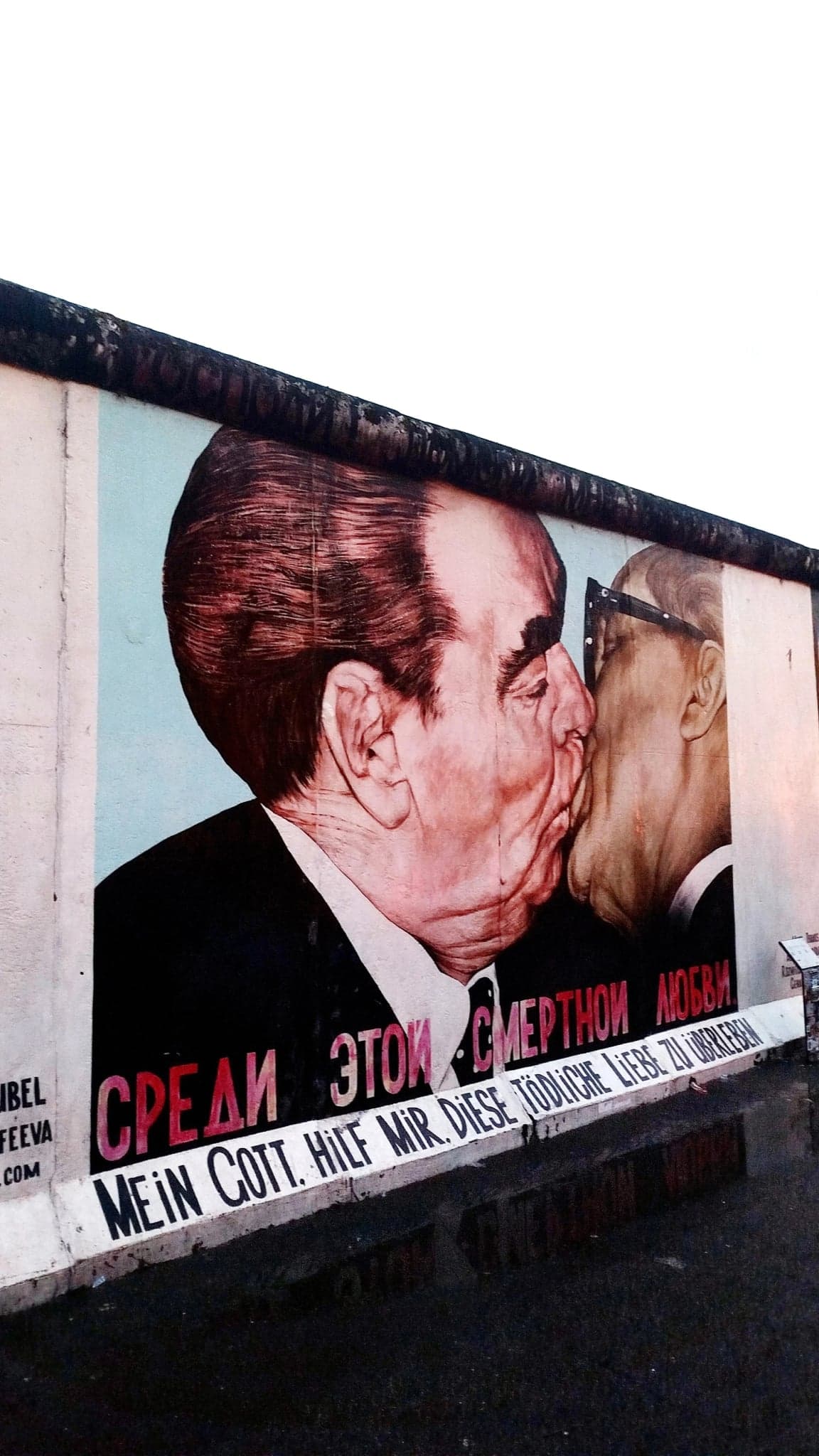 Gem · Audio guideBerlin: Mein Gott hilf mir, diese tödliche Liebe zu überleben© dravvtLightUp OriginalsEnglish · 4 min audioFree

Reviews
No reviews yet. Be the first.