
Osthafenspeicher (Spreespeicher) · Audioführer
Höre die Geschichte von Osthafenspeicher (Spreespeicher)
Lade die LightUp-App herunter oder scanne den QR-Code mit deinem Handy. Lass dir diesen Ort in deiner Sprache erzählen — 7 Sprachen verfügbar, KI- und menschliche Stimmen. Kostenlos starten und Berlin in deinem Tempo erkunden.
Mit dem Handy scannen
Richte deine Kamera auf den QR-Code
Geschichte
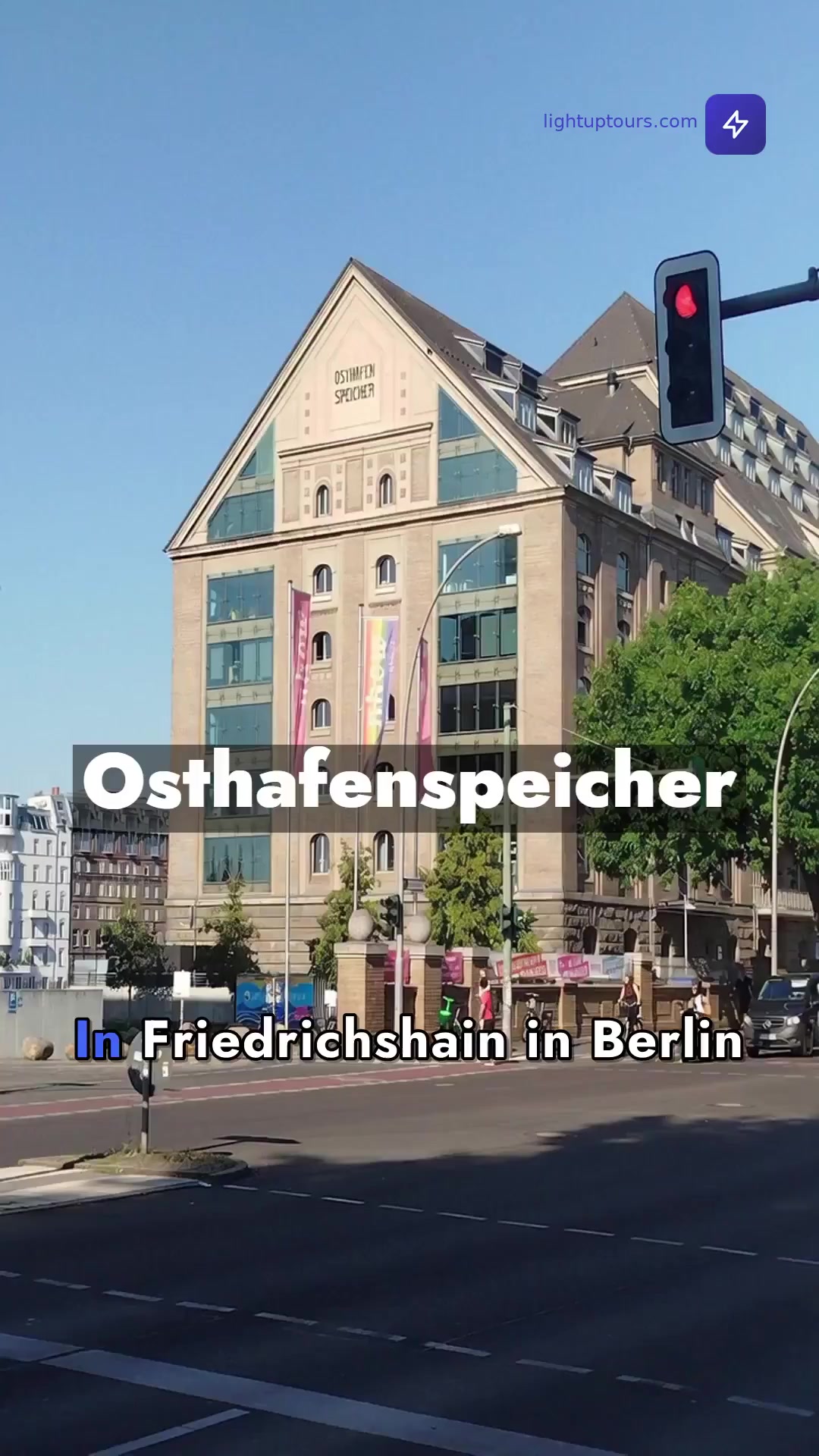
Junto al Spree, un granero de ladrillo con techo a dos aguas alza su gable por encima de la Stralauer Allee. Hoy tiene oficinas de medios. Pero en mil novecientos trece fue el corazón logístico de Berlín.
Seis de septiembre de mil novecientos siete: cavan los cimientos del Osthafen, el puerto industrial más grande que Berlín había tenido. Tardaron seis años en construirlo.
Friedrich Krause diseñó este almacén enorme de tres cuerpos para grano. Fritz Kritzler y Max Tischer dibujaron fachadas de ladrillo y piedra caliza dignas de la capital imperial.
El veintiocho de septiembre de mil novecientos trece inauguraron el puerto. Grúas, barcazas, toneladas de cereales moviéndose desde la barca al tren. Berlín respiraba por este muelle.
La guerra destruyó ochenta por ciento del puerto. Pero este edificio resistió. El Ejército Rojo ocupó los muelles en abril del cuarenta y cinco y vació los almacenes hasta el cuarenta y siete.
Hasta mil novecientos noventa, el Spreespeicher almacenó grano para Berlín Este. Con la reunificación, el puerto perdió su significado. El techo quedó parcialmente destruido durante años.
Lo restauraron en dos mil uno. Escucha el tour completo y te llevo a las entrañas de este gigante de ladrillo que movió el grano de toda una ciudad.
Osthafenspeicher (Spreespeicher) besuchen
- Wie man dorthin kommt
- Die nächste Haltestelle ist Stralauer Allee (Bus), 18 Meter entfernt.
Häufige Fragen
Was ist die Geschichte des Osthafenspeichers?
Der Osthafenspeicher wurde als Teil des Osthafens, des größten Industriehafens Berlins, gebaut. Er wurde 1913 eröffnet und diente als Getreidesilo und Umschlagplatz für Waren aus Osteuropa.
Welche Rolle spielte der Osthafenspeicher im Zweiten Weltkrieg?
Während des Zweiten Weltkriegs erlitt der Osthafen schwere Schäden, aber der Spreespeicher diente weiterhin als Verteilerzentrum für die Wehrmacht bis 1945.
Was geschah mit dem Osthafenspeicher nach dem Krieg?
Nach dem Krieg wurde der Osthafenspeicher bis 1990 in der DDR als Lagerhaus genutzt. Er war Teil der Infrastruktur, die den Warenfluss in Ost-Berlin sicherstellte.
Wie wurde der Osthafenspeicher nach der Wiedervereinigung genutzt?
Nach der Wiedervereinigung verlor der Osthafen seine wirtschaftliche Bedeutung. Der Spreespeicher wurde restauriert und beherbergt heute Büros und Veranstaltungsräume.
Was kann man heute im Osthafenspeicher sehen?
Heute sieht man die restaurierte Fassade mit den originalen Bogenfenstern von Kritzler und Tischer. Der Speicher bietet moderne Büroflächen und Veranstaltungsräume.
Mehr Audioguides in Berlin


Kommentare
Noch keine Kommentare.